

Add us as your preferred source on Google to see more of our content in Search.
 Add to Preferred Sources
The millions of people who have been marginalized and uprooted from their homes are now more vulnerable than ever. Having been threatened by persecution, conflict or human rights violations in the past, refugees and displaced persons could become the victims of a potentially devastating outbreak of the pandemic. Given how quickly COVID-19 is spreading and the high rates of forced displacement worldwide, the consequences could be disastrous. Unprecedent times require an effective international health response with the ability to reach these groups.
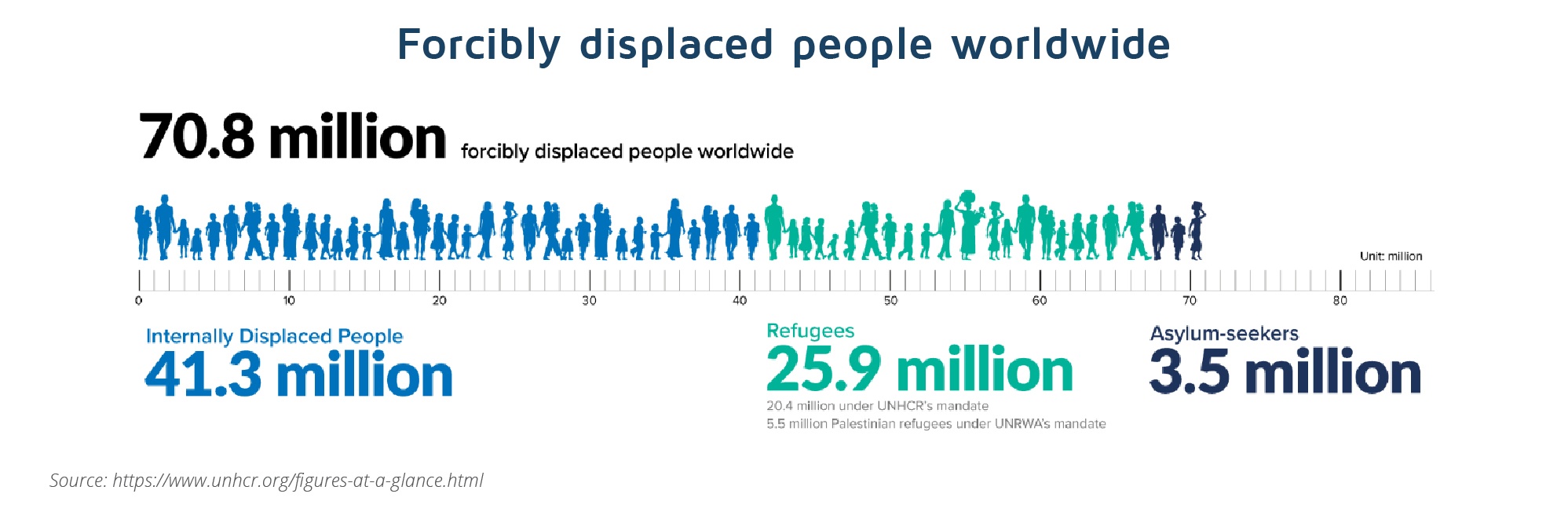
Millions of people in acute danger
Since 2012, the refugee population under UNHCR’s mandate has almost doubled and according to its latest report, over two thirds of the world’s refugees are from Syria, Afghanistan, South Sudan, Myanmar and Somalia.
Internally displaced people in South Sudan have found refuge in camps inside UN peacekeeping bases. However, the contagious nature of the coronavirus puts an extra burden on an already extremely fragile healthcare system that has suffered from poverty and under-investment. According to Aljazeera, in South Sudan it often takes people hours, even days, to reach healthcare facilities.
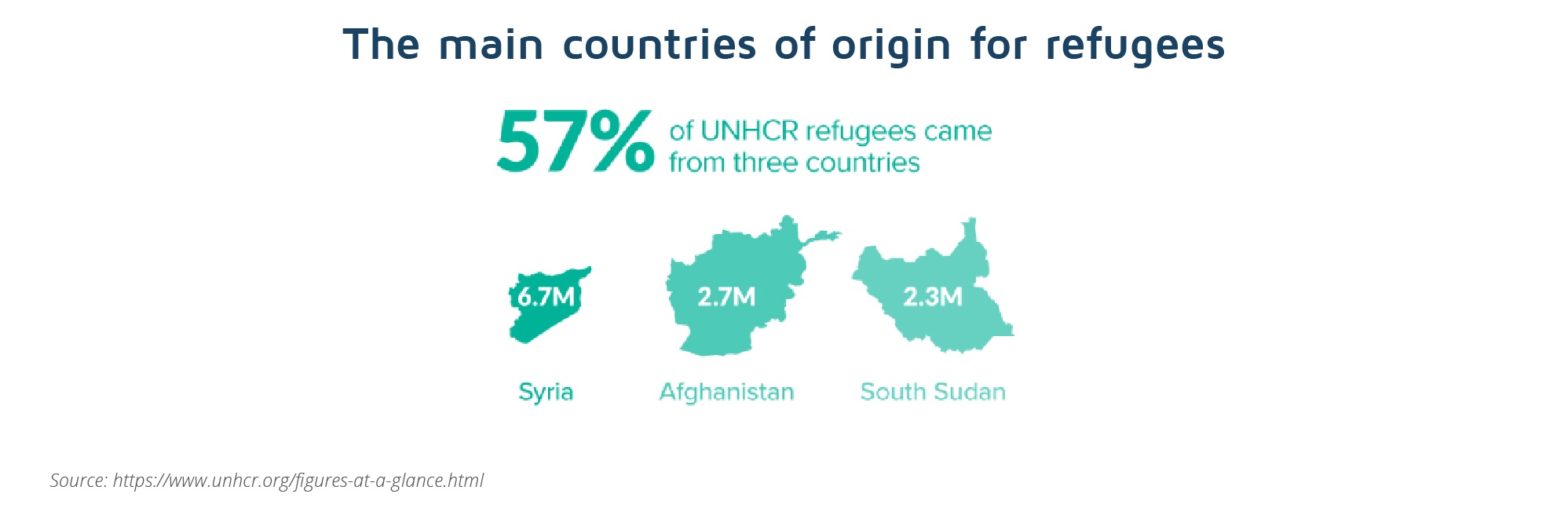
Neighboring countries host almost 80% of the refugees with more than one million stateless people originating from Syria living in Turkey although only a quarter of these are in official refugee camps. Just one single case of COVID-19 registered in a camp could transform the lives of the refugees into a nightmare and such a potentially large-scale outbreak is the worst scenario of the current global crisis.
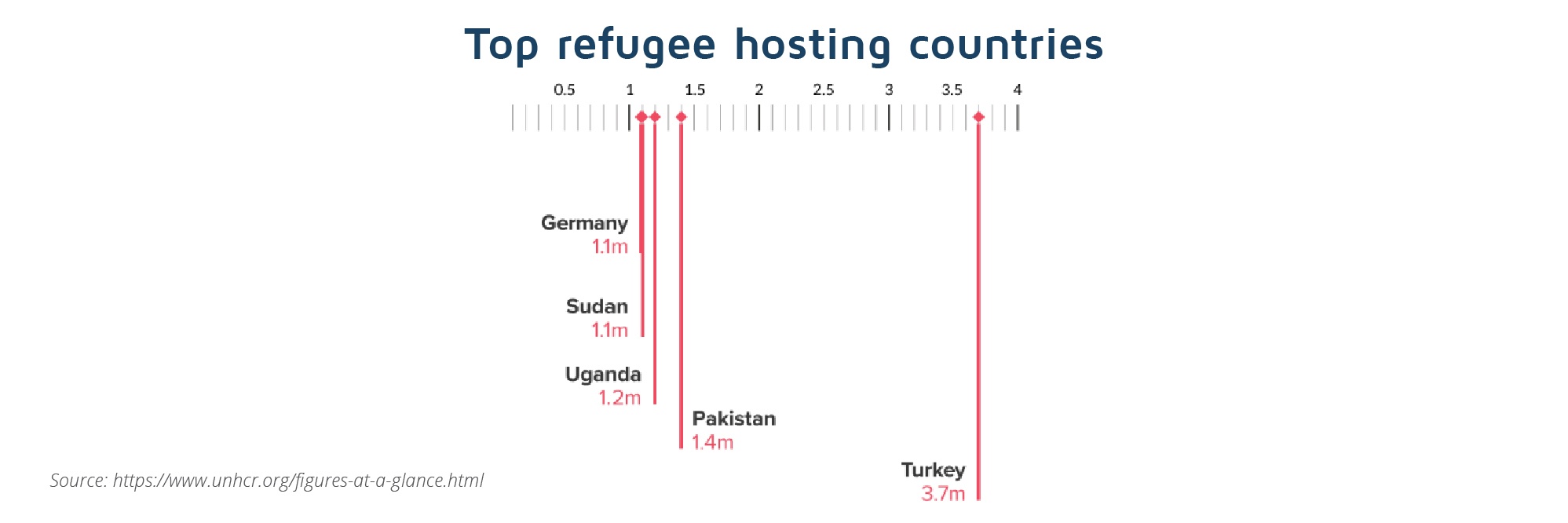
Social distancing impossible
Overcrowded conditions, precarious hygiene measures, shared facilities and a lack of protective equipment shape the reality for millions of refugees. This is how the situation in the refugee camps of Africa is described by protection and gender expert Ali Al Mokdad.
“Sanitation and hygiene levels are not ideal. We teach people that they should wash their hands a lot and about disease prevention but most of the time they don’t have water or soap. A large portion of the population is made up of children and it’s hard to make them understand the need for isolation and extra hand washing. My real concern is that this is a very crowded environment so, if we do have cases, it will be very hard to contain”, declared Ali Al Mokdad for DevelopmentAid.
UNICEF Executive Director Henrietta Fore expressed her concern regarding children being put in acute danger “Today, there are 31 million children who have been uprooted from their homes, including over 17 million internally displaced, 12.7 million refugees and 1.1 million asylum seekers. All of them need some form of assistance. Most of them do not have the luxury of calling a doctor when sick, of washing their hands whenever they need to or of practicing physical distancing to stop disease transmission.”
Unfortunately, refugees do not have the luxury of social distancing and, since isolation is an unreal option, promoting safety in camps could be the only solution. Similar fears are spreading throughout refugee settlements in Africa, the Middle East and Asia where healthcare and sanitation is also poor. The refugee shelters of the world’s largest cities and wealthiest countries face genuine challenges. According to The Guardian, refugees applying for asylum in one of the reception centers in Germany have complained about crowded conditions, no specific hygiene measures and a high risk of contagion due to a significant number of contaminated people attending the same facility, despite those 250 people tested positive.
Another 148 asylum seekers at a hotel in Greece, most of them from Africa, were diagnosed with coronavirus. A potential outbreak threatens a Palestinian camp in Lebanon after a refugee has tested positive with the new virus, the first known case in the region. A 46-year old Burundi from Nakivale Refugee Settlement tested positive after passing through a porous border with his colleagues.
The Jordanian government conducted 150 random tests in Zaatari – one of the largest camps for Syrian refugees, where live about 80,000 people. The refugees from Azraq settlement will be tested soon. World’s largest refugee camps like Cox’s Bazar from southern Bangladesh, a home for almost 900,000 refugees, are a matter of particular concern. While the testing capacity doesn’t cover most of the refugee camps’ needs, the lockdown and hygienic measures remain to be the only way out of the imminent danger.
In the absence of an effective plan of actions, the containment measures will transform the refugees’ existence in a chaos. Being prevented from leaving the camp, many of those who were employed can’t attend their workplace. Since the majority do not rely on assistance for income, their resources could end soon. They aren’t able to ensure the necessary supplies for a lockdown. Economic insecurity, cramped conditions and limited healthcare expose them to the virus.
Promoting safety in refugee settlements
Besides implementing safety measures in refugee settlements such as increasing the supply of fresh water, hand-washing stations and infection control points, workers should counteract the rumors and misinformation regarding COVID-19.
“Local NGOs in Africa are focusing on health promotion and awareness sessions through outreach activities and providing messages around COVID-19 and how to prevent it. At the same time, they provide activities related to hygiene promotion and distribute hygiene kits, but the problem and the main challenges are the lack of funding to deliver extra services and the local NGOs’ institutional capacity to implement large scale activities”, commented the protection and gender expert Ali Al Mokdad.
International organizations, UN agencies and NGOs cannot expand their activities in circumstances where there are insufficient financial resources. They are looking to obtain more support and have launched a global appeal. UNHCR has announced that US$255 m is required to cover the needs of refugees and other vulnerable areas while the Red Cross has called for $823 m to help the world’s most vulnerable communities. But how far will donors be able to finance their initiatives while governments are struggling to overcome the dramatic repercussions of this crisis and support their own citizens? The fact remains that forcibly displaced people worldwide must be included in readiness and response plans and strategies.
To increase the efficiency of the COVID-19 world response, DevelopmentAid is granting free access to COVID-19-related tenders and grant notices gathered together on its platform. Follow the COVID-19 related funding opportunities on DevelopmentAid. Don’t forget to subscribe to our news to be aware of the evolution of the situation in refugee camps.