
Add us as your preferred source on Google to see more of our content in Search.
 Add to Preferred Sources
UNHCR, the UN Refugee Agency, and partner organizations have further intensified their COVID-19 response in the Rohingya refugee camps in the Cox’s Bazar area of Bangladesh, following the first confirmed case of coronavirus among the refugee population.
Since March, UNHCR and partners have been supporting the Government of Bangladesh primarily in COVID-19 preparation and prevention efforts. With this first confirmed case, response mechanisms have now been activated and will require additional international support.
According to the Government of Bangladesh, one Rohingya refugee has tested positive for COVID-19 in the Kutapalong refugee settlement in Bangladesh. In addition, one member of the local Bangladeshi host community has also tested positive. Both had approached health facilities run by humanitarian partners, where samples were taken. These were subsequently tested in the IEDCR Field Laboratory in Cox’s Bazar.
Following the laboratory confirmation, Rapid Investigation Teams have been activated to investigate both cases, initiate isolation and treatment of patients as well as tracing contacts, quarantine and testing of contacts as per WHO guidelines.
Testing began in the Cox’s Bazar District in early April. As of (14 May), 108 refugees have been tested.
There are serious concerns about the potentially severe impact of the virus in the densely populated refugee settlements sheltering some 860,000 Rohingya refugees. Another 400,000 Bangladeshis live in the surrounding host communities. These populations are considered to be among the most at risk globally in this pandemic. No effort must be spared if higher fatality rates are to be avoided in overcrowded sites with limited health and water and sanitation infrastructure.
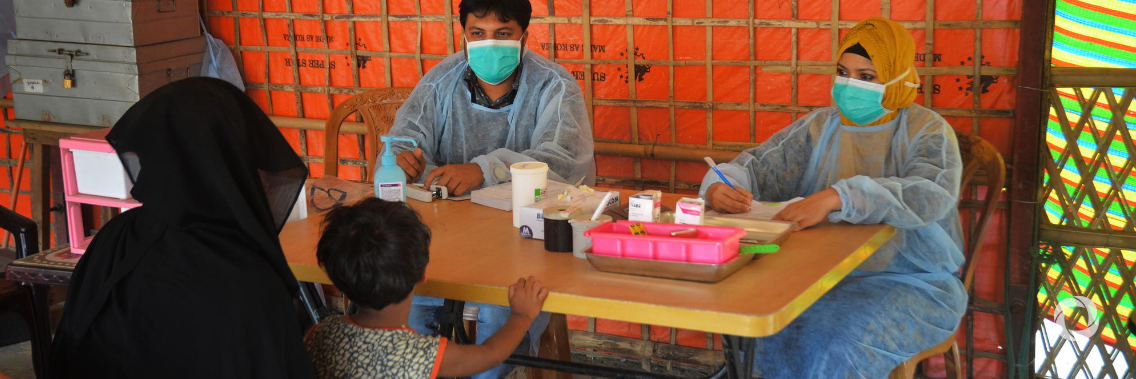
In support of the government-led public health efforts to curb the spread and impact of the pandemic, since March UNHCR and partners have carried out a range of preparedness and prevention measures. Established procedures have been put in place to respond to suspected and confirmed cases of COVID-19 in the host as well as refugee population of Cox’s Bazar. Health staff in all clinics within the camps have been oriented on Infection Prevention and Control (IPC), including the appropriate use of Personal Protective Equipment (PPE).
Despite the efforts that have been carried out to lay the ground to respond to the presence of COVID-19 in the refugee settlements, this response phase now requires concerted action and cooperation to ensure prompt treatment for patients, inform and communicate effectively with communities, and limit further spread.
Timely and flexible support from governments, private sector and individuals for ongoing refugee operations and host communities programmes as well as for Covid-19 response in Bangladesh and elsewhere remains critical. The Joint Humanitarian Response Plan for the Rohingya response is currently just 26 percent funded.
Original source: UNHCR
Published on 15 May 2020