
Small Island Developing States: Building resilience for sustainable trade, tourism, transport infrastructure and development
Add us as your preferred source on Google to see more of our content in Search.
 Add to Preferred Sources
Small Island Developing States (SIDS), such as the Caribbean Island of Grenada, face a double exposure to external economic and environmental shocks.
This has been made painfully clear by the economic shock caused by the coronavirus (COVID-19) pandemic that has, among other things, crippled the tourism industry upon which many SIDS depends. Tourism accounts for almost 30% of SIDS’ gross domestic product.
SIDS are also particularly vulnerable to extreme weather events, which are predicted to increase as a result of climate change. This was highlighted all too recently when Cyclone Harold swept across Vanuatu, Fiji, the Solomon Islands and Tonga causing widespread destruction and loss of life in early April 2020.
A new outcomes report, “Climate-resilient transport infrastructure for sustainable trade, tourism and development in SIDS”, documents the key outcomes of a High-Level Panel discussion held during the global climate conference (COP25) in Madrid in December 2019 to raise awareness of the climate-related challenges facing SIDS and the importance of and action required to build climate resilience.
One outcome highlights the ambition of Grenada to safeguard the economic and social value of highly vulnerable coastal cities and coastal infrastructure. Building the resilience of maritime and air transport infrastructure in SIDS, which are lifelines for the economy, is crucial to support sustainable trade, tourism and development. The impacts of climate change increase the exposure of SIDS’ critical transport infrastructure to damage, delays and disruption, affecting services and operations throughout supply chains and leading to potentially devastating socio-economic impacts. Current projections suggest that by the end of the century 10 million more people will be at risk from climate-linked sea level rise.
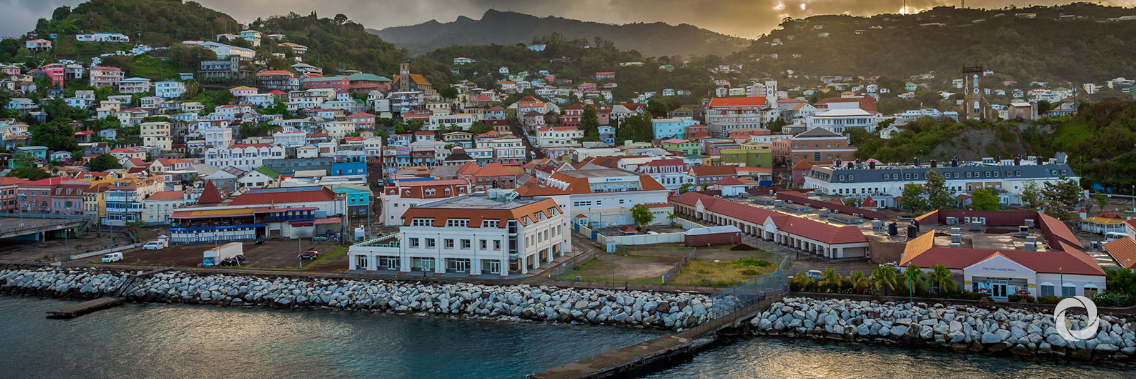
Grenada is undertaking an ambitious project, with technical support from New York University and financial support from the Global Climate Facility, to transform Saint George’s into the first climate-resilient, climate-smart city in the Caribbean region.
For SIDS, as for many coastal communities around the world, their natural environments are significant contributors to their economy making ecosystem approaches to adaptation and action to promote ecosystem services important elements in future strategies to address economic and environmental resilience.
For example, protecting coral reefs and mangrove forests is protecting the buffers between land and sea. Coral reefs form natural barriers that protect shorelines from the eroding forces of the sea, protecting coastal infrastructure, communities, agricultural land and beaches. More than 150,000 kilometres of shoreline in 100 countries and territories receive some protection from reefs today. At least 500 million people around the world rely on coral reefs for food and livelihoods, as well as their coastal protection.
While trade is dependent on well-functioning infrastructure it also plays a crucial role in building climate resilience. Trade is necessary, for example, to deploy the technologies and materials necessary to help protect the Carenage in Saint George’s from inundation, flooding, and storm surges. In addition to promoting interconnectivity, diversification of production, increased productivity, trade enables the deployment of clean technologies that promote energy security as well as job creation. This is particularly relevant in the context of COVID-19 where some SIDS are experiencing a reduction in critical foreign exchange, gained through key export sectors like tourism, needed to fund energy imports.
Building climate resilience ultimately represents a double dividend, protecting both the environment and the economy.
The report stresses that while SIDS are demonstrating leadership in tackling climate change and building climate resilience, they need urgent assistance to address their financial, technology and capacity gaps. Improving SIDS’ resilience to climate change can provide major opportunities in terms of overall national sustainable development, which should be front of mind as the international community comes together to support the post-COVID recovery.
Original source: UNEP
Published on 18 May 2020