
Add us as your preferred source on Google to see more of our content in Search.
 Add to Preferred Sources
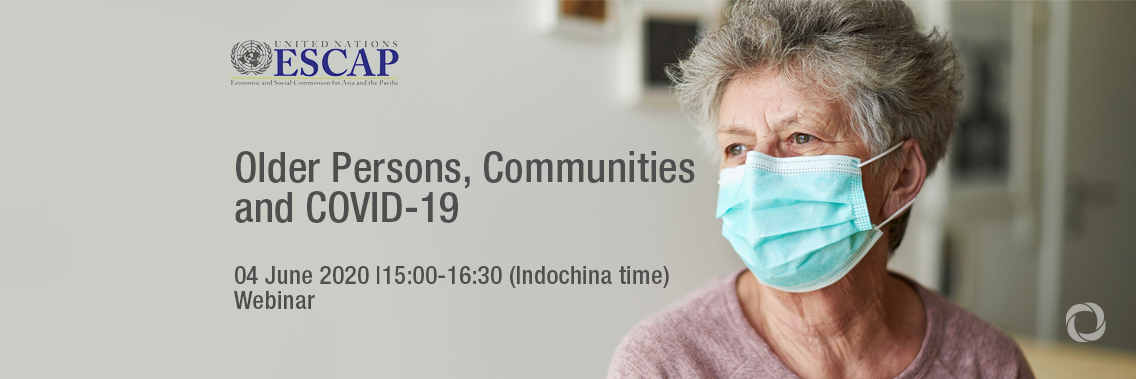
? 04 June 2020 ?15:00-16:30 (Indochina time)
Webinar
As COVID-19 continues to cause untold damage across the world, it is increasingly apparent that older persons are severely affected. Those aged 60 years and above infected with Covid-19 have a substantially greater risk of dying of the disease, and those over 80 are dying at five times the average rate. In addition, approximately 66 percent of individuals aged 70 years and over suffer from at least one underlying condition, which raises their overall risk of developing severe symptoms.
In Asia and the Pacific, the number of those aged 60 years and over is projected to grow at an unprecedented rate, from 630 million in 2020 to almost 1.3 billion by 2050.3 By that time, one in four people in the region will be over 60 years old; the number of older women is growing even more rapidly.
In addition to the known health risks associated with the virus, older persons, in particular, have been severely affected by the related economic turmoil and lockdowns. Only a small portion of older people in Asia and the Pacific have a pension or social allowance. With 4 out of 5 workers globally impacted by lockdown measures, their income and that of family members who support them financially, have been affected.
Social distancing disrupts social connections. Those with care support needs are more vulnerable to isolation, abuse, and neglect. With health systems focused on COVID-19, those with chronic conditions may not receive regular health care. Those with care needs likewise may have reduced services and support available. Residential homes with high numbers of at-risk older people have seen high mortality once COVID-19 spreads within them. Older women will be particularly affected because they generally outlive men and often require long-term care.
Many of these challenges first surface in households and communities, where neighbours, families, community leaders, and older persons associations address the immediate needs of a sick or isolated older person. In this context, it is important to identify the vulnerable persons, assess their needs, and find innovative, cost-effective short- and long-term solutions. Communities across Asia-Pacific face similar challenges. They have shown creativity and resilience and offer hope to older persons and societies in general during these unprecedented times.
Original source: UNESCAP
Published on 04 June 2020