
Add us as your preferred source on Google to see more of our content in Search.
 Add to Preferred Sources
Massive funding gaps are threatening hundreds of thousands of lives in the Democratic Republic of the Congo, where surging violence and COVID-19 are exacerbating already dire conditions for millions of forcibly displaced people.
As of June 7, DRC has recorded 4,105 confirmed cases of COVID-19 – the second largest number in the Southern Africa region. At the same time, surging violence is uprooting hundreds of thousand more people in the east of the country.
UNHCR, the UN Refugee Agency, is warning that without an urgent injection of cash, underfunding will have a devastating impact on critical lifesaving humanitarian programmes. Our activities to assist and protect the refugees and the displaced are only 20 percent funded of the US$168 million needed.
This gap is seriously undermining our response to bring aid to the multiple humanitarian emergencies, leaving many vulnerable without food, water, shelter, health, and hygiene facilities amid a rapid spread of COVID-19 across the country.
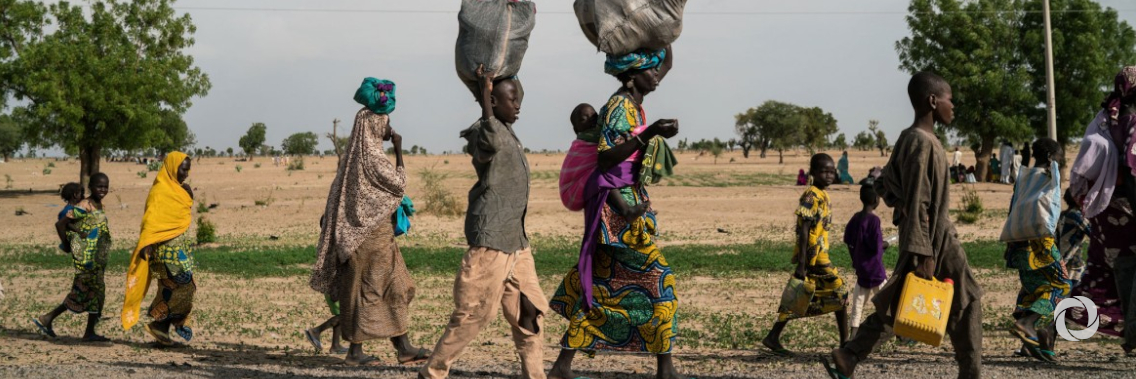
People uprooted in DR Congo by repeated cycles of conflict, represent Africa’s largest internal displacement situation – 10 percent of the global numbers of internally displaced people. Over the past few months, hundreds of thousands more people have been displaced in eastern and northern DRC following brutal attacks by various armed groups, intercommunal violence and natural disasters.
The country also hosts over half a million refugees – mainly from Rwanda, Burundi, the Central African Republic (CAR), and South Sudan.
While the overall humanitarian situation remains alarming, UNHCR is forced to make difficult choices that result in many of those in dire need not getting the assistance they require.
“We are working to help the most vulnerable to the extent possible, minimum standards in health, water and sanitation, education and other basic needs are often hard to meet with limited resources available for all populations.”
Currently, available funding also limits UNHCR’s interventions to support the 120,000 refugees from the CAR living outside of camps, who constitute about 70 percent of refugees from CAR in the DRC.
The education gap for 6,000 South Sudanese refugees of secondary age is also increasing. A staggering 92 percent of them still do not go to school. While UNHCR started a small programme to enroll refugees in secondary school, additional funding is needed to help construct and refurbish school buildings serving both refugees and host communities.
Over 47,000 Burundian refugees might not be able to access basic health services in South Kivu.
Continued underfunding also undermines UNHCR’s shelter programmes, and specifically its work to decongest displaced sites and hosting areas. More funding is needed to provide durable housing solutions which will contribute to reduce public health risks.
The outbreak of COVID-19 further aggravates the risks faced by displaced families who are unable to return home due to the ongoing violence, and who often live in overcrowded displacement sites or with impoverished host families. Their circumstances do not allow for distancing, while there is also limited access to water, sanitation systems and health facilities.
UNHCR has just received US$ 400,000 for COVID-19 prevention measures in DRC.
Original source: UNHCR
Published on 09 June 2020