
UNHCR, WFP join forces to reach thousands of refugees and asylum seekers in Libya with emergency food aid
Add us as your preferred source on Google to see more of our content in Search.
 Add to Preferred Sources
UNHCR, the UN Refugee Agency, and the World Food Programme, WFP, are joining forces in Libya in a project that will aim to reach up to 10,000 food-insecure refugees and asylum seekers with emergency food aid this year.
The partnership was launched in recognition of the severe socio-economic impacts of the COVID-19 pandemic in Libya as well as the effects of the ongoing conflict. Nutritious food supports a healthy immune system, which is even more critical in challenging times of a global pandemic. Regular food support helps to meet this basic need and allows for limited income to be used for other needs.
Most refugees and asylum seekers in Libya have been unable to find any daily work to support themselves as curfews have been introduced and food prices and the cost of basic goods have dramatically risen. The cost of a minimum expenditure food basket that would meet basic needs has increased by 24 percent since March. Many refugees say that they are only able to afford to eat one meal a day.
A quick needs assessment conducted by WFP between 30 May and 3 June 2020, carried out via telephone interviews with 10% of refugees proposed for assistance, found that on average, one out of two respondents had poor or borderline poor food consumption. A majority showed significantly higher frequency of using negative coping strategies such as reducing the number of meals per day or limiting the size of meal portions. In the past 30 days, 77 percent of respondents could not access supermarkets, and 70 percent had no money to buy food.
Among those who will be assisted under the project are refugees and asylum seekers recently released from detention centres, with limited means of supporting themselves. Others will include refugees in urban settings facing severe challenges in accessing food.
“The help we’re providing under this project has come at a critical time and will be a lifesaver for some of the most vulnerable refugees and asylum seekers in urban areas,” said Jean-Paul Cavalieri, UNHCR’s Chief of Mission in Libya. “Most relied on daily labour, but this work has dried up because of COVID-19 movement restrictions. They are living a hand-to-mouth existence and finding it very hard to feed themselves. In addition, as the UN continues to call for the orderly release of refugees and migrants from arbitrary detention, it is important that whenever the authorities release people from these centres, we can assist them in urban settings.”
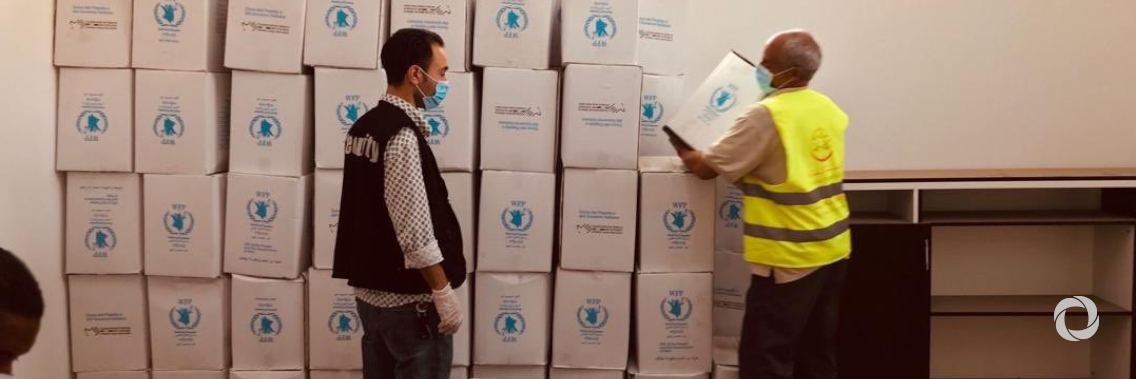
The first distribution of food assistance began on 15 June at UNHCR’s registration centre in Serraj, Tripoli. Some 2,000 refugees and asylum seekers will be reached in the pilot phase.
WFP and UNHCR staff will distribute the food packages through to the end of the year, ensuring COVID-19 precautionary measures, such as personal protection equipment, social distancing, disinfection, and enhanced crowd controls, are in place for the distributions.
This innovative partnership will also go beyond emergency food support, extending to technology services that facilitate communication and exchange of information.
Original source: UNHCR
Published on 16 June 2020