
Add us as your preferred source on Google to see more of our content in Search.
 Add to Preferred Sources
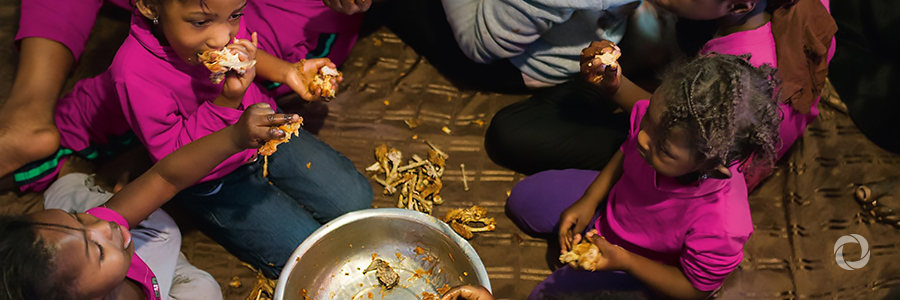
Civil strife and fragile statehood are the main causes of hunger today. However, 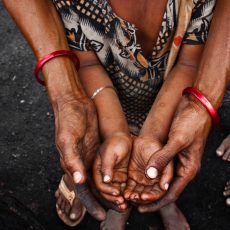 other reasons are contributing to worsening food insecurity in East and Central Africa. The underlying problems must be tackled – and concern the entire international community. Unfortunately food security is looking increasingly shaky all over East Africa and parts of Central Africa. According to aid agencies, at least 25 million people in about a dozen countries are affected. The situation is worst in those places that are haunted by violence and fragile statehood, including Somalia and the Central African Republic, for example, but many other countries need humanitarian aid as well.
There are several, inter-related reasons for increasing food insecurity, including the following:
- Unusually harsh weather has affected farms and herds. Droughts and floods have resulted in less food and reduced incomes. It is impossible to say that every incident of extreme weather is the direct result of climate change, but it is also true that climate change is making extreme weather more likely. Accordingly, we must expect things to get worse in the future if global warming continues and should assume that the phenomenon is contributing to the current problems.
- The populations of African countries are still growing fast. This trend has been slowed down or even turned around in other world regions, but in Africa the number of persons that need to be fed is still increasing.
- The problems are compounded by pests destroying crops and infectious diseases affecting people as well as animals. The weaker an organism becomes, the less able it is to withstand.
In war zones, combatants use hunger as their strategy. They burn fields, kill herds and poison wells, for example. They make it hard or even impossible for humanitarian agencies to deliver aid. Moreover, the destruction of infrastructure and indispensable agricultural assets, including seed, means that matters will not improve fast even if the fighting stops. Throughout history, armed struggle has meant deprivation.On the other hand, increasing deprivation is likely to lead to violent conflict as tensions concerning scarce resources intensify.
When many people are forced to leave their homes in search of new livelihoods, governance becomes increasingly difficult and societies become less stable.Dwindling food security in East and Central Africa is an issue of global relevance. It is irritating that the humanitarian agencies report that they need more money than is made available. In our interconnected world, a severe crisis in one world region concerns all world regions. Policymakers in rich countries must pay attention to the underlying problems and contribute to solving them. Action to mitigate climate change and to support developing countries to adapt to the phenomenon are essential. Support for building infrastructure, institutions and peace is indispensable. Worried about refugees coming to their countries, European leaders like to say they are “fighting the reasons of flight”. That stance makes sense, but it would be unrealistic to expect short-term results. The focus must not be on immediately limiting the number of refugees crossing the Mediterranean Sea, but on providing decent livelihoods to everyone south or east of that sea. The real challenge is not to strengthen borders. It is to ensure human rights and human security.
By Hans Dembowski
Source: D+C, Development and Cooperation. Read full article.
13 March, 2017