
Add us as your preferred source on Google to see more of our content in Search.
 Add to Preferred Sources
As governments try to kick-start their economies, the UN is calling for recovery plans to be built around low-carbon technologies, to avoid a return to fossil fuel-based business as usual.
Some of the countries and regions at the forefront of this wholescale shift to renewables are islands, where the need to avoid the significant cost of importing fossil fuels, such as oil and gas, provides added motivation.
Mauritius, for example, is planning to generate over a third of its electricity from renewable sources within the next five years. Projects supported by the UN Development Programme (UNDP), will be an important part of this transition, bringing an additional 25 Mega Watts of solar power to Mauritius, including a mini-power grid in Agalega, one of the outer islands.
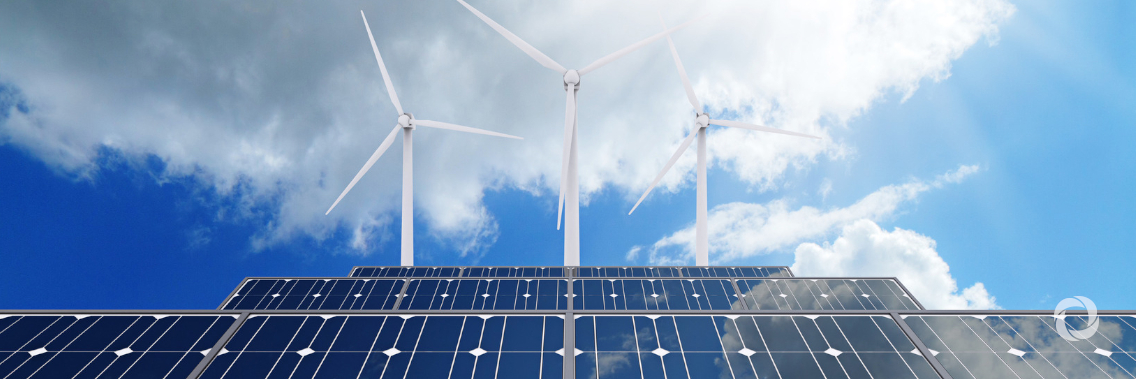
As well as reducing pollution, this shift to clean energy is expected to aid economic recovery, with new jobs in areas such as the production, installation, and maintenance of renewable energy equipment, from solar panels, to batteries and wind turbines.
Another added benefit is energy security: with such a high dependence on imported oil, price fluctuations can make budgeting difficult, and any interruption to supply can have serious consequences. “Home-grown” energy from renewable sources can make the energy grid more reliable, and more resilient.
The Pacific US State of Hawaii is planning to go even further and become a trailblazer for the rest of the United States, by going completely renewable by 2045.
Nevertheless, Mauritius and Hawaii show that a green option is not only possible but actually a better deal than a fossil-fuel-based recovery plan, especially when the true costs, including air pollution, climate change effects and traffic congestion, are factored in.
A new book from the World Bank, Technology Transfer and Innovation for Low-carbon Development shows that most of the emissions reductions needed to keep global warming to 1.5 degrees above pre-industrial levels, can be achieved if existing, commercially proven low-carbon technology is adopted on a massive scale.
As Inger Andersen, the Executive Director of the UN Environment Programme (UNEP) explains, “renewables are now more cost-effective than ever, providing an opportunity to prioritize clean economic recovery packages and bring the world closer to meeting the Paris Agreement Goals. Renewables are a key pillar of a healthy, safe and green COVID-19 recovery that leaves no one behind.”
The economic slowdown resulting from the COVID-19 pandemic has seen a significant fall in harmful greenhouse emissions and, according to the International Energy Agency (IEA), 2020 will see a drop of around eight percent.
This has given us an idea of what a cleaner world might look like, but it is only a temporary respite: it has also had devastating consequences, including the shuttering of entire sectors, and unemployment for millions of people.
Now, with countries and regions like Mauritius and Hawaii investing in policies, programmes and initiatives to get people back to work, there is an opportunity for a more sustainable approach, with renewable technologies at its heart. The question is whether the international community will seize this opportunity, or stick with the devil they know.
Original source: UN News
Published on 27 June 2020