
Add us as your preferred source on Google to see more of our content in Search.
 Add to Preferred Sources
The Asian Infrastructure Investment Bank’s (AIIB) Board of Directors has approved a loan of USD7.3 million to the Maldives to strengthen the country’s health response to the COVID-19 pandemic. This is AIIB’s first project financing in the country.
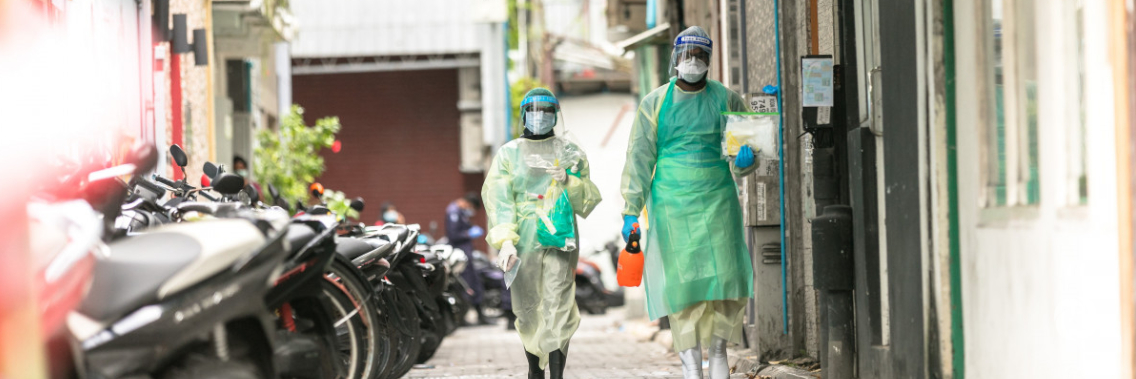
Cofinanced with the World Bank, the project will immediately enable the government to scale up its efforts to provide protection to medical professionals through the provision of personal protective equipment and strengthen health systems through boosting testing capabilities. Beneficiaries include at-risk populations, particularly the elderly and people with underlying conditions, as well as public health agencies engaged in the response in the Maldives.
The socio-economic impact on the island nation remains uncertain given its dependence on the international tourism market. Most tax and non-tax revenues originate directly or indirectly from tourism.
“Our first project financing in the Maldives comes at a critical time as the country navigates the impact of the global health crisis,” said AIIB Vice President, Investment Operations, D.J. Pandian. “AIIB is strongly committed to ensuring that the government has the necessary resources and capacity to protect the most vulnerable in the country.”
The project was approved under a new Special Fund Window (SFW) as part of AIIB’s COVID-19 Crisis Recovery Facility (CRF). This additional financing will allow the Maldives to buy down the interest rate to reduce the financial burden of the loan. AIIB’s SFW is only available to International Development Association members to help them raise affordable funds to fight the pandemic.
As of end-June 2020, AIIB has approved a total of 13 projects amounting to over USD5.5 billion to support 11 members to navigate the challenges of these highly uncertain times.
Original source: AIIB
Published on 01 July 2020