
Add us as your preferred source on Google to see more of our content in Search.
 Add to Preferred Sources
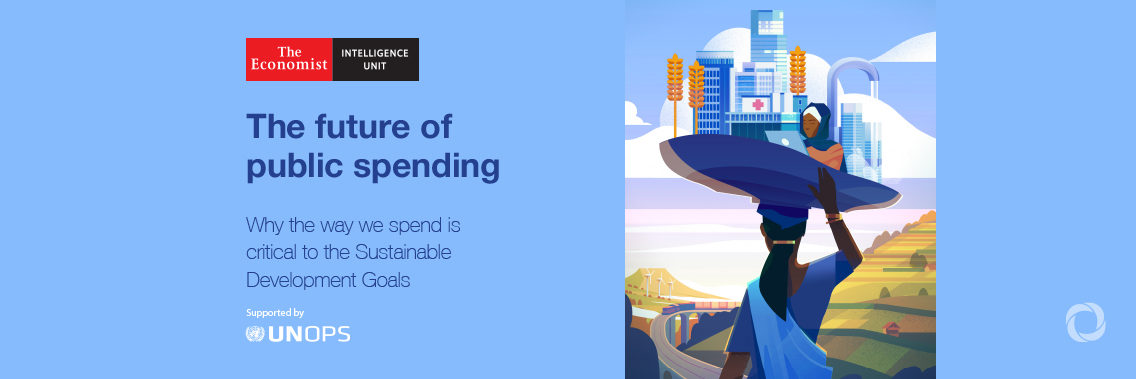
New UNOPS-supported research published by The Economist Intelligence Unit (The EIU) examines the implications of COVID-19 and the opportunity it presents to rethink approaches to public procurement.
The follow-up research essay to The EIU’s recent UNOPS-supported report, ‘The future of public spending: Why the way we spend is critical to the Sustainable Development Goals’ (SDGs) highlights the importance of effective and sustainable public spending, as countries reopen, recover and rebuild.
“UNOPS is proud to support this body of research, which reveals the important opportunity governments around the world now have to rethink the way they approach public spending. To continue driving progress towards the SDGs, it is key to place efficiency, equality and sustainability at the core of public spending,” said Grete Faremo – Under-Secretary-General and UNOPS Executive Director.
The COVID-19 crisis has caused severe disruptions to global supply chains and exposed undesirable practices such as price gouging of essential items.
“Prices have gone up by 20 times – or 2,000 percent – for some items […] That makes it more difficult for low- and middle-income countries to have access to those supplies compared with richer countries,” said Vinay Sharma, Global Director of Solutions and Innovations in Procurement in the World Bank’s Governance Global Practice, in the report.
Yet the crisis has also triggered rapid and innovative responses, and fostered valuable new partnerships between the public and private sectors.
The research finds that to support local businesses and save jobs, governments all over the world are ‘ripping up the rulebook’ on public spending – adopting flexible procurement processes that enable speed and an opening up of contracts to new players, including small and medium-sized enterprises. The research suggests that if done right, such practices could bring welcome innovation far beyond the pandemic.
In the essay, experts point out that with unemployment set to rise to unprecedented levels, the need to shape inclusive spending policies that actively enable greater and more diverse participation in public contracts has become more critical than ever. In part, this can be accomplished with a tech-led transformation to more open, online, inclusive digital services.
The research concludes that achieving efficiency and value for money now will also help to ensure that more public funds are available to governments as they face the enormous challenges of shifting to a low-carbon economy and accelerating progress towards the SDGs.
Read the research essay: The future of public spending: Why the way we spend is critical to the Sustainable Development Goals.
Original source: UNOPS
Published on 01 July 2020