
OCHA calls for support against ‘triple threat’ of COVID-19, flooding and desert locusts in the Horn of Africa
Add us as your preferred source on Google to see more of our content in Search.
 Add to Preferred Sources
At a briefing for United Nations Member States on the humanitarian situation in Ethiopia, Kenya and Somalia, OCHA called for more support to help vulnerable people in the region grapple with the “triple threat” of COVID-19, major flooding and desert locusts.
The Under-Secretary-General for Humanitarian Affairs and Emergency Relief Coordinator, Mark Lowcock highlighted that humanitarian needs are rising across Ethiopia, Kenya and Somalia as a result of multiple, simultaneous and compounding shocks, including the worst desert locust upsurge in generations, recurring and increasing floods affecting millions of people, and the COVID-19 pandemic – sometimes referred to as the “triple threat” – in addition to conflict-related issues.
“There is COVID in all three countries. We see an immediate impact on health-care systems already, including routine immunizations and on sexual and reproductive health. At the same time, we have seen a lot of disruption and displacement from flooding, and that brings with it the risk of waterborne diseases, potentially including cholera, malaria, and acute watery diarrhoea,” said Mr. Lowcock.
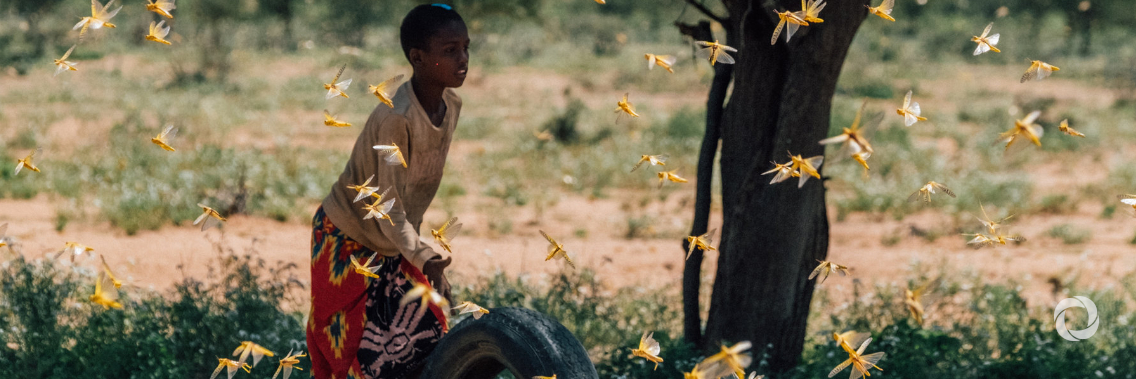
In addition, the UN humanitarian chief said that the desert locust situation remains extremely serious, threatening pastures and crops in the three countries.
Mr. Lowcock emphasized that despite the current COVID-19 context, aid organizations are remaining on the ground, continuing life-saving programmes while ensuring the safety of humanitarian workers.
In Somalia, humanitarian actors have managed to significantly scale up food assistance, from reaching an average of 700,000 people a month with food or cash in March, to 1.6 million people in April and 2.3 million people in May.
Mr. Lowcock noted that non-governmental organizations (NGOs) are essential to this delivery, as evidenced by the fact that they have received more than 96 percent of the funds disbursed by the OCHA-managed Somalia Humanitarian Fund between 2017 and 2019, and 84.5 percent of the funds disbursed in 2020.
Partners in Ethiopia have collectively reprogrammed more than $150 million in support of the national strategic preparedness and response efforts and continue to deliver assistance. Similarly, in Kenya, UN partners redeployed $45 million to support Kenya in its response to the pandemic in addition to deploying over 70 staff and volunteers to assist the Government.
The UN has also stood up its airbridge capacity established in the wake of the pandemic, with Addis Ababa providing an essential service for all humanitarian partners, including NGOs. In addition, the UN Humanitarian Air Service (UNHAS) has airlifted 45 metric tons of equipment and supplies to various parts of Somalia, including urgently needed medical supplies.
Mr. Lowcock noted that it is now critical to step up advocacy and fundraising efforts to address critical existing humanitarian needs in Ethiopia, Kenya, and Somalia, as well as additional needs resulting from the COVID-19 pandemic.
Original source: UNOCHA
Published on 08 July 2020