

Add us as your preferred source on Google to see more of our content in Search.
 Add to Preferred Sources
Private foundations are playing an increasing role in the development sector. As these foundations have started to share data with the public about their activity, this has offered the ability to quantify and provide a deeper understanding of where philanthropies primarily spend their resources. This article presents the highlights of the main trends regarding private donations and investments in support of development.
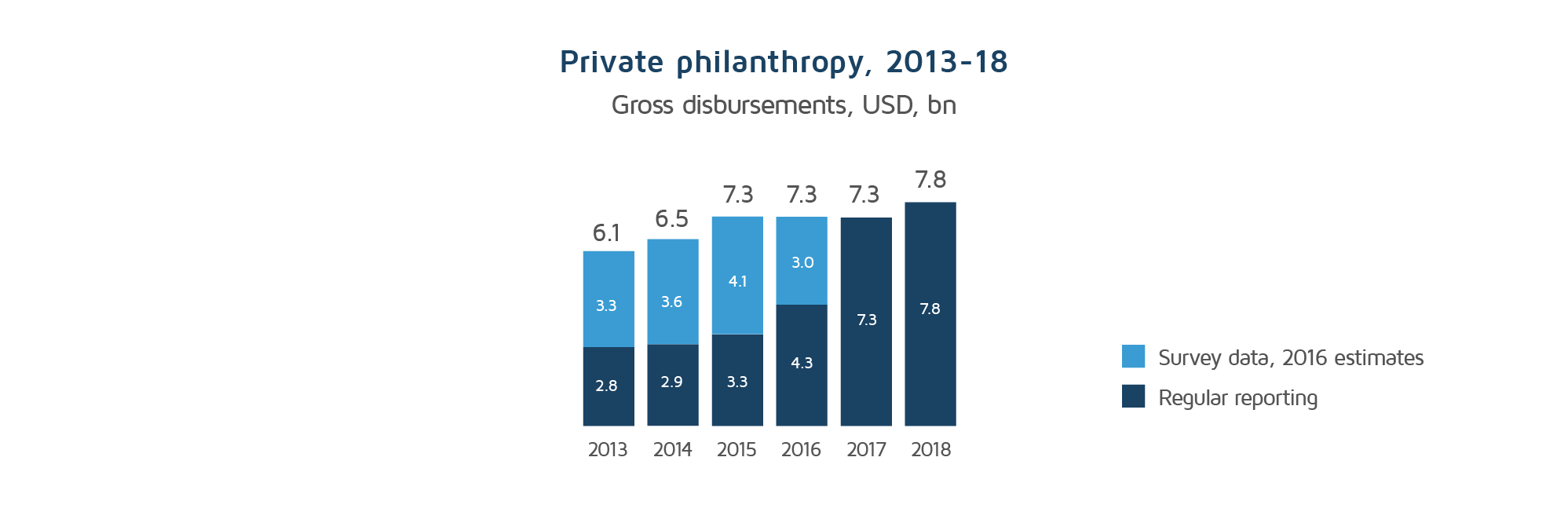
Although the philanthropic flows are still modest, there is consistent growth in the funding provided by private foundations. In 2018, according to OECD data, private philanthropic donations amounted to US$7.8 billion which represents 5% of Official Development Assistance (ODA). Based on access to decades of public tax records, the Foundation Center shows that amounts given by the United States foundations to international causes as percentage from total giving have doubled in a decade, from 13.9 percent in 2002 to 28.4 percent in 2015.
Source: (OECD) Private Philanthropy for Development
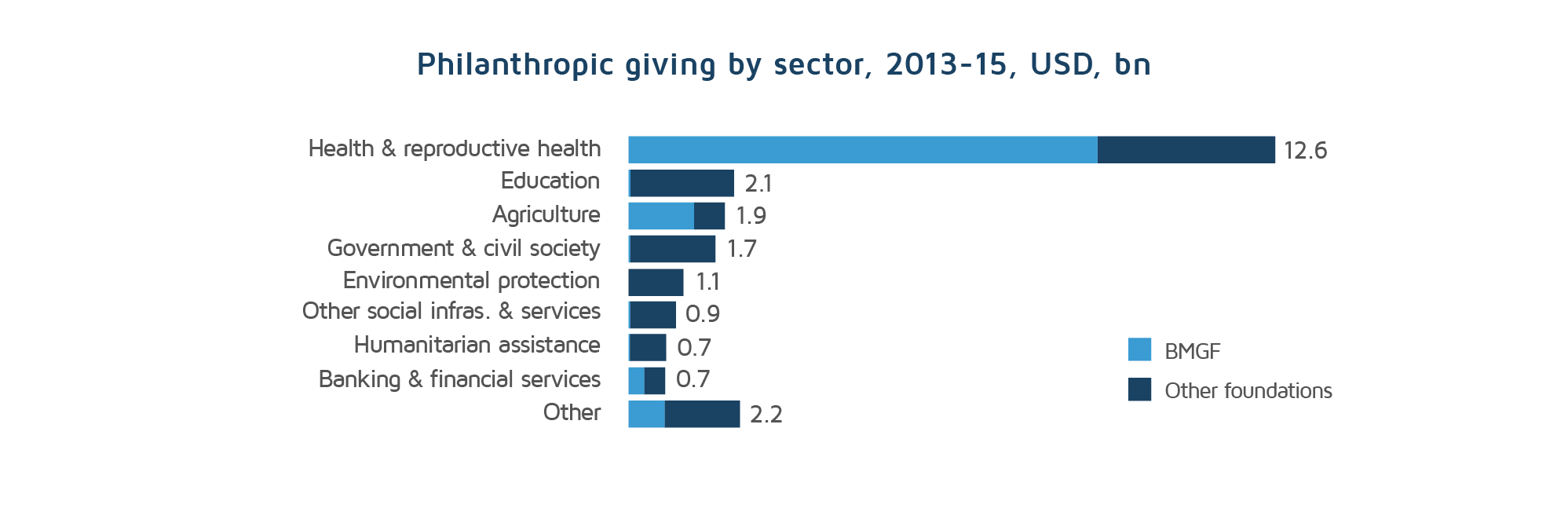
Foundations have become major players in certain specific areas. In the health and reproductive health sectors, support from philanthropies plays a key role and is the third-largest source of financing for developing countries, following that of the United States and the Global Fund. The Bill and Melinda Gates Foundation (BMGF) was the major actor in this area, accounting for 72% of total donations to the health sector. Fifty foundations have dedicated more than 20% of their donations to the health sector, while ten such organizations have dedicated more than 80%.
Source: (OECD) Private Philanthropy for Development
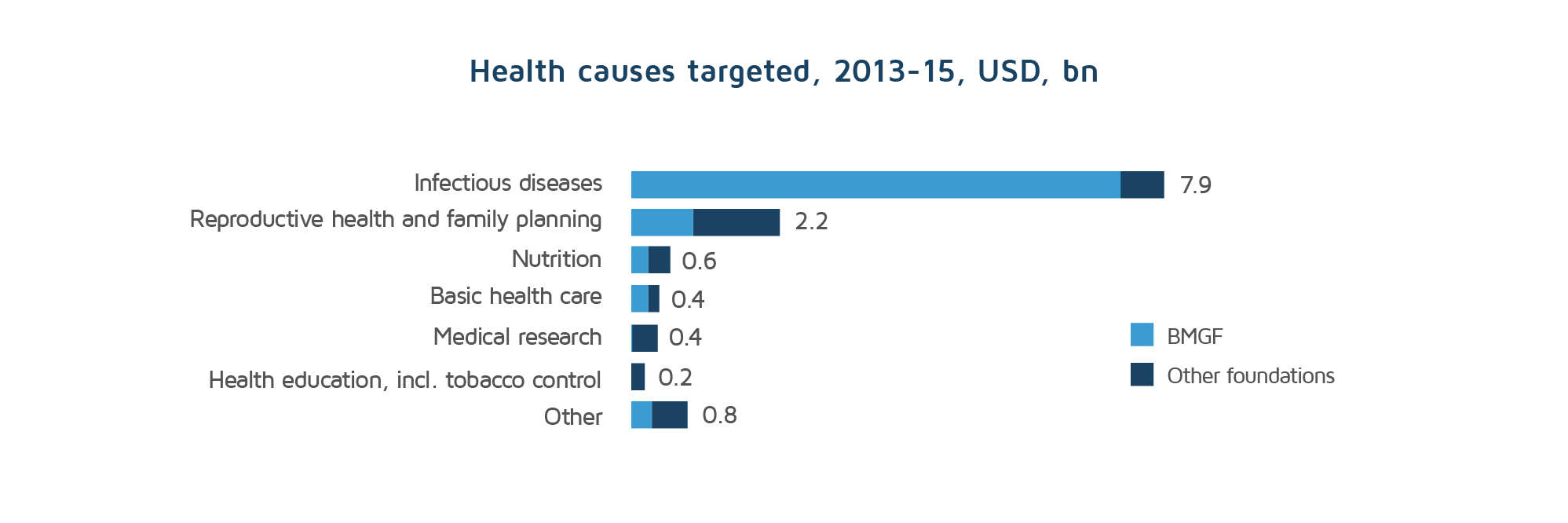
The main health-related area targeted is the control of infectious diseases, which accounts for 62% of the total giving. This was followed by reproductive health and family planning (18%), basic nutrition (5%), the provision of basic health care (3%), medical research (3%) and health education (2%, including tobacco control).
Source: (OECD) Private Philanthropy for Development
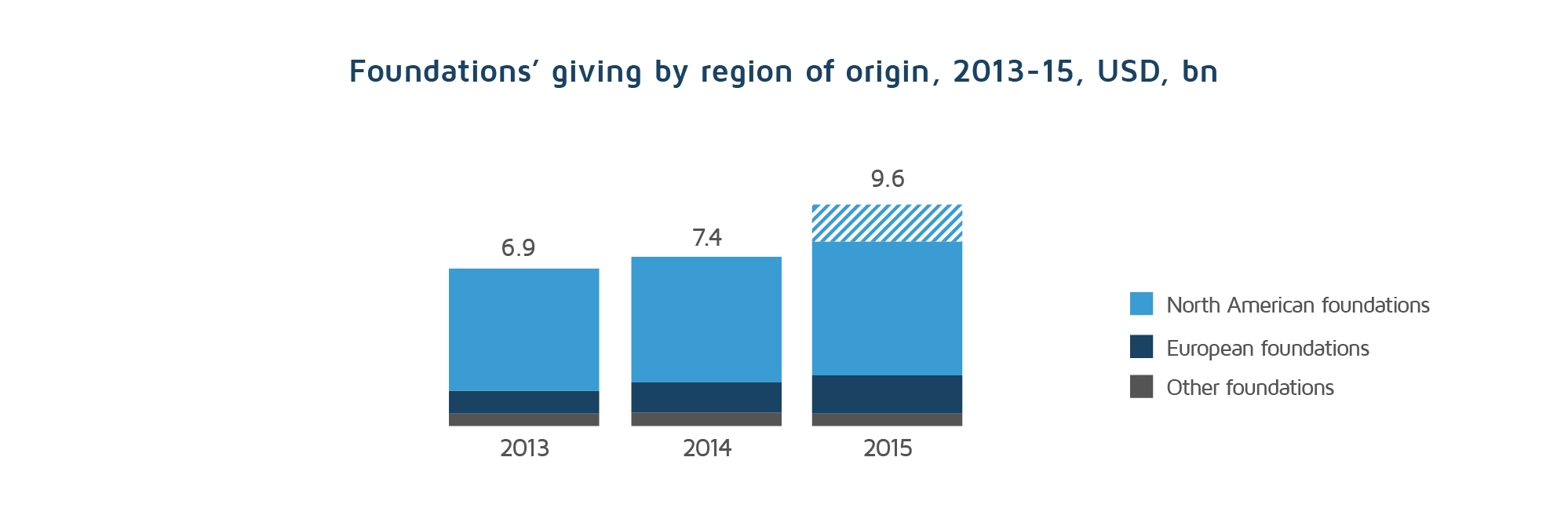
The sources of philanthropic giving are highly concentrated, specifically in the United States and mainly due to the Bill & Melinda Gates Foundation. Of the top 25 foundations included in the OECD DAC data survey sample, this is by far the most significant philanthropic donor, having provided more than half of the total donations in 2018 (60%). In addition, 81% of the total philanthropic donations (from 143 foundations included in the OECD sample survey) during 2013-15 was provided by only 20 foundations.
Source: (OECD) Private Philanthropy for Development
Philanthropists favor investment in stable, middle-income economies. An OECD report shows that 67% of country-targeted philanthropic giving was received by middle-income countries. Only a third of the country-allocable funding went to the least developed countries (28%). Africa received the largest share of philanthropic giving (28%), followed by Asia (17%), Latin America (8%), Europe (2%) and Oceania (0.12%). However, the country to receive by far the most philanthropic donations is India (7% of total funding, mainly from the BMGF). Among the top 20 beneficiary countries, 11 are from sub-Saharan Africa.
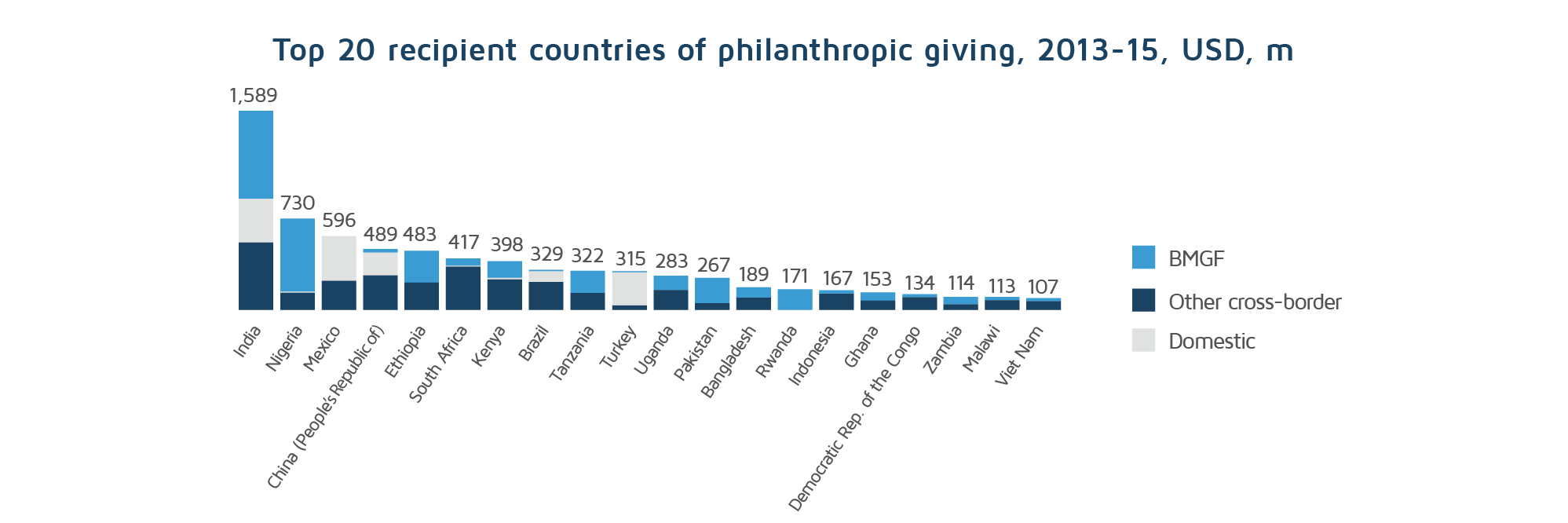
Source: (OECD) Private Philanthropy for Development
Philanthropists mainly invest through large, established partners such as international organizations and NGOs. Almost all philanthropic giving (97%) was implemented through intermediary institutions. Particularly in the health sector, philanthropic funding is channeled through large international organizations and NGOs such as Gavi, the Vaccine Alliance, the World Health Organization (WHO), the Program for Appropriate Technology in Health (PATH), the United Nations Children’s Fund (UNICEF) or Rotary International.
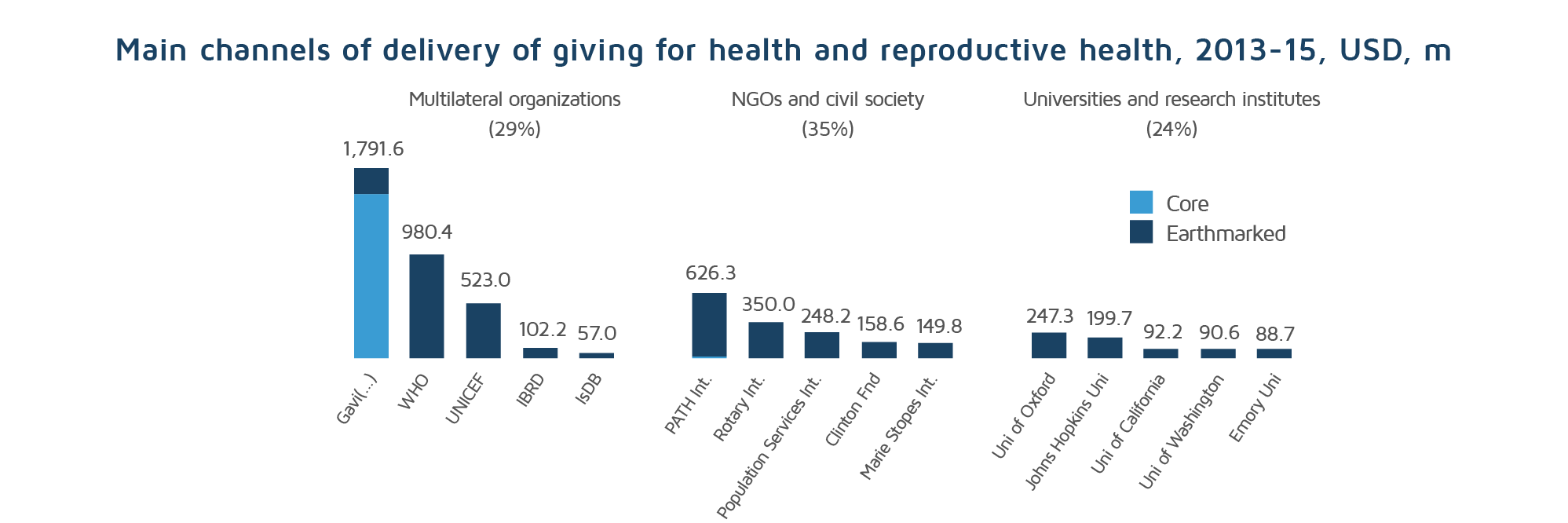
Source: (OECD) Private Philanthropy for Development
In some developing countries, domestic philanthropic giving plays an important role. Philanthropic foundations based in developing countries operate, to a large extent, domestically. As a result, in some countries, domestic philanthropic flows represent a significant part of total philanthropic donations (83% in Turkey, 60% in Mexico and 35% in China). The largest of such foundations are the Mexican Carlos Slim Foundation, the Indian Tata Trusts, the Turkish Vehbi Koç Foundation and the Hong Kong, China-based Li Ka Shing Foundation.
Education remains a popular cause among philanthropies. This is the second largest sector supported by foundations. Private foundations in particular are some of the top providers for education in Africa. The main givers in this sector are the MasterCard Foundation (15% of the sector total), the Vehbi Koç Foundations (8%), the IKEA Foundation (7%), the Telefónica Foundation (7%) and the Li Ka Shing Foundation (6%).
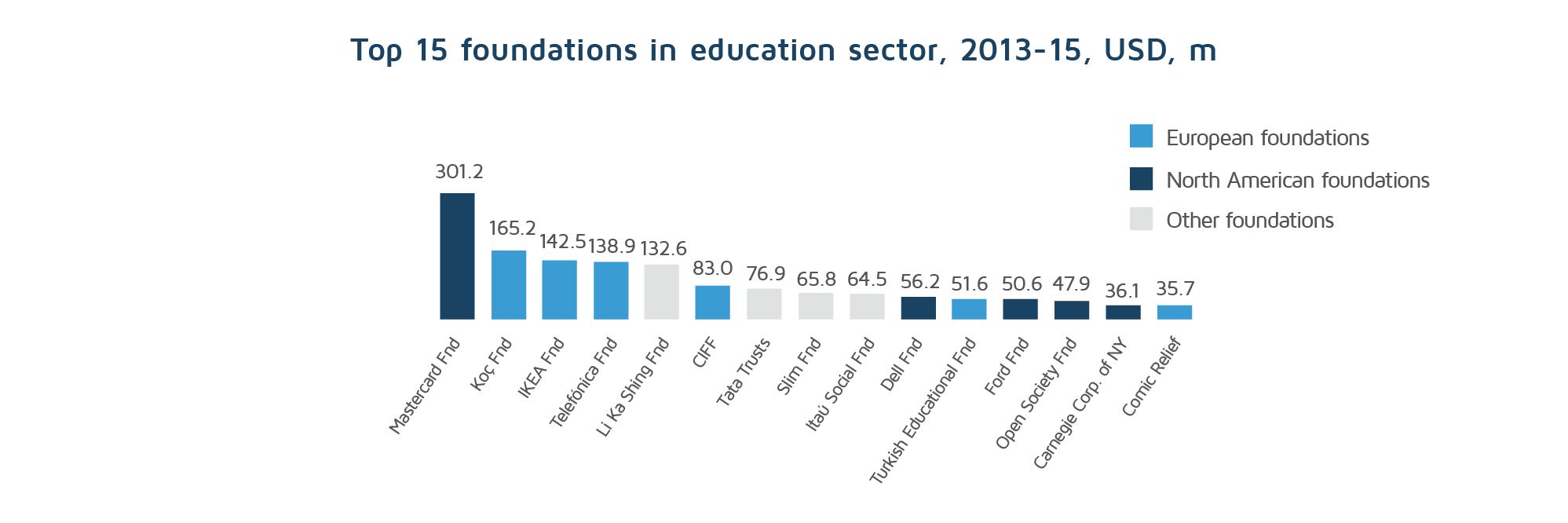
Source: (OECD) Private Philanthropy for Development
You can review open tenders of the Bill and Melinda Gates Foundation on the DevelopmentAid website, as well as insider data regarding the Foundation’s tender activity on the DevelopmentAid platform. You can also review existing job postings from the Wellcome Trust, the Children’s Investment Fund Foundation, the Oak Foundation and the Ford Foundation.