
Add us as your preferred source on Google to see more of our content in Search.
 Add to Preferred Sources
COVID-19 continues to disrupt the health, public life, and livelihoods in Africa’s most populous country. As the disease continues to spread in northeast Nigeria, the International Organization for Migration (IOM) is extending its water, sanitation, and hygiene (WASH) operations to reduce the spread of the virus.
A new IOM project will help prevent and control COVID-19 infections in three areas in Borno State with high concentrations of displaced persons; areas also deemed high-risk for disease spread.
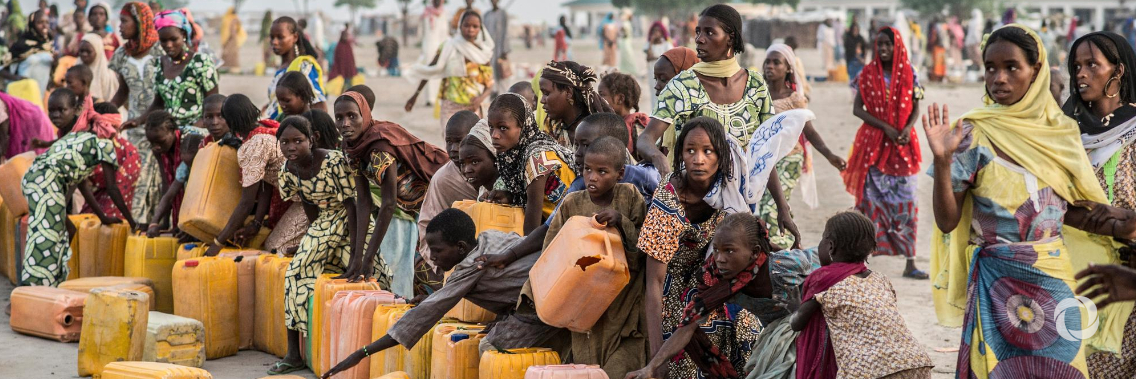
In Borno, the largest state in the region, about 80 percent of the estimated 840,000 internally displaced persons (IDPs) live in makeshift and temporary shelters in overcrowded conditions where physical distancing is difficult, if not impossible.
Moreover, despite the pandemic, attacks by non-state armed groups in the north-east are ongoing, including in areas close to humanitarian operations.
“Without the availability of sanitation facilities and hygiene materials, IDPs are extremely vulnerable to disease transmission,” said Teshager Tefera, IOM Nigeria WASH Programme Manager. “Our teams continue working alongside displaced communities to bring clean water to camps and nearby settlements, but more needs to be done.”
Services will reach an estimated 420,000 IDPs in 120 camps and nearby communities in Maiduguri, Konduga, and Damasak municipalities in Borno State. The project will supply clean and safe water, as well as 22,000 hygiene kits with soap, buckets, and other items, to populations at risk.
On average, IOM supplies two million liters of water per day to 113,500 people in Borno where torrential rains and flooding have caused substantial damage to latrines, showers, handwashing stations, and solar panels. The funding will allow IOM to train and mobilize displaced communities to repair and maintain these facilities and construct an additional 1,040 handwashing points using foot-operated water taps and soap dispensers to avoid contact with surfaces.
To complement these activities, IOM field workers are training local camp residents on risk communication and community engagement, reaching close to 20,000 people through door-to-door awareness-raising.
The USD 6.22 million project Strengthening COVID-19 Preparedness and Response in North-east Nigeria Through Targeted Water, Sanitation, and Hygiene (WASH) Activities, funded by the Office of U.S. Foreign Disaster Assistance (OFDA), will be implemented over a twelve-month period.
Original source: IOM
Published on 17 July 2020