
Hundreds of millions of family farmers in Asia-Pacific need help to ensure food security in the face of pandemic
Add us as your preferred source on Google to see more of our content in Search.
 Add to Preferred Sources
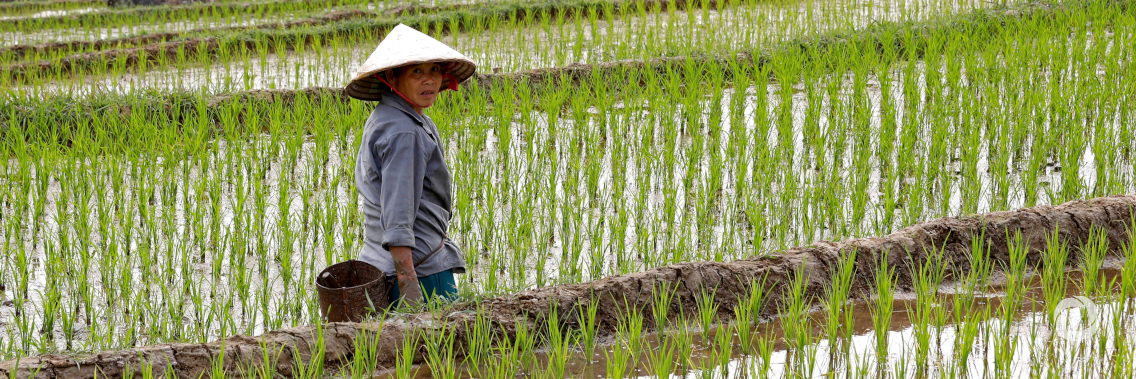
Asia-Pacific’s smallholder family farmers produce most of the world’s food, yet they are facing a disproportionate impact on their livelihoods and food security due to the present coronavirus pandemic, a collaboration of FAO and advocacy groups warned.
The COVID-19 impact on the region’s rural communities, and particularly those in developing countries, has resulted in economic slowdown and stagnation. The pandemic has exposed vulnerabilities and inequalities within and among countries. Food, trade, health, and climate are interdependent and the pandemic has revealed the fragility of these linkages.
Family farmers are experiencing a weakening in their purchasing power, increasing amounts of food loss, falling prices, and other disturbances caused mainly by the disruption of food chains. With low average incomes, even before the pandemic, smallholder family farmers are now enduring worsening conditions. Nevertheless, they continue risking their own health, while playing their fundamental role in feeding us all.
The pandemic has threatened worsening poverty, food insecurity, gender inequality, and progress toward other Sustainable Development Goals. In Asia, home to 350 million undernourished people, more than any other region, the pandemic threatens to undo decades of gains in reducing poverty and ending hunger.
The pandemic struck the world at a time when steps were being taken to raise awareness of family farming’s importance to global food security. Indeed, 2019 – 2028 has been proclaimed as the UN Decade of Family Farming (UNDFF), and a Global Action Plan was launched to raise visibility.
Here in the Asia-Pacific region, the Food and Agriculture Organization of the United Nations (FAO) launched a regional awareness campaign. Its main aim is to create a better understanding of the important role family farmers’ play in building a resilient food secure region, one that can provide nutritious food for its people. By extension, family farming also relates to fisher folks, herders, and people relying on forests for their food and livelihoods.
Globally, there are some 500 million family farmers. In the Asia-Pacific region, smallholder farmers own and operate the vast majority of farmland, but representing less than five hectares per farm.
Less than 25 percent of what they produce is consumed by their own families, with the remaining 75 percent sold on to markets. This means a large number of farmers produce a surplus for sale, contributing to national and even global food security. Indeed, family farmers produce more than 80 percent of the world’s food.
“This campaign to advocate for Asia-Pacific’s family farmers, fishers, herders, and others is needed now more than ever,” said Allan Dow, FAO’s Asia-Pacific Communication Officer. “Safeguarding the food security and livelihoods of the most vulnerable people in our vast region is an absolute priority – and with the added impact of this global pandemic a call to action must be loud and clear.”
FAO has created a family farming knowledge platform, with an extensive amount of information materials. Through this knowledge platform, the partners in this campaign will also reach out to various stakeholders including members and development partners.
Original source: FAO
Published on 29 July 2020