
Add us as your preferred source on Google to see more of our content in Search.
 Add to Preferred Sources
For the first time in the ILO’s history, an International Labour Convention has been ratified by all Member States.
Convention No. 182 on the Worst Forms of Child Labour achieved universal ratification, following ratification by the Kingdom of Tonga.
Ambassador for the Kingdom of Tonga, Titilupe Fanetupouvava’u Tuivakano, formally deposited the ratification instruments with ILO Director-General, Guy Ryder on 4 August 2020.
The Convention is the most rapidly ratified Convention in the history of the Organization, since its adoption 21 years ago by the International Labour Conference.
“Universal ratification of Convention 182 is a historic first that means that all children now have legal protection against the worst forms of child labour,” said ILO Director-General Guy Ryder. “It reflects a global commitment that the worst forms of child labour, such as slavery, sexual exploitation, the use of children in armed conflict or other illicit or hazardous work that compromises children’s health, morals or psychological wellbeing, have no place in our society.”
This universal ratification is a further step towards making more concrete the aspirations of Kailash Satyarthi, Nobel Peace Prize laureate when he said: “I dream of a world full of safe children and safe childhoods; …I dream of a world where every child enjoys the freedom to be a child.”
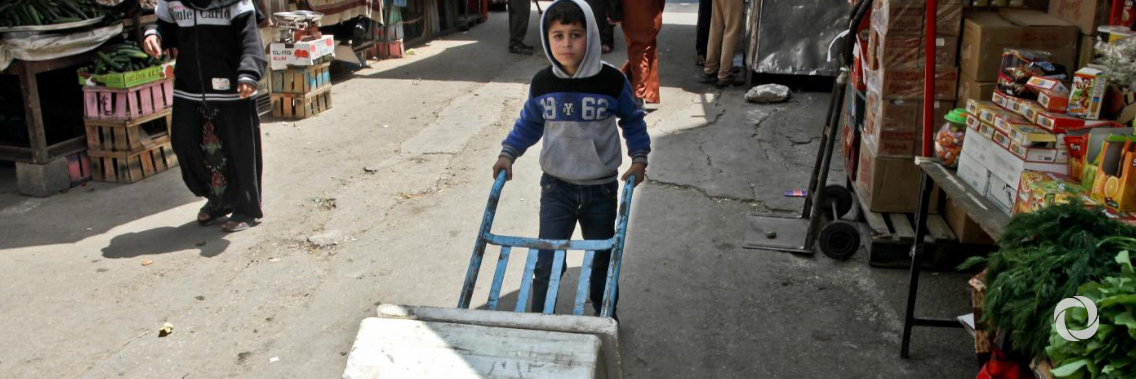
The ILO estimates that there are 152 million children in child labour, 73 million of whom are in hazardous work. Seventy percent of all child labour takes place in agriculture and is mostly related to poverty and parents’ difficulties finding decent work.
Convention No. 182 calls for the prohibition and elimination of the worst forms of child labour, including slavery, forced labour, and trafficking. It prohibits the use of children in armed conflict, prostitution, pornography and illicit activities such as drug trafficking, and in hazardous work.
The incidence of child labour and its worst forms dropped by almost 40 percent between 2000 and 2016, as ratification rates of Convention No. 182 and Convention No. 138 (on the minimum age to work) increased, and countries adopted effective laws and policies.
However, progress has slowed in recent years, particularly amongst the youngest age group (5-11 years) and in some geographical areas. With the COVID-19 pandemic, there is a real risk that years of progress will be reversed, leading to a potential increase in child labour for the first time in 20 years unless appropriate action is taken.
This landmark achievement comes just months before the start of the International Year for the Elimination of Child Labour in 2021, to be led by the ILO in collaboration with partners. Its aim is to raise awareness of the issue and to help accelerate the pace of progress.
Original source: ILO
Published on 4 August 2020