

Add us as your preferred source on Google to see more of our content in Search.
 Add to Preferred Sources
(August 6 – 21, 2020)
While “supply nationalism” has exacerbated the pandemic and contributed to the failure of the global supply chain, the World Health Organization (WHO) has emphasized the need for global solidarity to address the COVID-19 crisis. The head of the WHO, Dr. Tedros Adhanom Ghebreyesus, has also warned against another rising concern – “vaccine nationalism”, with nine vaccine candidates in the COVAX portfolio currently advancing through Phase 2 or 3 clinical trials.
Dr. Tedros has urged nations to join the COVAX Global Vaccines Facility, a mechanism aimed at guaranteeing fair access to all countries, rich or poor, for effective immunization programs. So far, countries representing 70% of the global population have registered for COVAX initiative or have expressed interest in being part of it.
The WHO hopes that the lessons learned during the “supply nationalism” situation will be used to address problems during the eventual distribution of COVID-19 vaccines and medicines, once these have been developed and approved.
“As new diagnostics, medicines and vaccines come through the pipeline, it’s critical that countries don’t repeat the same mistakes,” he said, adding that “we need to prevent vaccine nationalism.”
In this context, SII, the world’s largest vaccine manufacturer by volume, Gavi and the Bill & Melinda Gates Foundation have announced an acceleration in the manufacture and delivery of up to 100 million doses of COVID-19 vaccines for low- and middle-income countries (LMICs) as part of the Gavi COVAX AMC, a mechanism within the COVAX Facility.
As soon as a vaccine gains regulatory approval and WHO prequalification, doses can be produced at scale for distribution to poor countries as early as the first half of 2021.
COVID-19 vaccine – a high-risk investment
Since investing in a COVID-19 vaccine is a high-risk decision for vaccine developers because of the high cost and high failure rate involved, some international donors are utilizing different instruments in their search for a COVID-19 vaccine.
On the European continent, the European Commission is using advance purchase agreements to finance part of the upfront costs faced by vaccine producers. The European body is doing so in return for the right to buy a specified number of vaccine doses within a pre-agreed given timeframe.
According to the institution, this is one of the instruments intended to “accelerate the development, manufacturing and deployment of effective and safe vaccines against COVID-19.”
The funds provided will be considered as a down payment for the vaccines that will eventually be purchased by EU Member States.
Non-COVID patients under pressure due to supply chain failure
For many non-COVID patients, access to much-needed medicines is also a growing concern.
Governments are responsible for providing their populations with affordable and timely medical care and the International Narcotics Control Board (INCB), the World Health Organization (WHO) and the United Nations Office on Drugs and Crime (UNODC) have called on governments to ensure that the procurement of controlled medicines meets the needs of patients.
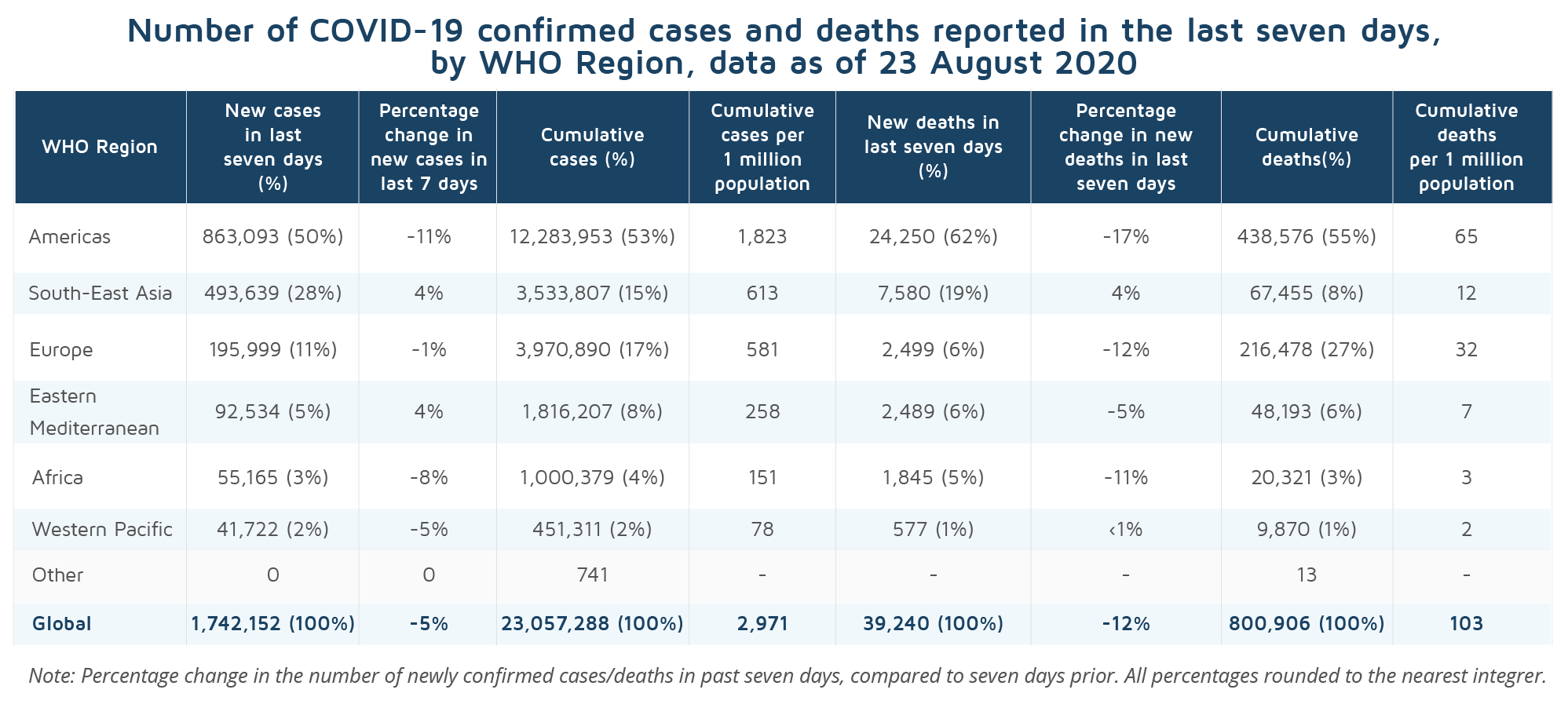
In the Americas, where the COVID-19 pandemic has caused the deaths of over 400,000 people, regional plans to eliminate and control infectious diseases including tuberculosis, HIV, hepatitis and others are under threat.
With 100,000 new cases being reported every day, “countries can’t delay the fight against COVID-19, but we must not let COVID-19 delay us in completing our unfinished agenda of eliminating and controlling infectious diseases from our region,” said PAHO Director Carissa F. Etienne during a press briefing.
That being said, challenges in delivering TB treatments during the pandemic have been reported by 80% of countries in Latin America and the Caribbean. This could turn previously manageable cases of tuberculosis into active infections. HIV-positive people are also in danger – 30% of patients with HIV are avoiding seeking care while antiretroviral medications remain in limited supply. One third of the countries from the region have reported disruptions in hepatitis screenings which are key for the detection and treatment of the disease, concluded the PAHO spokesperson.
Education put on hold provokes anxiety and depression
Despite it being every child’s dream to have a prolonged vacation, the harsh reality of schools and universities being closed is having a devastating effect on young people.
According to the report, ‘Youth and COVID-19: impacts on jobs, education, rights and mental well-being’, released by the International Labor Organization, 65% of young people have said they have learned less since the beginning of the pandemic. The main reason for this was the transition from classroom to online and distance learning during lockdown. Despite their efforts to continue studying and training, half of the students believed their studies would be delayed and 9% thought that they might fail to make the grade.
The situation was even worse for the youth of lower-income countries since limited access to the internet, a lack of equipment and sometimes a lack of space at home added to their struggles and unease.
Since the beginning of the pandemic, over 70% of youth who study or combine study with work have been adversely affected by the closing of schools, universities and training centres, according to the ILO report which also found that an alarming 50% of young people may be subject to anxiety or depression with a further 17% probably being affected by this.
And the younger generation is not alone in suffering from depression.
The coronavirus pandemic has caused a mental health crisis in Latin America and the Caribbean. Health workers face burn-out because of working longer hours than ever before and risking their lives as hospitals struggle to maintain sufficient Personal Protective Equipment.
Patients who have tested positive for COVID-19 also experience insomnia, delirium or even depression.
Pan American Health Organization Director, Carissa F. Etienne, said that many people are overwhelmed by fear of developing severe illness while others are understandably worried for their lives.
“The COVID-19 pandemic has caused a mental health crisis in our region at a scale we’ve never seen before. It’s a perfect storm in every country, as we see growing needs and reduced resources to address them. It is urgent that mental health support is considered a critical component of the pandemic response.”
She added that the most effective steps to address the rising problem in the health sector are to hire and train more health workers and integrate mental health and psychosocial support within primary healthcare systems so that this is easily accessible to those who need it most.
About COVID-2019

Coronaviruses are a large family of viruses that are common in many different species of animals including camels, cattle, cats and bats. Rarely, animal coronaviruses can infect people and then spread between them such as was the case with MERS (2012) and SARS (2003).The symptoms of the virus are very similar to those of a common cold – runny nose, headache, cough, sore throat, fever, a general feeling of being unwell. Blood tests are necessary in order to prove the presence of the virus in the organism.

Named by scientists as the “Wuhan seafood market pneumonia virus”,  COVID-19 is a coronavirus, like MERS and SARs, all of which have their origins in bats. Initial reports show that, in the early stages of the outbreak (early January 2020), many of those infected in Wuhan had some link to a large seafood and live animal market – the Huanan Seafood Wholesale Market, mainly its western wing where wildlife animals are traded. This suggests that the virus initially affected an animal and subsequently spread to a person in a what a CDC has called “the species barrier jump”.