
Add us as your preferred source on Google to see more of our content in Search.
 Add to Preferred Sources
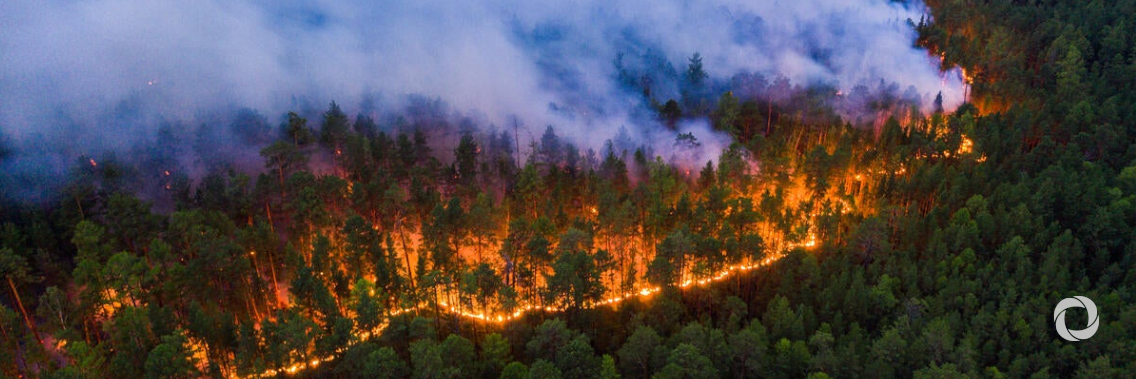
Summer wildfires in the Arctic exceeded last year’s records for CO2 emissions, according to scientists from the Copernicus Atmosphere Monitoring Service (CAMS). The wildfires that raged across the Arctic Circle also saw smoke plumes covering the equivalent of more than a third of Canada, scientists say.
Using data from the CAMS Global Fire Assimilation System (GFAS), scientists have estimated that this year’s CO2 emissions from the Arctic Circle fires have increased by just over a third compared with 2019. From 1st January to 31st August 2020, the estimated CO2 emissions for the region were 244 megatonnes, compared to 181 megatonnes for the whole of 2019.
Most of the increased wildfire activity has been seen in Russia’s Sakha Republic, decimating millions of acres of land and creating a large spike in CO2 emissions from 208 megatonnes in 2019 to 395 megatonnes in 2020. While the ignition sources are uncertain and difficult to pin down, some fires early in the season are thought to have been caused by so-called ‘zombie fires’ which may have been smouldering underground during the winter months.
“The IPCC’s Special Report on Oceans and the Cryosphere makes clear the level of emergency we are facing. And the lack of bold and immediate action is the cause of this emergency. We need a cohesive global response to limit the worst impacts of climate change and to help improve public health and protect the places we live. Current commitments by governments to fight climate change are completely inadequate, and could lead to an Arctic that is 10˚C warmer than it is today. That’s why we are calling on governments to present ambitious national climate plans and emissions targets to the UN, this year, in line with the Paris Agreement,” said Manuel Pulgar-Vidal, Global Lead for Climate & Energy at WWF.
According to the CAMS Global Fire Assimilation System (GFAS) data, while the peak of the Arctic fire season was in July and early August, the Sakha Republic and Chukotka still experienced above-average daily total wildfire intensity in August. Between June and August, the fires in the Eastern Federal District of Russia emitted a total of approximately 540 megatonnes of CO2, which surpasses the previous highest total emissions, for the year 2003, in the GFAS dataset.
Original source: WWF