
Add us as your preferred source on Google to see more of our content in Search.
 Add to Preferred Sources
Unless countries act now, the COVID-19 pandemic could erase recent “fragile progress” towards gender equality, the UN Secretary-General warned urging governments to put women at the centre of recovery and response.
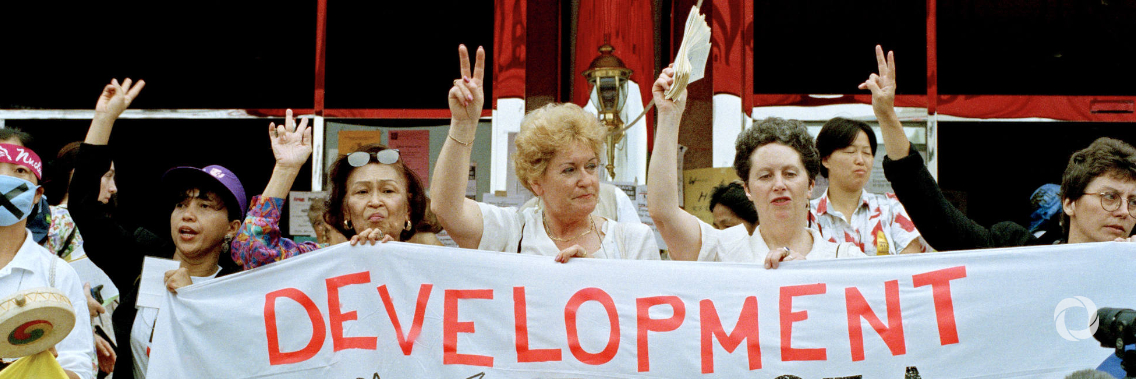
António Guterres issued the charge in a speech to a UN General Assembly high-level meeting to commemorate the 25th anniversary of the landmark Fourth World Conference on Women held in Beijing, China.
The Beijing Conference, as it is known, marked a significant turning point on the global agenda, making it clear that women’s rights are at the heart of equality and justice around the world.
But as the UN chief told the gathering, the Conference was also a “wake-up call” as these rights are still being denied, hindered, and ignored everywhere.
“COVID-19 has emphasized and exploited the continued denial of women’s rights. Women and girls are bearing the brunt of the massive social and economic impact of the pandemic,” he said, speaking from the rostrum in the General Assembly Hall.
“Twenty-five years after Beijing, we are facing a women-led recession as women employed in the informal economy are first to lose their jobs,” Mr. Guterres continued, outlining the aftershocks of the pandemic. These include a “shadow pandemic” of gender-based violence and an increase in early marriage and other abusive and repressive practices affecting women and girls.
“Unless we act now, COVID-19 could wipe out a generation of fragile progress towards gender equality,” he stated.
While the pandemic has demonstrated the need for a strong push to meet what the UN chief called “the unfulfilled promise of Beijing”, it is also an opportunity for transformative thinking that puts women at the front and centre of response and recovery.
“Stimulus funds should put money directly into women’s hands through cash transfers and credits. Governments should expand social safety nets to women in the informal economy, and recognize the value of unpaid care work,” he advised.
The Beijing Conference concluded with a groundbreaking Platform for Action, with commitments covering 12 areas of concern, such as power and decision-making, poverty, violence against women, education, human rights and discrimination against girls.
Since Beijing, major advances have been made in the global fight for gender equality, as various UN agencies have documented. In 1995, there were 12 women Heads of State and Government worldwide. Today, there are 22. Maternal mortality has dropped by nearly 40 percent during this period, more girls are now in school, and women are increasingly involved in peace processes.
However, this progress is not enough; plus, it has been slow, according to the Executive Director of UN Women, which supports countries in achieving gender equality and the empowerment of women.
Phumzile Mlambo-Ngcuka emphasized the need for women’s leadership, including young women, in efforts to build back better after the pandemic.
“Women and the people of the world are demanding these changes”, she said in a pre-recorded statement.
“It’s time to bring an end to discriminatory laws, norms and homophobia, to end men’s violence against women and girls, and make a concerted effort to put women at the heart of climate justice. “
Given the SDG context, there is no longer any excuse for gender imbalances, according to Ms. Mlambo-Ngcuka.
Original source: UN News