
World leaders reignite the vision of the Beijing Platform for Action, the most transformative agenda for advancing gender equality
Add us as your preferred source on Google to see more of our content in Search.
 Add to Preferred Sources
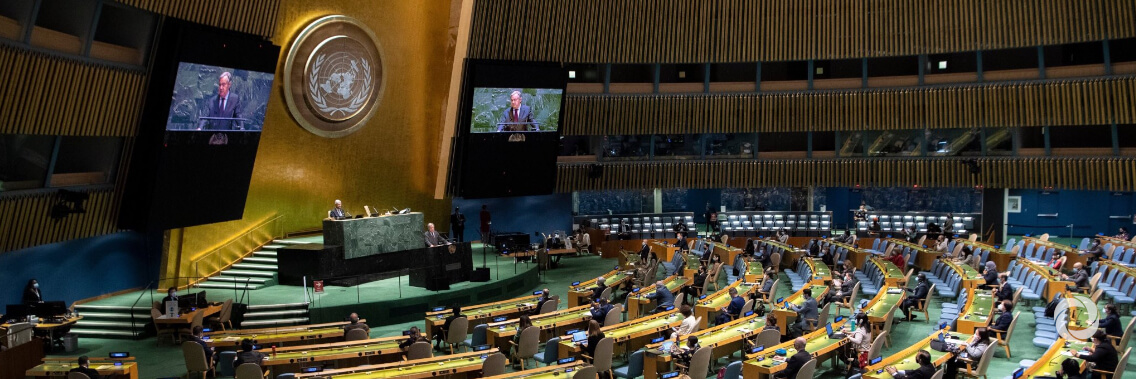
More than 100 countries committed to concrete actions that would advance gender equality for women and girls everywhere at a virtual high-level meeting during the UN General Assembly.
This gathering – under the theme “Accelerating the realization of gender equality and the empowerment of all women and girls” – marked the 25th anniversary of the Beijing Declaration and Platform for Action – the most comprehensive roadmap for women and girls’ empowerment.
The Beijing Declaration and Platform of Action is a strong call to action for the removal of systematic and structural barriers that prevent women and girls from enjoying their human rights across social, economic, political, and environmental domains, and sets out a comprehensive catalogue of policy actions to achieve the vision. However, 25 years after its adoption, global leaders recognized that the redistribution of power and resources between women and men in the public and private spheres, which is inextricably tied in with the broader goals of achieving equality for all, has not been achieved. Overall, the progress made falls far short of what States committed themselves to in 1995.
The far-reaching social and economic impacts of the COVID-19 pandemic are disproportionately affecting women around the world, from a significant rise in violence against women, including domestic violence, to women’s disadvantage in labour markets, carrying the bulk of unpaid care and domestic work and an estimated increase of 9.1 percent of the poverty rate for women. It is estimated that due to the pandemic, in 2021, 47 million additional women and girls will be pushed into extreme poverty, bringing the total to 435 million. The consequences of the pandemic threaten to undo decades of progress and many of the hard-won advances.
During the event, leaders recommitted to turn the Beijing Declaration and Platform for Action into a lived reality for all women and girls. Towards this end, they will accelerate action towards achieving Sustainable Development Goal 5 on gender equality. They will also work for further implementation of Security Council resolution 1325 on women and peace and security; the Convention on the Elimination of All Forms of Discrimination against Women, the Maputo Protocol, the Istanbul Convention, and other instruments and treaties. Participants in the Action Coalitions of the Generation Equality Forum will take concrete steps for realizing measurable results.
Work done so far across a broad range of areas is now a stepping stone for further progress. Actions will be taken to tackle all forms of violence against all women and girls, to mitigate the impact of climate change and achieve gender parity in public and political life, including in parliaments and in countries and societies around the world. This will include implementation of social protection measures, wage subsidies and care services to counter the gender-specific impacts of the COVID-19 pandemic, enhancing land ownership/rights, equal pay measures, and support for women in the informal economy and women entrepreneurs. Enhanced collaboration with civil society to create safe spaces for women and girls to exercise their voice and leadership and ensure enjoyment of their human rights is also needed.
While the current COVID-19 pandemic created new challenges, leaders committed to seizing the opportunity for transformative change, keeping focused on closing the gender digital divide to ensure that women and girls can contribute to, and benefit from technology and innovation.
UN Women called for actions to change the course of history for women and girls, through bold leadership, unwavering political will, and urgent investment, especially in women’s organizations, women’s ministries, and agencies and with young feminists leading change.
Original source: UN Women