
Add us as your preferred source on Google to see more of our content in Search.
 Add to Preferred Sources
From Ostrów Wielkopolski (72 000 inhabitants) to Warsaw (1.78 million people), cities of all sizes in Poland are turning to the European Investment Bank (EIB) to secure affordable funding for development projects that are green and socially inclusive.
Eleven operations with a combined total of more than PLN2 billion (equivalent to approximately €500 million) have been signed since January with ten Polish cities across the country. One of them was backed by a guarantee from the European Fund for Strategic Investments (EFSI), the financial pillar of the Investment Plan for Europe.
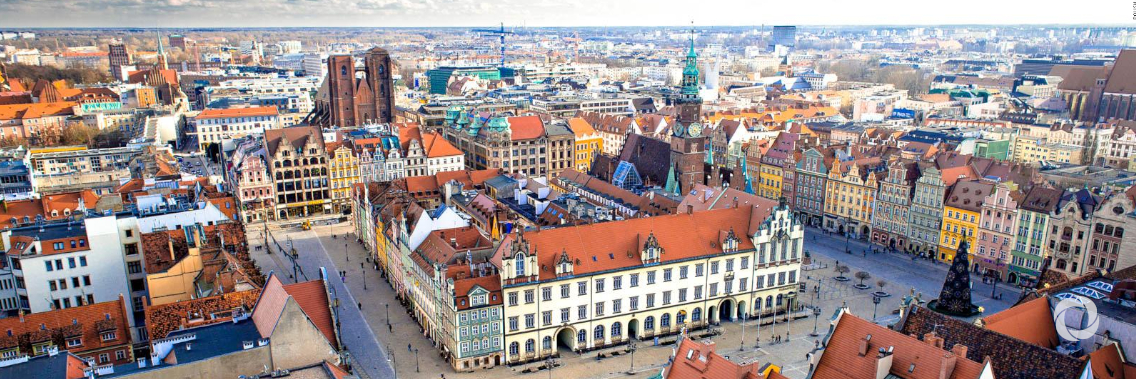
Loans were signed with the municipalities of Szczecin (PLN469 million), Poznan (PLN100 million), Wroclaw (PLN200 million), Rybnik (PLN53 million), Plock (PLN90 million), Sosnowiec (PLN50 million), Ostrów Wielkopolski (PLN110 million), Gorzow Wielkopolski (PLN157 million), Opole (PLN75 million), as well as a PLN655 million loan for the extension of the metro line in Warsaw. A PLN85 million EFSI-backed loan with two municipal affordable housing companies in Szczecin was signed on 15 September. These ten cities have a combined total of approximately 4.14 million people or more than 10% of the country’s population.
More transactions between the EIB and Polish cities are expected in the coming months, as the response to the COVID-19 pandemic adds an important element to the infrastructure modernisation plans for Poland’s urban centres.
“Since the first loan to Katowice more than 20 years ago, the European Investment Bank has been supporting around 30 Polish cities in their development and regeneration plans,” said EIB Vice-President Prof. Teresa Czerwińska, who oversees operations in Poland. “Urban investments not only make cities more inclusive but can be good for the environment and for the climate by promoting cleaner public transport, energy-saving heating systems and efficient wastewater management. For the EIB, cohesion and climate action are interdependent goals and we want Polish cities to be fully part of Europe’s green recovery.”
EIB loans support a variety of urban development projects, from the regeneration of deprived neighbourhoods and post-industrial areas to “smart city” solutions, connectivity, and affordable housing. Financing for sustainable transport, including electric buses, tramways, and modern rolling stock depots is increasing. Besides traditional urban projects, the EIB is also discussing with several municipalities the extension of financial support for the healthcare and civil protection sectors during the ongoing COVID-19 pandemic by including them in the scope of existing municipal framework loans.
Original source: EIB