
Add us as your preferred source on Google to see more of our content in Search.
 Add to Preferred Sources
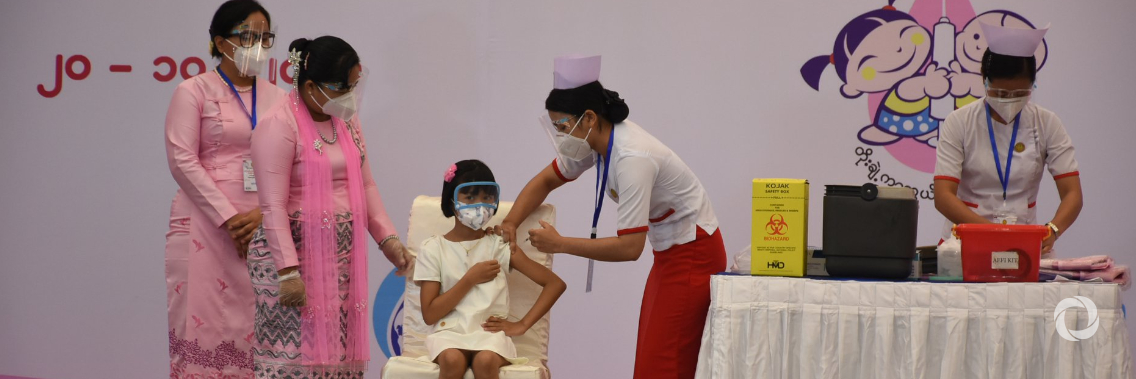
Around 450,000 girls each year will be protected from the leading cause of cervical cancer following the introduction of the human papillomavirus (HPV) vaccine into Myanmar’s routine immunisation programme.
In putting in place the programme, Myanmar’s Union Minister for Health and Sports, H.E. Dr. Myint Htwe, outlined stringent COVID-19 safety measures at the launch ceremony in the nation’s capital including strict physical distancing and catch-up immunisations for the 73 stay-at-home townships that are currently under tighter COVID-19 restrictions.
Myanmar has the second-highest incidence of cervical cancer among Southeast Asian countries, amounting to 21 cases per 100,000 women. In 2018, 6,472 women were diagnosed with cervical cancer in Myanmar, of which 3,856 died.
“The introduction of the HPV vaccine into the national immunisation programme, which will be available to all regardless of race, religion, and ethnicity, is a huge investment for the government which will be beneficial to the country in the long term,” said State Counsellor H.E. Daw Aung San Suu Kyi. “The availability of effective vaccines will enhance public confidence and trustworthiness and consequently will also improve immunisation coverage of other vaccines.”
The vaccines, provided with financial support from Gavi, the Vaccine Alliance, will aim to reach all girls aged between 9-101 in two doses administered twelve months apart.
“The fact that the Government of Myanmar has been able to introduce this life-saving vaccine in the midst of a pandemic is a testament to the government’s commitment to improving public health,” said Thabani Maphosa, Gavi Managing Director for Country Programmes.
As of the end of 2019, Gavi has supported the immunisation of 4.8 million girls and helped 18 countries introduce HPV vaccines, including 8 countries in 2019 alone. Despite the COVID-19 pandemic, Gavi-eligible countries have continued prioritising this life-saving vaccine. Myanmar, Lao PDR, and Cameroon will have all introduced this vital vaccine in 2020.
Original source: Gavi