
Add us as your preferred source on Google to see more of our content in Search.
 Add to Preferred Sources
Agrifood systems cannot be transformed unless there is gender equality. That was the simple message underlying the launch of a new report by the Food and Agriculture Organization of the United Nations (FAO) and the African Union that puts the spotlight on women’s role in agrifood systems.
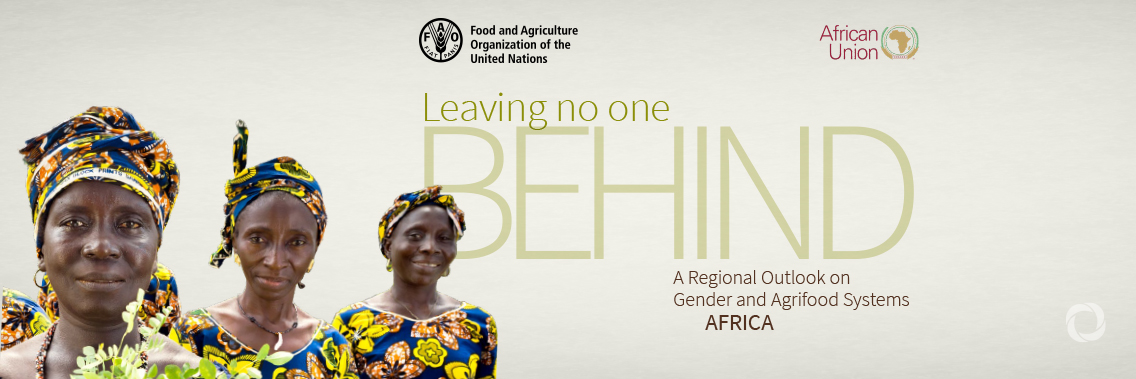
The report, Leaving no one behind: A Regional Outlook on Gender and Agrifood Systems, was launched by FAO Director-General QU Dongyu and African Union Commissioner for Rural Economy and Agriculture Josefa Sacko.
“Rural women are the pillars of our food systems and agents of change for food security and climate justice. But they’re also disproportionately affected by poverty, inequality, exclusion and the effects of climate change,” UN Deputy Secretary-General Amina Mohammed said by video message at the launch.
“This excellent report will make an important contribution to the (2021 UN) Food Systems Summit and to policies and strategies that empower rural women and girls in Africa,” she said.
“According to the findings of the report we are launching today, we must step up our efforts to create an enabling environment for rural women’s empowerment and entrepreneurship in the agri-food sector,” Director-General QU said. “I am confident that our joint efforts will pave the way for a more empowered future for rural women and girls in Africa.”
Based on a review of 40 country gender assessments of agriculture and rural livelihoods, the report provides an in-depth review of the challenges and best practices to empower women in priority areas of the Comprehensive Africa Agriculture Development Programme (CAADP) and the Malabo Declaration.
The report makes recommendations to promote gender equality and women’s empowerment to achieve the 2030 Sustainable Development Goals and the African Union’s Agenda 2063, including:
- Developing gender-sensitive and gender-targeted activities in food security, nutrition, and resilience.
- Scaling up female entrepreneurship and women’s empowerment in agribusiness.
- Ensuring public-private partnership is inclusive to women to enhance their participation in value chains.
In Africa, women are the backbone of their households, communities and rural economies, as food producers, processors, and marketers. They usually lead nutrition decisions for the family.
The dramatic effects of climate change coupled with the impacts of the COVID-19 pandemic mean women face multiple challenges. The number of people suffering from hunger is rising, and women are more likely than men to be food insecure.
Improving women’s status and harnessing their potential as “food heroes” will be critical to ending hunger in Africa, the report argues.
Read the report: Leaving no one behind: A Regional Outlook on Gender and Agrifood Systems.
Original source: FAO