
GEM report urges countries in Latin America and the Caribbean to promote inclusion in education in the face of COVID-19
Add us as your preferred source on Google to see more of our content in Search.
 Add to Preferred Sources
A new GEM Regional report in partnership with SUMMA shows that COVID-19 has increased education divides in Latin America and the Caribbean, which was already the most unequal region in the world before the pandemic began.
Although the report acknowledges the efforts made by countries to continue distance learning programmes, it points to the need to develop urgent measures to reach those left behind. Its recommendations show steps policymakers most prioritise in their response plans so that the education emergency does not turn into a disaster.
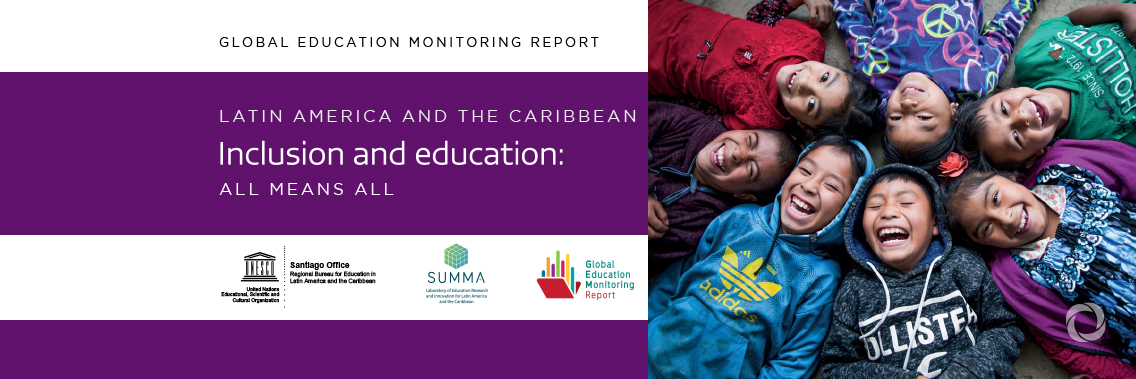
The Report, Todos y todas sin excepción, produced by the Global Education Monitoring (GEM) Report and the Regional Bureau for Education in Latin America and the Caribbean (OREALC /UNESCO Santiago), along with the Laboratory of Education, Research and Innovation in Latin America and the Caribbean (SUMMA) shows that, prior to the pandemic, in 21 countries, children from the richest households were five times as likely as the poorest to complete upper secondary school.
Learning outcomes were low before COVID-19. Only half of the 15-year-olds achieved minimum proficiency in reading. In Guatemala and Panama, barely 10 disadvantaged 15-year-old students master basic mathematics skills for every 100 of their better-off peers. Indigenous people and Afro-descendants also have lower attainment and literacy rates.
In grade 3, students who do not speak the language of the test are less likely to reach a minimum level of proficiency in reading. The probability of Afro-descendants completing secondary education was 14% lower than that of non-Afro-descendants in Peru and 24% lower in Uruguay in 2015. Adolescents with disabilities were on average 10 percentage points less likely to attend school than their peers.
The report includes a set of key recommendations for the next decade, which will help countries achieve the objectives of the 2030 Agenda and calls for schools to be more inclusive, which many still are not. A survey of 10% of schools in Jamaica showed only 24% had ramps and 11% had accessible bathrooms. Bullying urgently needs to be addressed: LGBTI youth in seven countries being heavily victimized were at least two times as likely to miss school.
Training teachers to teach inclusively is also critical. In Brazil, Colombia, and Mexico over half of teachers reported a high need for training on teaching students with special needs.
Curricula and textbooks must represent all groups are fairly, and respectfully. Textbooks in various countries tend to present indigenous peoples in stereotyped images and situations when they are represented at all. Educational support is often not provided in the home language, affecting children from indigenous communities, children and young people of Haitian origin who have migrated to Spanish or English-speaking countries, and children whose mother tongue is different from the official language of the school, as is typically the case in Caribbean countries. In Suriname, for example, only 4% of children in Sipaliwini district speak the language of instruction, Dutch, at home.
The Report has ten recommendations in total, backed up with evidence-based examples from across the region, and invites countries to take them into account in their plans for action in the decade for action until 2030 and to prevent education progress backsliding as a result of COVID-19.
Read the report: Todos y todas sin excepción.
Original source: UNESCO