
Add us as your preferred source on Google to see more of our content in Search.
 Add to Preferred Sources
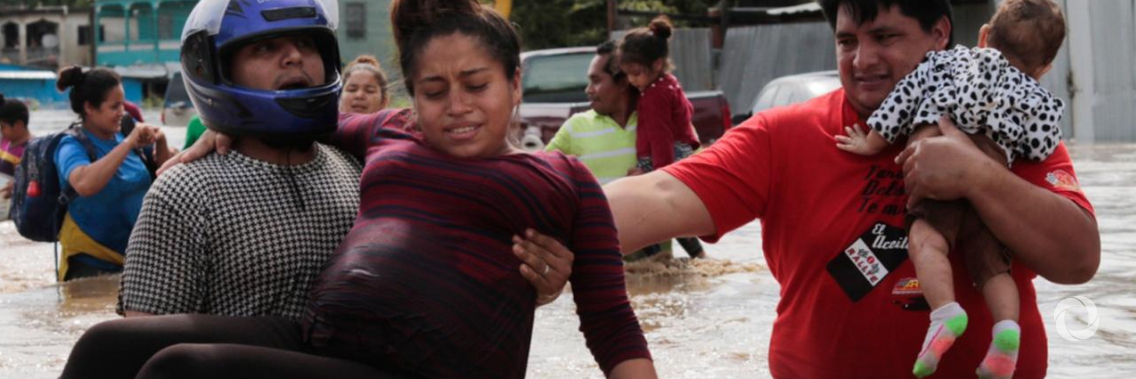
Women and girls in Honduras are at high risk in the aftermath of Hurricane Eta. More than 400,000 women have been directly affected by the widespread destruction and are now left without access to essential health services.
The storm has been wreaking havoc since 3 November, when it began to pummel parts of Central America as a Category 4 hurricane. By the time it moved into central Honduras, it had been downgraded to a tropical depression, but it continued to unleash deadly floods and landslides.
More than 1.6 million people throughout the country have been affected. Some 12,000 are now staying in shelters, a precarious situation due to the COVID-19 pandemic.
Today, nine out of 18 departments have been affected. There are an estimated 3.3 million women and children living in those affected departments; they now face disruptions to critical health services.
In the hard-hit department of Cortés, for instance, most health facilities have been closed due to damage, injuries among health personnel, and blocked roads.
Officials say the storm is also significantly affecting food security, livelihoods, and education across the region. Women and girls face the additional threat of gender-based violence; vulnerability to violence often increases in humanitarian settings.
UNFPA is joining the response effort, supporting a rapid needs assessment and working to restore access to sexual and reproductive health services. With funding from Canada, UNFPA is acquiring thousands of dignity kits, which contain information about how to receive assistance and hygiene supplies such as soap and sanitary napkins, to distribute to affected women and girls. UNFPA is also prioritizing efforts to prevent and respond to gender-based violence.
In addition to its storm response, UNFPA is continuing its response to the COVID-19 pandemic in Honduras. Since the start of the pandemic, UNFPA has provided infection-prevention supplies to nearly 7,000 front-line health workers and to 15,000 pregnant women and adolescents.
Original source: UNFPA