
Add us as your preferred source on Google to see more of our content in Search.
 Add to Preferred Sources
Approximately every minute and 40 seconds, a child or young person under the age of 20 was newly infected with HIV last year, bringing the total number of children living with HIV to 2.8 million, UNICEF said in a report.
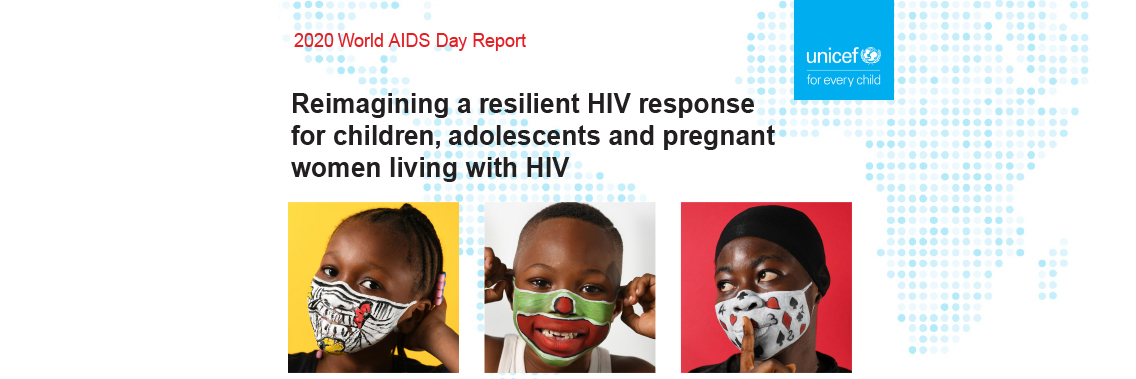
The report, Reimagining a resilient HIV response for children, adolescents and pregnant women living with HIV, warns that children are being left behind in the fight against HIV.
Prevention efforts and treatment for children remain some of the lowest amongst key affected populations. In 2019, a little more than half of children worldwide had access to life-saving treatment, significantly lagging behind coverage for both mothers (85 percent) and all adults living with HIV (62 percent). Nearly 110,000 children died of AIDS that year.
Despite some progress in the decades-long fight against HIV and AIDS, deep regional disparities persist among all populations, especially for children, the report says. Paediatric coverage of antiretroviral treatment is highest in the Middle East and North Africa, at 81 percent, followed by South Asia (76 percent), Eastern and Southern Africa (58 percent), East Asia and the Pacific (50 percent), Latin America and the Caribbean (46 percent) and West and Central Africa (32 percent).
“Even as the world struggles in the midst of an ongoing global pandemic, hundreds of thousands of children continue to suffer the ravages of the HIV epidemic,” said UNICEF Executive Director Henrietta Fore. “There is still no HIV vaccine. Children are still getting infected at alarming rates, and they are still dying from AIDS. This was even before COVID-19 interrupted vital HIV treatment and prevention services putting countless more lives at risk.”
The COVID-19 crisis has further exacerbated inequities in access to life-saving HIV services for children, adolescents, and pregnant mothers everywhere.
In a recent UNICEF survey of 29 HIV priority countries, one-third responded that service coverage for children, adolescents, and women living with and vulnerable to HIV is lower by 10 percent or more compared with pre-pandemic numbers.
UNAIDS’ HIV service disruption data, cited in the report, further illustrate the impact of necessary control measures, supply chain disruptions, lack of personal protective equipment, and the redeployment of healthcare workers on HIV services.
In the months of April and May, coinciding with partial and full lockdowns, paediatric HIV treatment and viral load testing in children in some countries declined between 50 to 70 percent, and new treatment initiation fell by 25 to 50 percent.
Similarly, health facility deliveries and maternal treatment were also reported to have reduced by 20 to 60 percent, maternal HIV testing and ART initiation declined by 25 to 50 percent, and infant testing services declined by approximately 10 percent.
Though the easing of control measures and the strategic targeting of children and pregnant mothers have successfully led to a rebound of services in recent months, challenges remain, and the world is still far from achieving the global 2020 paediatric HIV targets.
The report calls on all governments to protect, sustain, and accelerate progress in fighting childhood HIV by maintaining essential health services and strengthening health systems.
Read the report: Reimagining a resilient HIV response for children, adolescents, and pregnant women living with HIV.
Original source: UNICEF