
Add us as your preferred source on Google to see more of our content in Search.
 Add to Preferred Sources
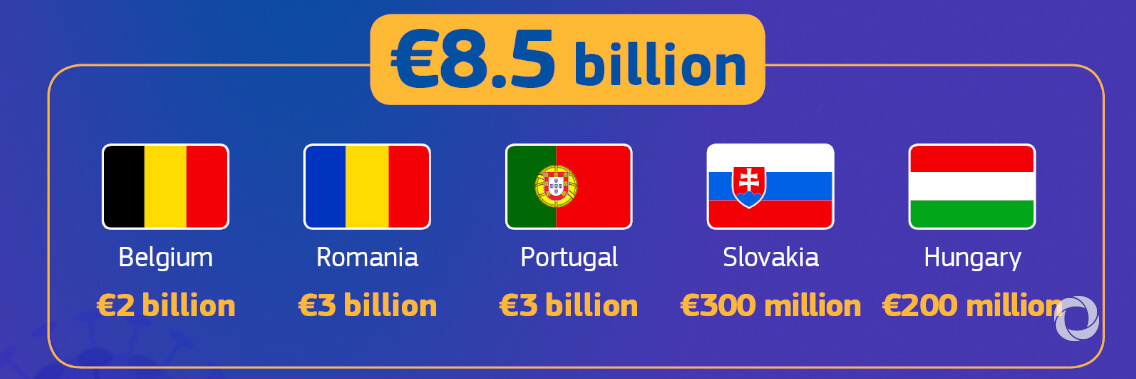
The European Commission has disbursed €8.5 billion in the third instalment of financial support to five Member States under the SURE instrument. As part of these operations, Belgium has received €2 billion, Hungary €200 million, Portugal €3 billion, Romania €3 billion, and Slovakia €300 million.
This support, in the form of loans granted on favourable terms, will assist these Member States in addressing sudden increases in public expenditure to preserve employment. Specifically, they will help cover the costs directly related to the financing of national short-time work schemes, and other similar measures they have put in place as a response to the coronavirus pandemic, including for the self-employed.
President Ursula von der Leyen said: “Our priority is to save people’s lives, and also their livelihoods. The EU is mobilising €100 billion in loans for EU countries to finance short-time work schemes. This will provide support to our companies and help keep people employed. Today, another five Member States are receiving funding via SURE, and 15 have benefitted so far. More countries will be able to benefit soon.”
With this disbursement, 15 Member States have received around €40 billion under the EU SURE instrument between the end of October and the end of November. Once all SURE disbursements have been completed, Belgium will have received €7.8 billion, Hungary €504 million, Portugal €5.9 billion, Romania €4.1 billion, and Slovakia €631 million.
The disbursement follows the third issuance of social bonds under the EU SURE instrument, which was over 13 times oversubscribed. This was translated into favourable pricing terms, meaning that Member States will receive more in loans than they will have to repay.
The SURE instrument can provide up to €100 billion in financial support to all Member States. The Commission has so far proposed to make €90.3 billion in financial support available to 18 Member States. The next disbursements will take place over the course of the months ahead, following the respective bond issuances.
Original source: European Commission