
Add us as your preferred source on Google to see more of our content in Search.
 Add to Preferred Sources
The World Meteorological Organization has strengthened its support to governments, the United Nations, and stakeholders in climate-sensitive sectors to mobilize preparations and minimize impacts of La Niña.
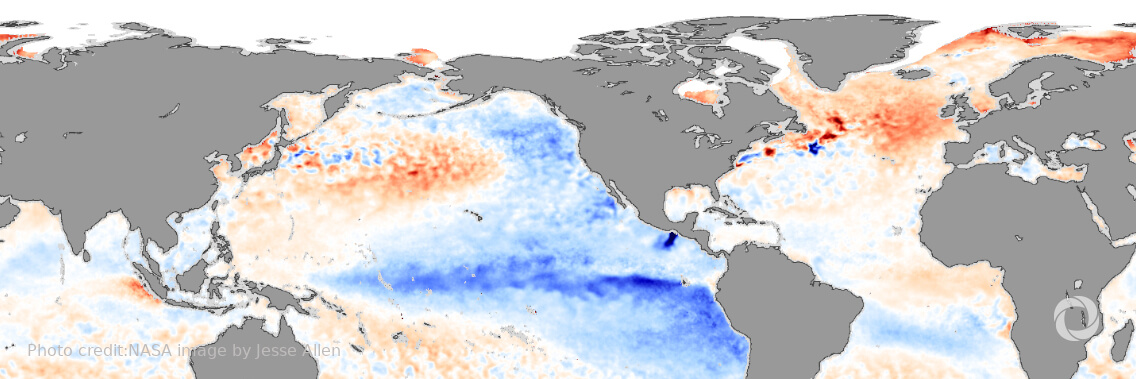
In October, WMO declared that La Niña has developed and is expected to last into next year, affecting temperatures, precipitation, and storm patterns in many parts of the world.
Since October, La Niña has continued to strengthen, as equatorial Pacific sea surface temperatures have cooled further. Many National Meteorological and Hydrological Services (NMHSs) have reported that ocean and atmospheric indicators now indicate that the La Niña event has matured and, according to most models, is expected to peak in intensity in either December or January. Thus, Australia’s Bureau of Meteorology says that model outlooks suggest that La Niña is approaching its peak, with a likely return to neutral conditions during the late southern hemisphere summer or early autumn. The latest update issued by NOAA Climate Prediction Center and the International Research Institute for Climate and Society advised of 95% probability of La Niña continuing through to March 2021.
Impacts on weather patterns
La Niña is just one of a range of climatic drivers which affect our weather. Other examples include the Indian Ocean Dipole, Madden-Julian Oscillation and Southern Annual Mode. Forecasting the expected impacts of La Niña can therefore be complex. The strength of a La Niña event alone also does not necessarily correlate with the scale of shifts in rainfall or temperatures. No two La Niña (or El Niño) events are ever the same.
Seasonal forecasts, which incorporate all climatic drivers including La Niña, are providing a fuller indication on what global and regional climate patterns are expected.
Impacts on society
To make sure that the true value of these forecasts is realised, it is important that the weather and climate community work with climate-sensitive sectors to translate this risk-based information into action. WMO Members are working with health, transport, energy, agriculture, and disaster risk management entities, to name just a few, to achieve this.
WMO has supported a number of regional La Niña briefings, organised by the UN Office for the Coordination of Humanitarian Affairs (OCHA) and the Food and Agriculture Organization in recent weeks. The briefings provided an opportunity to discuss the implications of the seasonal forecast and devise effective mitigation strategies.