
Add us as your preferred source on Google to see more of our content in Search.
 Add to Preferred Sources
The COVID-19 crisis could open the door for the kind of radical changes that are essential to safeguard our forests and help prevent the next pandemic by putting a stop to deforestation once and for all, according to WWF, whose new report reveals that an area roughly five times the size of the United Arab Emirates was lost to deforestation in just over a decade in the tropics and subtropics alone.
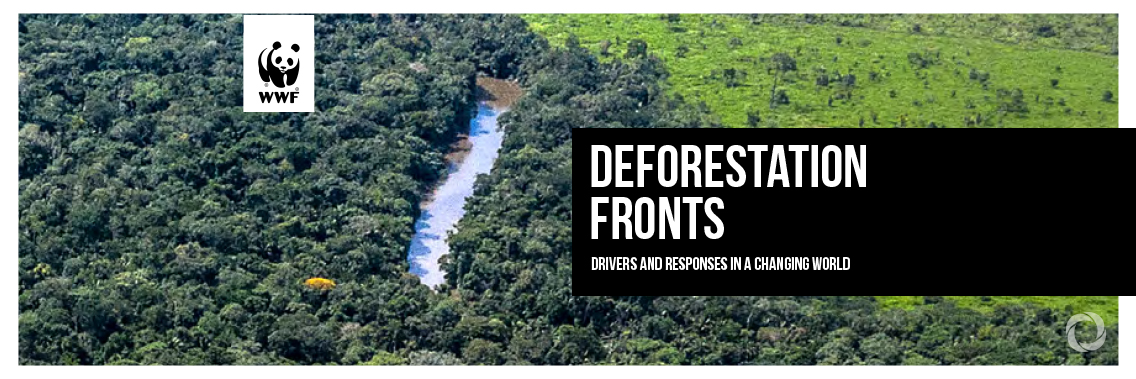
The Deforestation fronts: Drivers and responses in a changing world report, analysed 24 “deforestation fronts”, or hotspots, across 29 countries in Asia, Latin America, and Africa and found that more than 43 million hectares of forest were lost in these areas over a 13-year period. The report found that deforestation was taking place at the fastest rates in the following nine locations: the Brazilian Amazon and Cerrado, the Bolivian Amazon, Paraguay, Argentina, Madagascar, and Sumatra and Borneo in Indonesia and Malaysia.
“While the figures we’re sharing are alarming, the process of recovery from the COVID-19 pandemic may provide an opportunity for the kind of transformative changes that are essential to safeguard our forests – changes that have been identified as necessary for some time,” says Fran Raymond Price, Forest Practice Lead at WWF International.
Forests covered about half of the Earth’s land area 8,000 years ago, but today only 30% of land is forested, with deforestation continuing at shocking rates, particularly in places that are home to some of the world’s most vulnerable communities and endangered wildlife.
“We urgently need to change our relationship with nature. As governments create policies to address the economic and social impacts of the global pandemic, we must address over-consumption and put greater value on health and nature rather than the current overwhelming emphasis on economic growth and financial profits at all costs. This is in humanity’s best interests: the risk of new diseases emerging is higher in tropical forest regions that are experiencing land-use change, like many of the deforestation fronts, so if we don’t tackle deforestation while we can, we could miss out on our chance to help prevent the next pandemic.”
Commercial agriculture is the leading cause of deforestation globally, according to the report, particularly large-scale agriculture, with forested areas cleared to create space for livestock and to grow crops. Subsistence agriculture is a driver in some geographies, for example in Africa. In Asia, the main drivers are the expansion of plantations and commercial agriculture linked to global demand and domestic markets. Across all 24 fronts, infrastructure development, including the expansion of roads and mining operations, also contributes to deforestation.
In the Brazilian Cerrado, home to 5% of the planet’s animals and plants, land has been rapidly cleared for cattle and soy production, resulting in the loss of a third (32.8%) of its forest area between 2004 and 2017.
In the Cerrado and elsewhere, deforestation is a major factor leading to rising temperatures, which is why WWF wants combating deforestation to be recognised as a vital component of climate change mitigation.
The Deforestation Fronts report urges citizens everywhere to pay their part in combating deforestation by protecting nature where they live, avoiding products linked to deforestation such as certain meat, soy, and palm oil products by looking carefully at labels showing their provenance; and calling on their leaders to champion policies that halt deforestation and restore forests.
The report also calls for a number of urgent actions from governments, businesses and regulators, including:
- Securing the rights of indigenous peoples and local communities to their lands and territories and strengthening local control of forests.
- Securing the conservation of biodiversity-rich areas.
- Ensuring products sourced from forests are produced and traded legally and sustainably.
- Ensuring that companies’ supply chains are as sustainable as possible and encouraging more companies and financial institutions to commit to zero deforestation.
- Creating policies and legislation that ensure all imported forest commodities and products – and related finance – are free from deforestation and ecosystem conversion, and respect human rights.
The report tracked 24 deforestation fronts in the tropics and sub-tropics, covering an area of 710 million hectares, from 2004 to 2017. Nine of the 24 deforestation fronts are in Latin America, a region that has experienced a particularly dramatic decline in wildlife populations; eight are in Africa and seven in Asia-Pacific.
With world leaders scheduled to take critical decisions on the environment and climate this year, WWF is calling on them to secure a New Deal for Nature and People that sets nature on the path to recovery this decade, tackles climate change, and safeguards the future of humanity. Action to tackle the drivers of biodiversity loss, such as deforestation, is essential to securing a nature-positive world.