
Add us as your preferred source on Google to see more of our content in Search.
 Add to Preferred Sources
Without major step changes in urgency and ambition, governments negotiating a global ten-year biodiversity plan are risking another ‘lost decade for nature’, according to WWF, the global conservation organization.
The warning comes as countries get ready to restart talks on a post-2020 global biodiversity framework. Taking place under the auspices of the UN Convention on Biological Diversity, the negotiations represent a once-in-a-decade opportunity to secure a global biodiversity agreement similar to the Paris Agreement on climate change.
Human activities are currently destroying nature at a rate much faster than it can replenish itself. Since 1970, global wildlife populations have suffered an average two-thirds decline. Three-quarters of all land and two-thirds of the oceans have already been significantly altered by human actions. In October 2020, a UN report revealed that the world had failed to meet any of its previous decade-long biodiversity targets.
In WWF’s assessment, the current draft biodiversity plan is neither ambitious nor comprehensive enough to tackle our global nature crisis.
“Science has never been clearer. We are currently witnessing a catastrophic decline in our planet’s biodiversity. This isn’t new. It’s been accelerating for decades – with the world failing time and time again to act. We cannot afford another lost decade for biodiversity. Many ecosystems like coral reefs and tropical forests are heading towards tipping points and one million species are now threatened with extinction. Today we also know that nature loss is increasing our risk of pandemics, accelerating climate change, undermining food and water security, and placing livelihoods at risk. Now is the time when leaders must step up and deliver for people and the planet. We need them to secure an ambitious biodiversity agreement that resets our relationship with the natural world and delivers a nature-positive future,” said Marco Lambertini, Director General of WWF International.
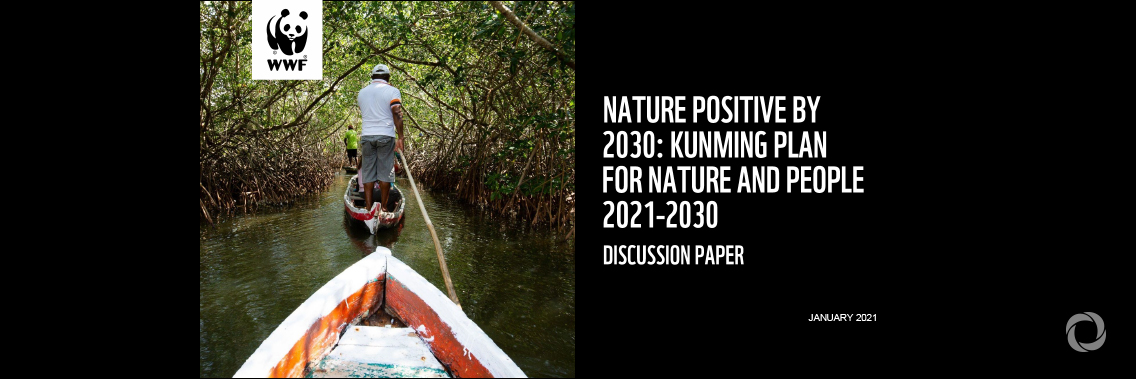
WWF published its proposals for a transformative, comprehensive, and measurable post-2020 global biodiversity framework. Titled The Kunming Plan for Nature and People, the discussion paper identifies the key actions needed to achieve a nature-positive world by 2030.
WWF is certain that a mission of halting and reversing the loss of biodiversity to achieve a nature-positive world by 2030 is both necessary and achievable. It is therefore critical that countries work to increase the level of ambition in the draft UN plan while ensuring that the drivers of nature loss, such as unsustainable agricultural practices and deforestation, are addressed. Efforts to conserve and protect land, freshwater, and marine habitats along with initiatives to protect and recover species must be complemented by a goal of cutting in half the impact of everything the world produces and consumes in the next decade.
To successfully reverse nature loss, WWF urges countries to adopt a whole-of-society approach that spurs all sectors of society and government into urgent and transformative action. It must be inclusive and include full recognition of the role and rights of Indigenous Peoples and Local Communities.
Ambitious goals and targets are only meaningful if they stimulate action and WWF further stresses the need for negotiations to produce a complete package that includes a robust implementation mechanism that holds countries accountable.
A related area of concern is finance. WWF believes progress on resource mobilization has been too slow and calls for it to be prioritized by all countries as soon as possible, with rich countries committing to support developing ones and ensure the costs of implementing the framework do not fall most heavily on their shoulders.
At the same time, the new biodiversity plan must address the negative impact of finance on our world’s natural resources, aligning financial flows with nature-positive practices and eliminating harmful incentives, including perverse subsidies. WWF calls on countries to make specific commitments on these issues to enable ambitious target setting in other essential elements of the framework, including direct conservation action and the transformation of productive sectors driving nature loss.
Negotiations on the draft biodiversity plan began in 2019. However, further talks were postponed due to the COVID-19 pandemic. The final negotiated plan is scheduled to be adopted in Kunming, China, later this year.
WWF welcomes the leadership shown by the more than 80 countries that have endorsed the Leaders’ Pledge for Nature, committing to reverse biodiversity loss by 2030 for sustainable development. WWF urges all countries to endorse the pledge and implement its commitments, including by delivering an ambitious and transformative post-2020 global biodiversity framework.