
EIB Group increases financing to €77 billion in 2020, combating the COVID-19 pandemic and the climate crisis
Add us as your preferred source on Google to see more of our content in Search.
 Add to Preferred Sources
In the year of the worst global health and economic crisis for generations, the European Investment Bank (EIB) Group rapidly redirected its business to fight the COVID-19 pandemic and its economic consequences on all fronts.
It increased financing volumes to €76.8 billion, exceeding its own targets. A third of these funds, €25.5 billion, went into the immediate crisis response that started with a first package in March. Most of it went to small and medium-sized businesses to avoid insolvencies and job losses, especially in countries that did not have the budgetary means for massive national rescue packages.
Reflecting the additional need for assistance caused by the COVID-19 pandemic, EIB Group support for small and medium-sized companies grew by €5 billion to €30.6 billion. In total, more than 425 000 companies profited from financing, sustaining more than 4.2 million jobs. The EU bank achieved this without neglecting its other investment priorities: environmental investment reached €16.8 billion, infrastructure projects were supported with €15 billion, and €14.4 billion went to innovation projects.
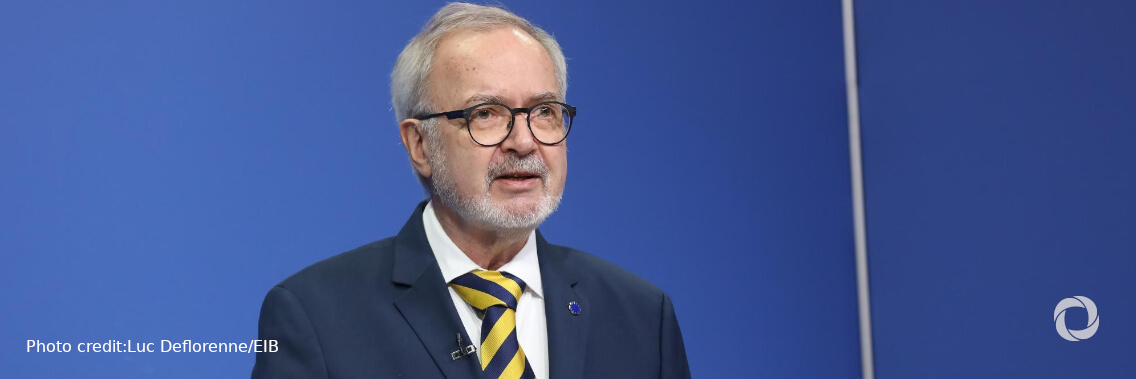
“We demonstrated in 2020 that there is no trade-off between investing in the economic recovery and investing in climate action and innovation. All our objectives are interlinked. Europe can only emerge stronger from this crisis by investing in the green and digital economy of the future and not in structures of the past – making sure it leaves no region in Europe behind and working with our partners outside of the European Union”, said EIB President Werner Hoyer at the EIB Group’s annual press conference on 20 January.
Crucial investment in the health sector
As part of the COVID-19 response, the EIB Group massively increased its financing for the health sector. It not only supported hospitals but also played a substantial role in the development and mass production of vaccines to stop the devastating virus. Early in the year, the EU bank quickly approved a €100 million loan to BioNTech, the German company that brought us the first COVID-19 vaccine in association with Pfizer. The Group financed a number of vaccines, but also companies that develop COVID therapies and testing technology.
“In the course of the year we dramatically increased and accelerated our involvement in fighting this devastating pandemic, helping thousands of companies in the European Union and across the world”, stated EIB President Werner Hoyer. “The fight against the pandemic and its economic consequences will keep us busy in 2021. On top of the €25 billion already provided, our Board has already approved close to another €25 billion of financing for ailing companies and the health sector.”
Progress on the road to the EU climate bank
At the same time, the EIB kept its promise to increase green investment and transform into the EU’s climate bank. The share of EIB investments that went to climate action and environmental sustainability projects rose from 34% to 40% last year, in spite of the COVID crisis, bringing the EU bank closer to its 50% target. The Group aims to mobilise €1 trillion in investment for the climate and the environment by the end of the decade. In November 2020 the EIB Board approved the Climate Bank Roadmap, which defines the way in which it will achieve these ambitious targets. The Roadmap provides for the phasing-out of financing for high-emission projects such as airport expansions and sets stringent criteria for the financing of others, such as motorways, after the Bank already announced an end to unabated gas projects.
“The fight against climate change cannot wait until the pandemic is over. The COVID crisis is not a reason to stop tackling the climate and environmental challenges facing humanity. The EIB Group has made great progress with its Climate Bank Roadmap. I call on the other financing institutions to take similar stands against environmentally unsustainable projects. Instead of financing assets we will have to write off tomorrow, we must invest in energy efficiency, renewable energy, sustainable mobility and green innovation. We need massive investment in a green recovery”, said President Hoyer.
Danger of a growing investment gap in Europe
A growing investment gap threatens Europe’s ambitions for a green recovery, the new EIB Investment Report shows. According to the report to be published on Thursday 21 January, 45% of EU companies expect to reduce their investment in the aftermath of the crisis, while only 6% expect to increase it. The report warns that companies are aware of an urgent need to invest, especially in digitalisation and climate action, but the COVID crisis deprives them of the means to do so.
Investing around the world to build resilience and combat climate change
The COVID-19 pandemic and the climate crisis are a twin challenge for the whole world, and this is why the EIB Group increased its efforts to support the EU neighbourhood, Africa, and other regions. 13% of last year’s financing – €10.2 billion – went into countries outside the EU, helping the European Union achieve its policy goals, improving people’s lives, modernising health systems, and building economic resilience. The EU bank achieved record lending in Africa, signing a volume of more than €4.7 billion, a 50% increase over the year before. We reached the target for SheInvest, our initiative to mobilise €1 billion in investment to boost gender equality and economically empower women across Africa.
“The EIB Group is concentrating its efforts on helping some of the most vulnerable countries, where people’s livelihoods are threatened by the climate crisis today. One example is our recently announced engagement in the Great Green Wall Initiative, providing financial and technical support to back sustainable agriculture, clean energy and water, infrastructure and private sector investment in 11 Sahel countries”, President Hoyer said.
Find all EIB documents and 2020 figures here.