
Add us as your preferred source on Google to see more of our content in Search.
 Add to Preferred Sources
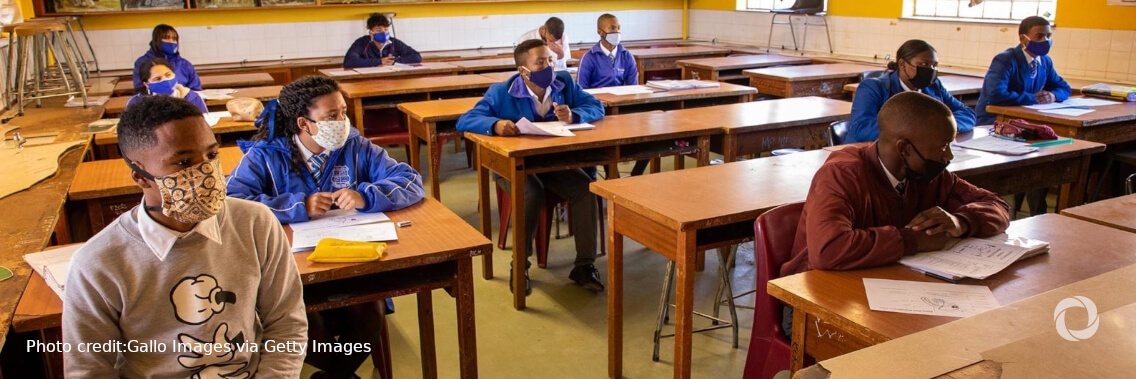
To mark the third International Day of Education, UN Secretary-General António Guterres paid tribute to the resilience of students, teachers, and families in the face of the global COVID-19 pandemic that, at its peak, forced almost every school, institute, and university to close its doors.
“When education is interrupted, it affects everyone”, he said, and “all of us pay the price”, stressing that education is the foundation for expanding opportunities, transforming economies, fighting intolerance, protecting our planet, and achieving the Sustainable Development Goals (SDGs).
Although this disruption has led to learning innovations, he said, it has also dashed hopes of a brighter future among vulnerable populations.
Avert generational catastrophe
With that in mind, the UN chief said that as the world continues to battle the pandemic, education – as a fundamental right and a global public good – must be protected to avert a generational catastrophe.
Even before the pandemic, some 258 million children and adolescents were out of school, the majority of them girls. Indeed, more than half of 10-year-olds in low and middle-income countries were not learning to read a simple text.
“In 2021, we must seize all opportunities to turn this situation around. We must ensure the full replenishment of the Global Partnership for Education fund, and strengthen global education cooperation”, the Secretary-General explained.
“We must also step up our efforts to reimagine education – training teachers, bridging the digital divide and rethinking curricula to equip learners with the skills and knowledge to flourish in our rapidly changing world”, he said, adding: “Let us commit to promote education for all — today and every day.”
Getting ‘COVID-19 generation’ back on track
In connection with the International Day, the UN Educational, Scientific and Cultural Organization (UNESCO) released new data on its interactive monitoring map showing that one year into the COVID-19 pandemic – over 800 million students, more than half the world’s student population – still face significant disruptions to their education, ranging from full school closures in 31 countries to reduced or part-time academic schedules in another 48 countries.
Even more concerning is the data released by UNESCO’s Global Education Monitoring Report which shows that, even before the COVID-19 crisis, only one in five countries demonstrated a strong commitment to equity in education through their financing mechanisms, and there is little evidence of a strong equity angle in responses to the pandemic.