
Add us as your preferred source on Google to see more of our content in Search.
 Add to Preferred Sources
Governments can finance critical action on extreme poverty, COVID-19, and the climate crisis and by recovering the billions of dollars lost through tax abuse, corruption, and money-laundering, says a UN panel.
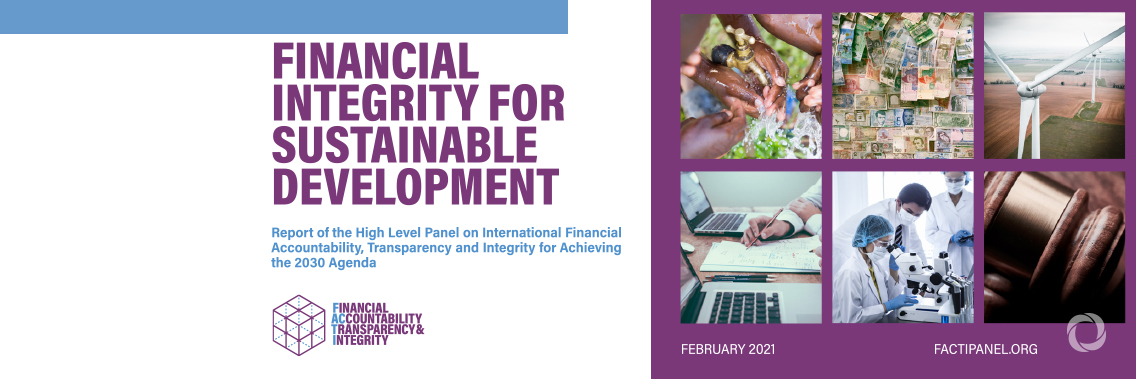
The High-Level Panel on International Financial Accountability, Transparency, and Integrity for Achieving the 2030 Agenda (FACTI Panel) is calling on governments to agree to a Global Pact for Financial Integrity for Sustainable Development.
The Panel of former world leaders and central bank governors, business and civil society heads, and academics says as much as 2.7 percent of the global GDP is laundered annually, while corporations shopping around for tax-free jurisdictions cost governments up to $600 billion a year.
In its report, Financial Integrity for Sustainable Development, the FACTI Panel says stronger laws and institutions are needed to prevent corruption and money laundering, and that the bankers, lawyers, and accountants who enable financial crime must also face punitive sanctions.
The report also calls for greater transparency around company ownership and public spending, stronger international cooperation to prosecute bribery, international minimum corporate tax and the taxing of digital giants, and the global governance of tax abuse and money-laundering.
“A corrupt and failing financial system robs the poor and deprives the whole world of the resources needed to eradicate poverty, recover from COVID and tackle the climate crisis,” says Dalia Grybauskaitė, FACTI co-chair and former president of Lithuania.
At a time when billionaires’ wealth soared by 27.5 percent while 131 million people were pushed into poverty due to COVID-19, the report says that a tenth of the world’s wealth could be hidden in offshore financial assets, preventing governments from collecting their fair share of taxes.
Recovering the annual loss to tax avoidance and evasion in Bangladesh, for example, would allow the country to expand its social safety net to 9 million more elderly, in Chad it could pay for 38,000 classrooms, and in Germany, it could build 8000 wind turbines.
The FACTI Panel reviews financial accountability, transparency, and integrity, and makes evidence-based recommendations to close remaining gaps in the international system as a means to achieve the 2030 Agenda and the Sustainable Development Goals.