
Add us as your preferred source on Google to see more of our content in Search.
 Add to Preferred Sources
The independent UN Special Rapporteur investigating human rights in Myanmar has called on the international community to hold an “emergency” summit of all stakeholders, including the parliamentarians who were democratically elected prior to February’s military coup.
In a statement, Tom Andrews warned that the “pace and scope” of the international response to the military coup in the southeast Asian nation “is falling short of what is required to head off a deepening crisis”.
“Conditions in Myanmar are deteriorating … but they will likely get much worse without an immediate robust, international response in support of those under siege”, he urged.
“It is imperative that the international community heed the recent call of UN Secretary-General António Guterres for a ‘firm, unified international response’.”
Junta’s assets ‘unscathed’
Mr. Andrews went on to note that the “limited sanctions” imposed so far by Member States do not impact the junta’s access to revenue that help sustain its “illegal activities”, with its most lucrative business assets “left unscathed”.
“The slow pace of diplomacy is out of step with the scale of the crisis”, he added, calling for the “incremental approach” to sanctions to be replaced by a robust action that includes a “diplomatic offensive designed to meet the moment”.
The Special Rapporteur said he was receiving reports indicating that the situation in Myanmar is in danger of spiralling further out of control and warned of a dramatic increase in loss of life.
“Without a focused, diplomatic solution, including the hosting of an emergency summit that brings together Myanmar’s neighbors and those countries with great influence in the region, I fear the situation of human rights in Myanmar will further deteriorate as the junta increases the rate of murders, enforced disappearances and torture”, he said.
Worsening impact
Meanwhile, the crisis continues to impact Myanmar’s most vulnerable, including migrants.
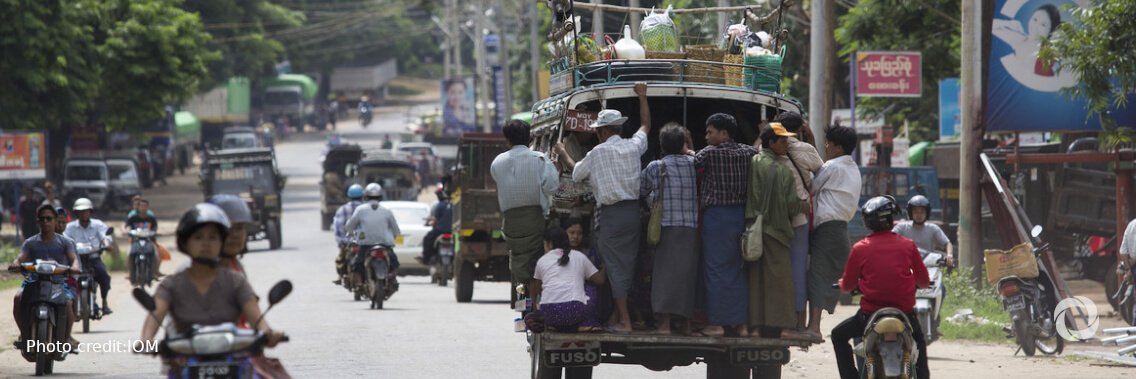
According to the UN’s International Organization for Migration (IOM), the martial law imposed in Yangon townships forced thousands of migrants to return to their places of origin, many with little savings to sustain themselves and their families.
The decree was imposed in the Hlaing Tharyar township on 15 March, following a violent crackdown by security forces, after unknown actors set fire to factories that were either operated or part-owned by Chinese investors.
“IOM estimates that approximately 100,000 migrants have returned to their communities of origin, mainly Rakhine state and Ayeyarwady region, in search of safety and security”, Farhan Haq, UN spokesperson said, citing reports from the agency.
“They are returning to communities already in distress due to the impacts of the military takeover, including the suspension of banking services and scarcity of food. Having left rapidly and using up their limited savings, many migrants cannot meet basic needs, including food and water”, he added.
Earlier this month, the UN World Food Programme (WFP) reported sharp increases in food and fuel prices in many parts of Myanmar, on the back of the supply chain, and market disruptions. Humanitarians worry that if the price trends continue, they will “severely undermine” the ability of the poorest and most vulnerable to put enough food on the family table.