
Add us as your preferred source on Google to see more of our content in Search.
 Add to Preferred Sources
The United Nations Development Programme urges strong support from international partners to ease the suffering of the people of Yemen.
Even before the current conflict escalated in mid-March 2015, Yemen faced enormous humanitarian challenges. More than two years of war have exacerbated these vulnerabilities, leaving nearly 19 million people in need of humanitarian or protection assistance, displacing 3.3 million people and driving the largest food security crisis in the world, with 17 million people across the country currently food insecure, including seven million who are facing starvation.
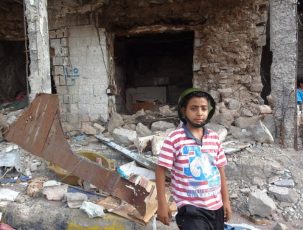 The conflict has also pushed more people into poverty, sharply reduced economic activity, and deeply diminished people’s self-reliance and livelihoods in what was already the poorest country in the Arab States region. Since fighting began, costs of food, medicine and other basics have skyrocketed, while economic activity has greatly slowed and parts of the public sector – a key employer – have ground to a halt. The situation is at once a political, humanitarian and development crisis.
While our humanitarian partners do the utmost to save lives and ensure basic needs are met in Yemen, development action is essential to support communities to build resilience and improve longer-term prospects,” said Mourad Wahba, UNDP Regional Director for Arab States, “Safeguarding livelihoods and prospects for the future in Yemen is essential so that once peace is achieved, it can be sustained.
Across Yemen, UNDP is working closely with humanitarian partners and forging new partnerships, mobilizing additional resources and implementing innovative programmes to help address the current crisis. With UNICEF and WHO, UNDP is working on emergency measures to pay performance-based incentives to health workers so they are able to earn income while providing much-needed treatment to malnourished patients. In partnership with the European Union, UNDP is building the resilience of rural communities through livelihood activities and provision of solar power. And in partnership with the World Bank, UNDP is scaling up to support two million impoverished Yemenis through cash-for-work programmes geared to generate income while supporting the functioning of basic services and the repair of critical infrastructure across the country.