

Add us as your preferred source on Google to see more of our content in Search.
 Add to Preferred Sources
Gross Domestic Product dropped by 7.1% in Latin America and the Caribbean in 2020 due to the global COVID-19 pandemic. The worst hit by this downturn were women and those working in the informal sector.
The latest report, Employment Situation in Latin America and the Caribbean, prepared by a Chilean think-tank, the Economic Commission for Latin America and the Caribbean (ECLAC) together with the International Labour Organization (ILO) leaves no doubt that the region has been strongly affected by the economic crisis triggered by the ongoing pandemic. It also forecasts that further economic decline should be expected during this year.
The GDP loss was related to an increase in the unemployment rate which grew by 2.1% in 2020 compared to the previous year, amounting to 10.5% for the entire region. Latin America and the Caribbean also saw the largest loss of working hours globally, as these diminished by 16.2% in 2020 whereas the global level was 8.8%.
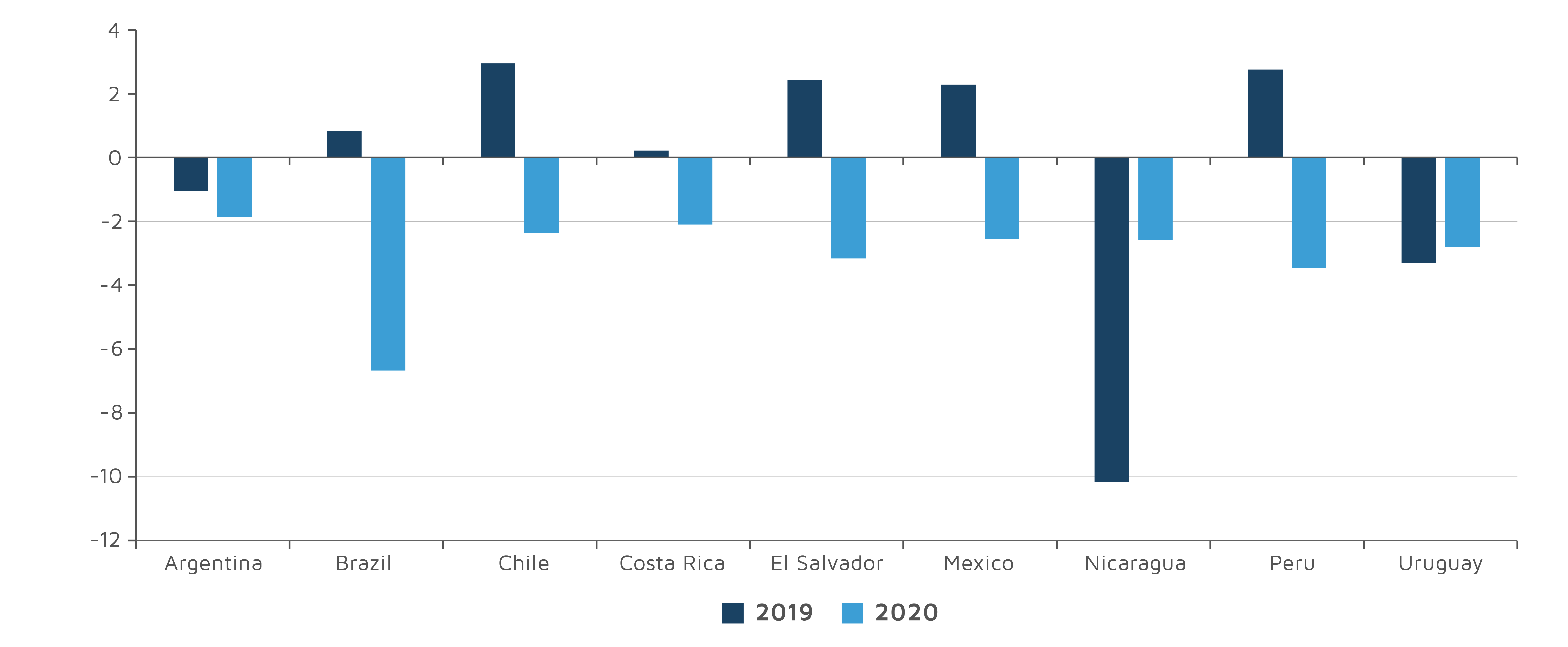
The informal sector was much more affected by unemployment than the formal sector particularly during the initial stages of the pandemic. This was mostly a result of the fact that employers and employees in the formal sector enjoyed state protection and could also rely on social benefits as many governments introduced public policies to support the job market. Figures within the report show that employment in the informal sector dropped by 7%. Nevertheless, registered employment was also hit hard in 2020 with the data available for 10 countries of the region indicating that the worst falls occurred in Brazil, Peru, and El Salvador as the graph below shows.
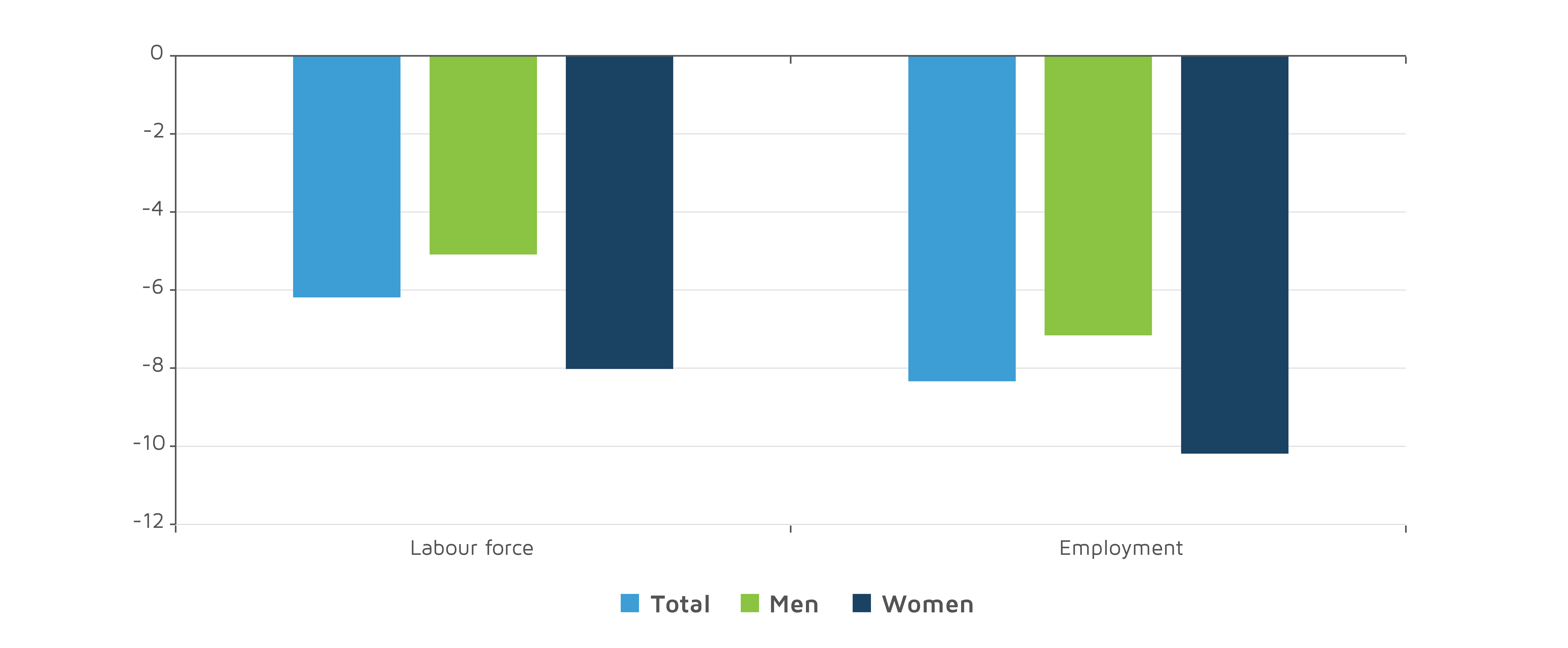
Since many women were employed in the informal sector and in domestic services, the pandemic hit their jobs harder than in the case of men. Between 2019-2020, the labor force amongst men dropped by 5% while amongst women this was 8.1% and employment amongst men decreased by 7.2% while amongst women it was 10.2%.
However, not all industries were hit equally. The biggest losses were recorded in sectors such as hotels (19.2%), construction (11.7%), trade (10.8%), and transport (9.2%) which combined were responsible for almost 40% of unemployment while drops in industry (8.6%) and other services (7.5%) were not as intense. Agriculture saw a decrease of 2.4%.
What is surprising is the fact that the pandemic did not impact the minimum wage in every country. While six countries registered drops, including the highest in Argentina (10%) and Uruguay (3%), at the same time the minimum wage increased in 10 countries of the region. Mexico saw a huge 16.1% rise in the minimum wage which is rather impressive given that Mexico accounts for 20% of the region’s economically active people. Overall, the minimum wage in Latin America and the Caribbean increased by 1.7%.
ECLAC forecasts that the region may face further economic turmoil because of the second and third waves of the pandemic as well as the lockdown measures. The report also warns that it is unlikely that formal jobs will rapidly return to pre-pandemic levels, especially in micro-, small and medium-sized companies. According to ECLAC, the pace of economic recovery will be strongly linked to how fast the region vaccinates its inhabitants.