
Add us as your preferred source on Google to see more of our content in Search.
 Add to Preferred Sources
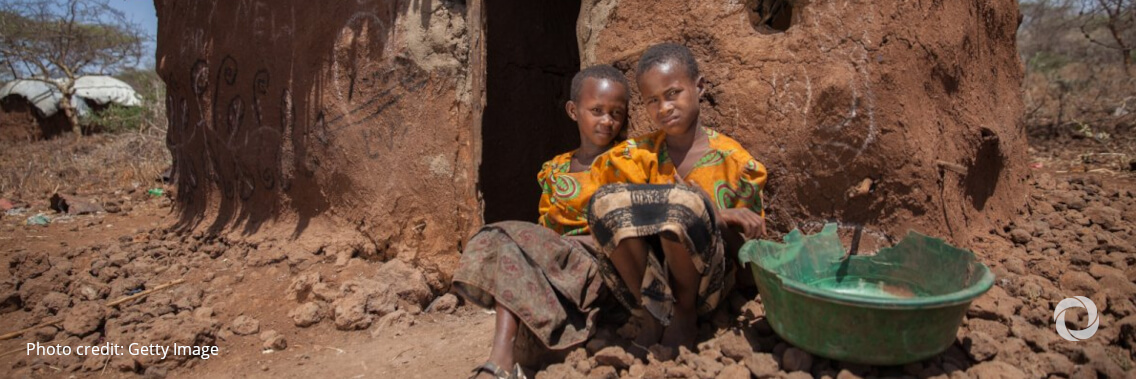
This year, more than half of the population of the Central African Republic (CAR) needs humanitarian assistance and protection. That’s 2.8 million people, two-thirds of whom are in acute need and may die without assistance. This is the first time in five years that so many people have been in acute need, making CAR one of the world’s most vulnerable countries.
One in four Central Africans is displaced
Twenty-four-year-old Georgette Mwagala is a single mother of three. In January, she was displaced for the third time due to insecurity in the Gobongo neighborhood of CAR’s capital, Bangui. But this displacement is different for Georgette, as this time she fears more for the survival of her children.
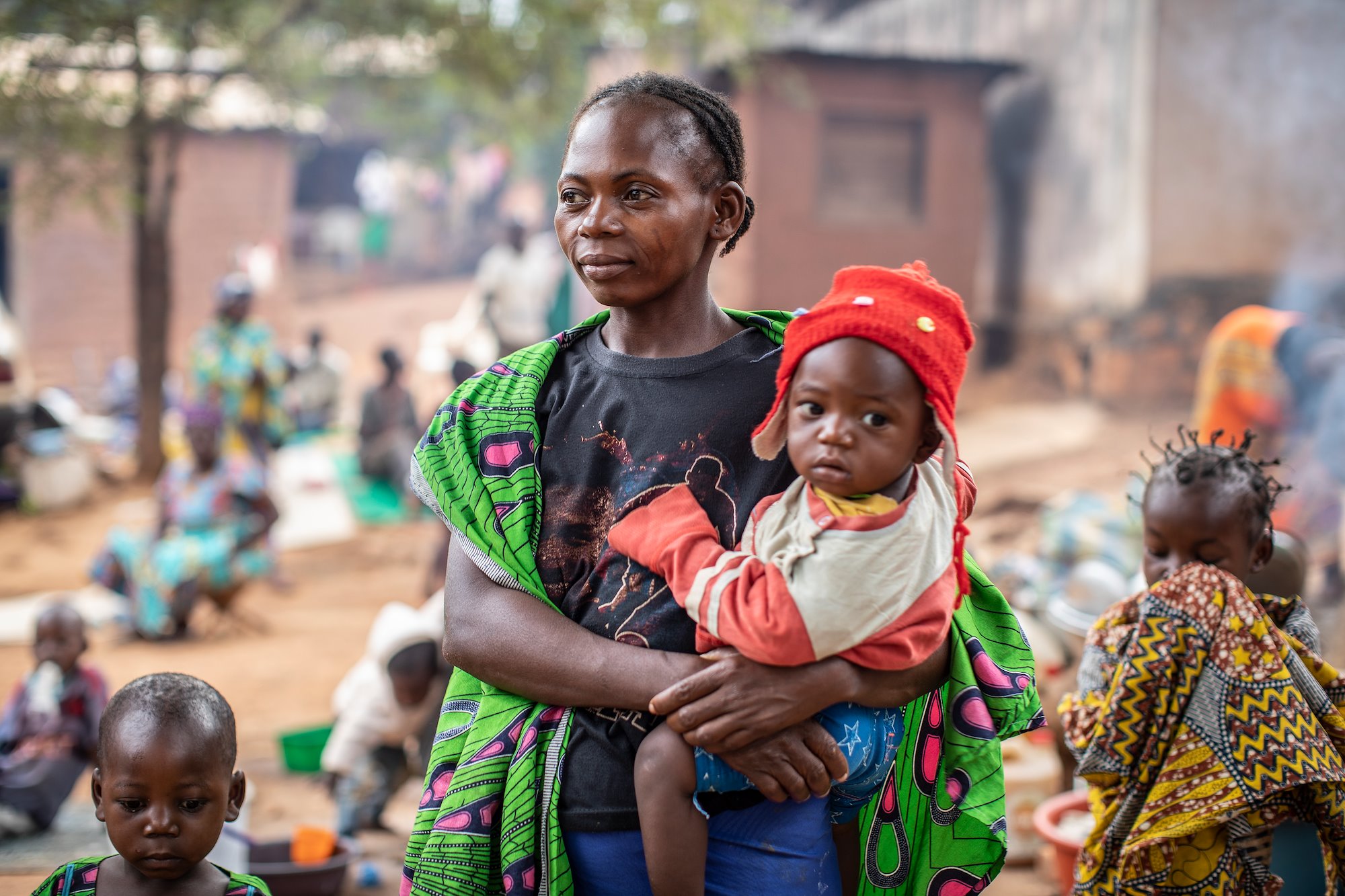
“My kids and I spend the night outside, next to the church, and I can no longer cultivate my field because of the insecurity. The little money I made selling vegetables was only enough to survive from day today. Now that I’ve been here at the church for four months, I can neither cultivate nor sell, because I still fear for my safety,” said Georgette.
Humanitarians provided food and non-food items to Georgette and 800 internally displaced persons (IDPs) at the church site in Gobongo.
Georgette and her children were among the more than 388,000 Central Africans newly displaced between December 2020 and March 2021, fleeing the violence that followed the country’s national elections in December 2020 and recurrent clashes between armed groups.
In total, more than 727,000 people are internally displaced and 695,000 are refugees in neighboring countries.
Severe food insecurity looms for hundreds of thousands
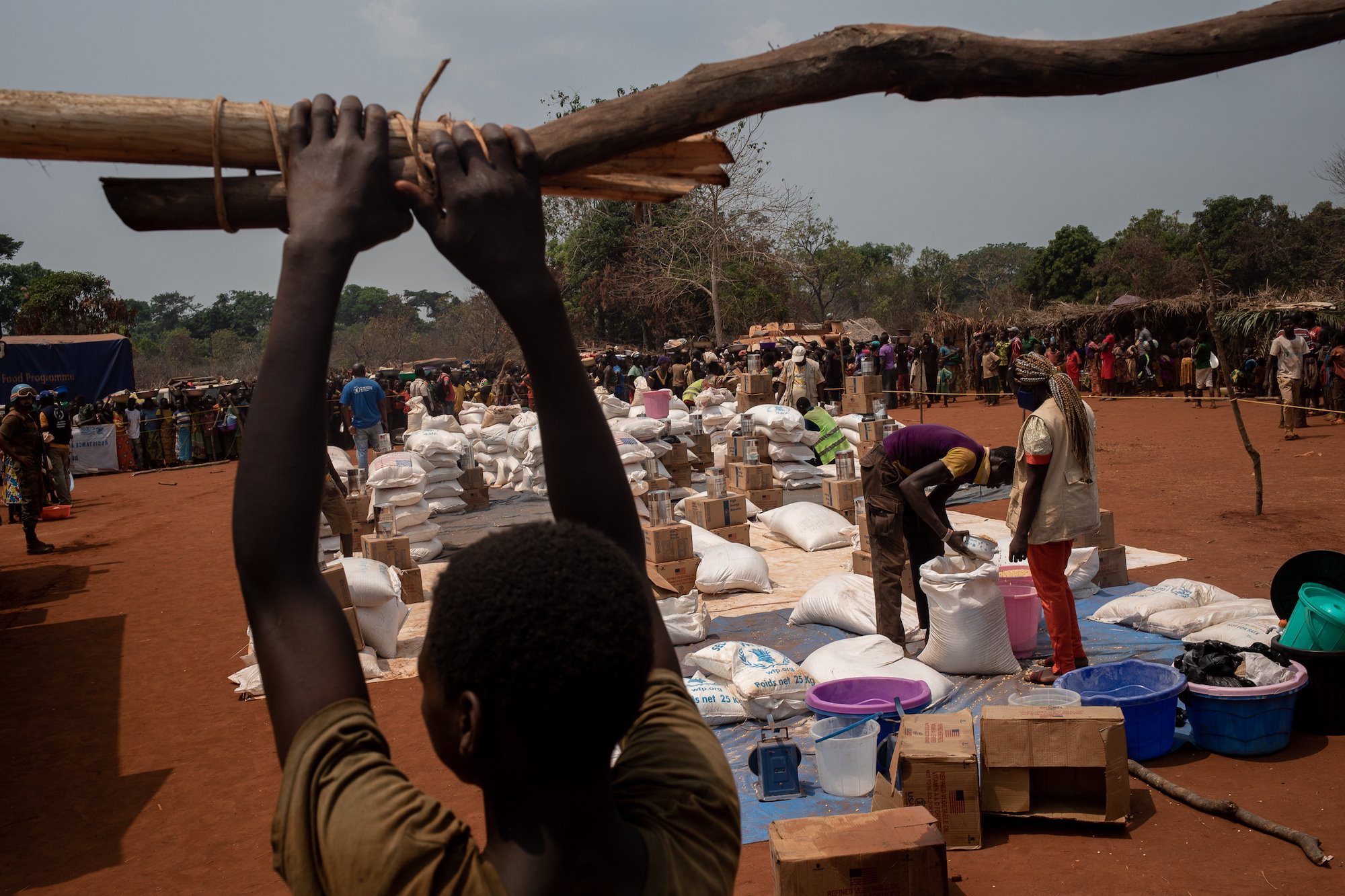
Violence and insecurity disrupted CAR’s main supply route, raising the prices of basic necessities by up to 60 percent. Meanwhile, the pandemic’s second wave worsened the situation by keeping prices high at the markets. As a result, 2.29 million people, or 46 percent of the population, do not have enough to eat, and more than half a million of these people are just one step away from famine.
Two-thirds of people do not have access to safe drinking water
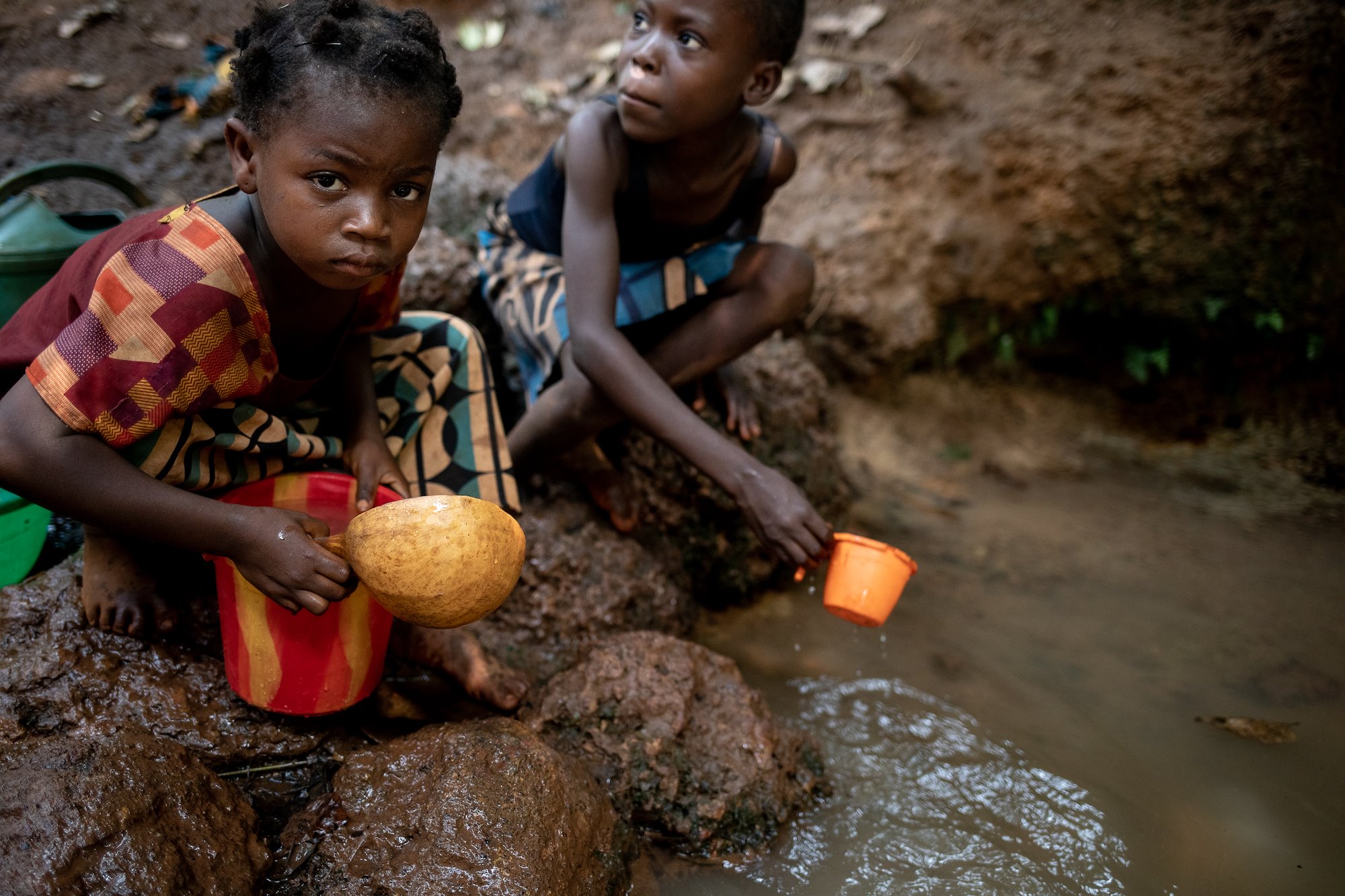
Clean water is a luxury in CAR. But due to the pandemic, the need for clean water is vital, as CAR is the world’s most vulnerable country to COVID-19, according to the INFORM COVID-19 index. Adding further complication and concern, 7 out of 10 people do not have access to hygienic toilets, increasing the risk of waterborne diseases.
One in two children drop out of school due to insecurity
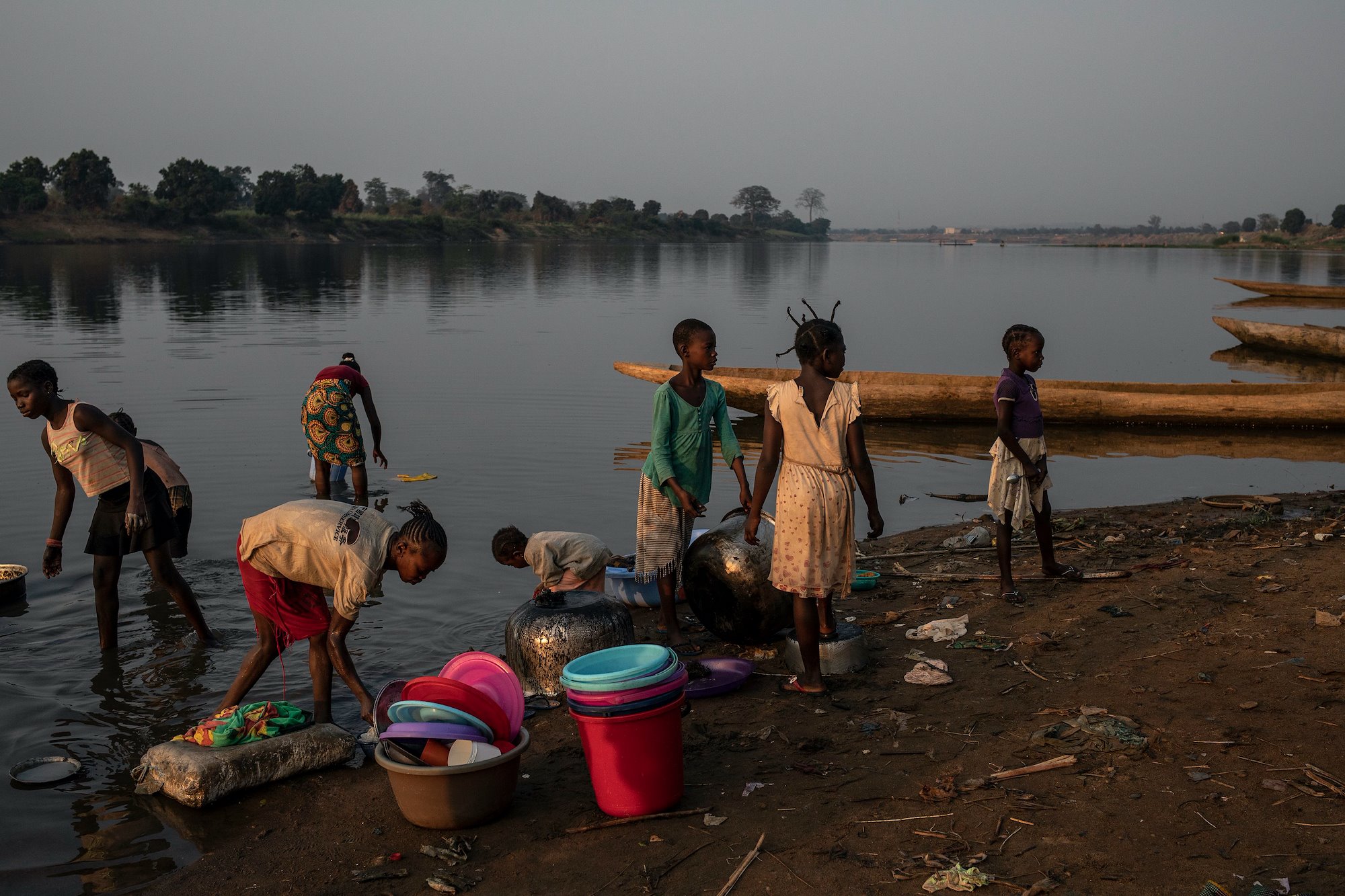
Several schools have been closed following the surge in violence that began in December 2020. But the schools had yet to make up for the setbacks caused by their pandemic-related closures in March 2020. Teachers and students are now displaced and have only one concern: sheltering from the conflict. Only 49 percent of children finish primary school in CAR.
Civilians bear the brunt of the protracted crisis
In February, Natasha Kinendere (56), a mother of seven, decided not to move from the site where she had settled five years earlier, fleeing the atrocities of armed groups in her village in central CAR.
“During the clashes in February, I told myself that I have suffered enough and seen worse. I don’t want to move with the children again. Life is difficult. There is no work. It is difficult to find the money. But at least we are safe here”, she explains.
In 2016, Natasha and her children had to walk for two days to reach the PK8 IDP site in Bambari, after armed men killed her husband.
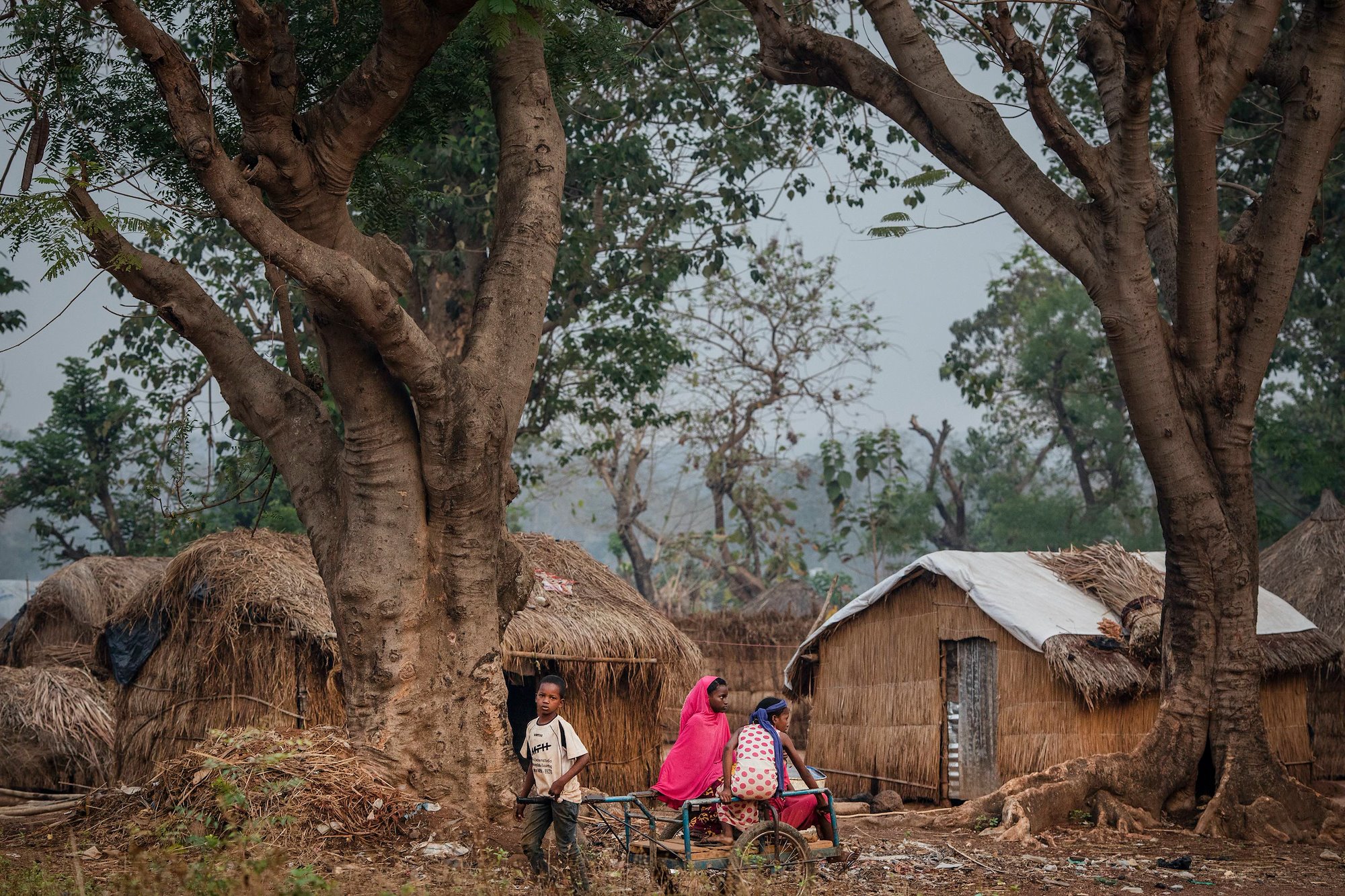
Armed violence has torn apart families and destroyed basic social services. It poses a serious threat to the protection of civilians, including at IDP sites where some armed groups operate.
In addition, the recent surge in violence has significantly increased violations of human rights and international humanitarian law, including the occupation of schools by armed groups, killings, and looting of civilians’ property. Gender-based violence is a plague, with one incident reported every hour by the humanitarian alert system, which covers only 42 percent of the country.
Staying and delivering
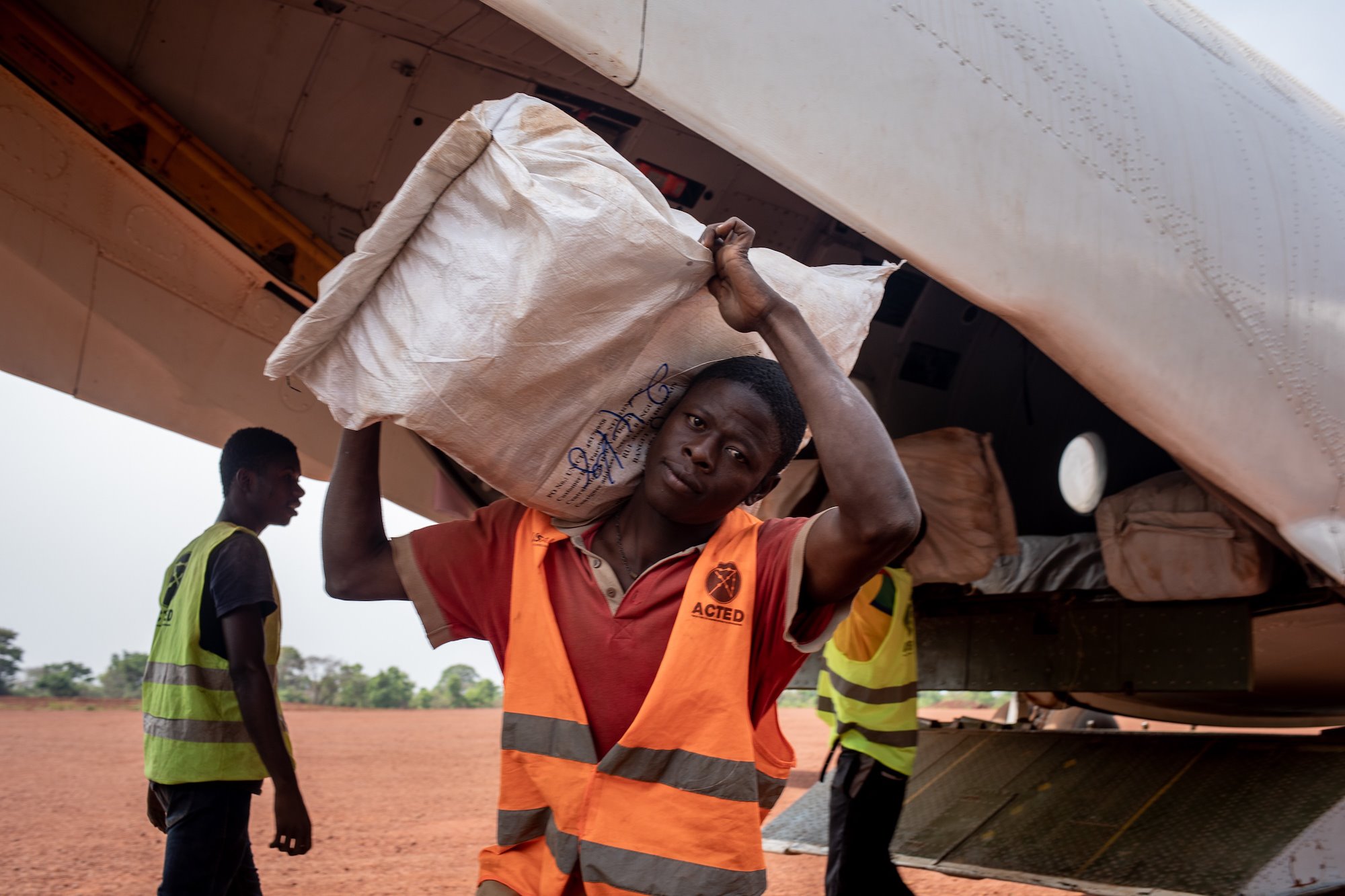
Despite the worsening security environment, the humanitarian community assisted 1.2 million people in CAR in the first quarter of this year. Last year, CAR was the world’s most dangerous place for humanitarian personnel. At least one security incident against humanitarians was reported every day, and two humanitarian workers were killed. The security situation in CAR has already worsened this year, with 229 incidents against humanitarians reported as of May, including one death.