
Add us as your preferred source on Google to see more of our content in Search.
 Add to Preferred Sources
New research conducted by the Red Cross Red Crescent Global Migration Lab across more than 50 countries reveals that refugees and migrants continue to face serious obstacles in accessing COVID-19 vaccines. Despite some progress made in policy, the equitable inclusion of refugees and migrants in vaccination strategies and plans is far from universal.
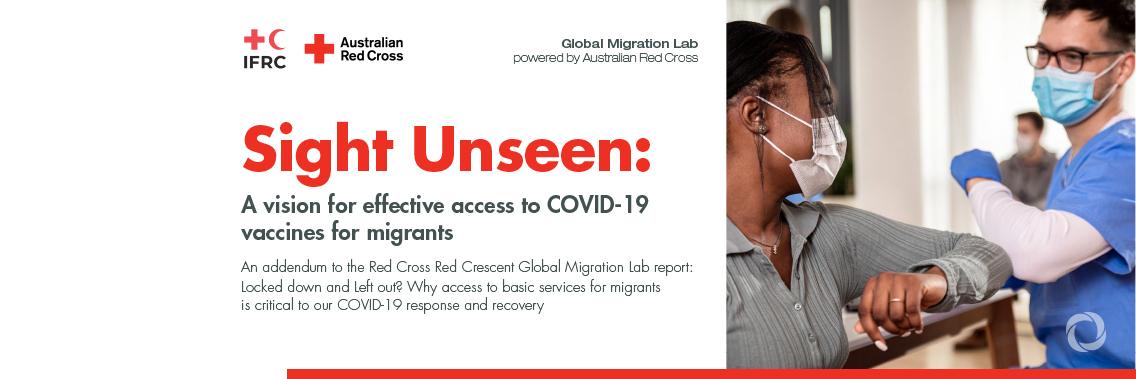
The new study, Sight Unseen: A vision for effective access to COVID-19 vaccines for migrants, takes stock of current global trends in migrants’ access to COVID-19 vaccines and builds on findings of an earlier report released in March 2021 by the Red Cross Red Crescent Global Migration Lab on the impact of COVID-19 on migrants’ access to essential services. The research draws on publicly available data from a wide range of sources, including academic institutions, governments, the United Nations, media, and civil society organizations and is complemented by insights and cases studies from a survey of 52 National Red Cross and Red Crescent Societies working directly with migrants and host communities around the world.
“While some progress has been made on paper to include all migrants in vaccination strategies and plans, research insights indicate that – in practice – some groups, particularly undocumented migrants, are still left out. Ensuring everyone has access to COVID-19 vaccines is not just the right thing to do from a humanitarian perspective; it is also the smart thing to do from a health and socio-economic standpoint,” Francesco Rocca, President of the International Federation of Red Cross and Red Crescent Societies (IFRC), said.
Across the global survey, National Red Cross and Red Crescent Societies identified the following main barriers to migrants’ access to COVID-19 vaccines: 90% of respondents pointed to limited information about where and how to get the vaccine; 80% to vaccine hesitancy due to fears of side effects; 67% to language; 60% to lack of required documentation; 50% to fears of arrest, detention or deportation; 50% to limited vaccine supply; and 33% to complex registration processes.
National Red Cross and Red Crescent Societies across the globe, supported by the IFRC Secretariat, are working tirelessly with governments and host communities to address these barriers. Among those surveyed, 87% indicated that they are involved in information-sharing and awareness-raising activities for migrants on where and how to access COVID-19 vaccines; 77% are supporting migrants in registering or attending vaccination appointments; 70% are involved in direct advocacy with governments and policymakers for greater inclusion of migrants; 60% are specifically tackling vaccine hesitancy.