

Add us as your preferred source on Google to see more of our content in Search.
 Add to Preferred Sources
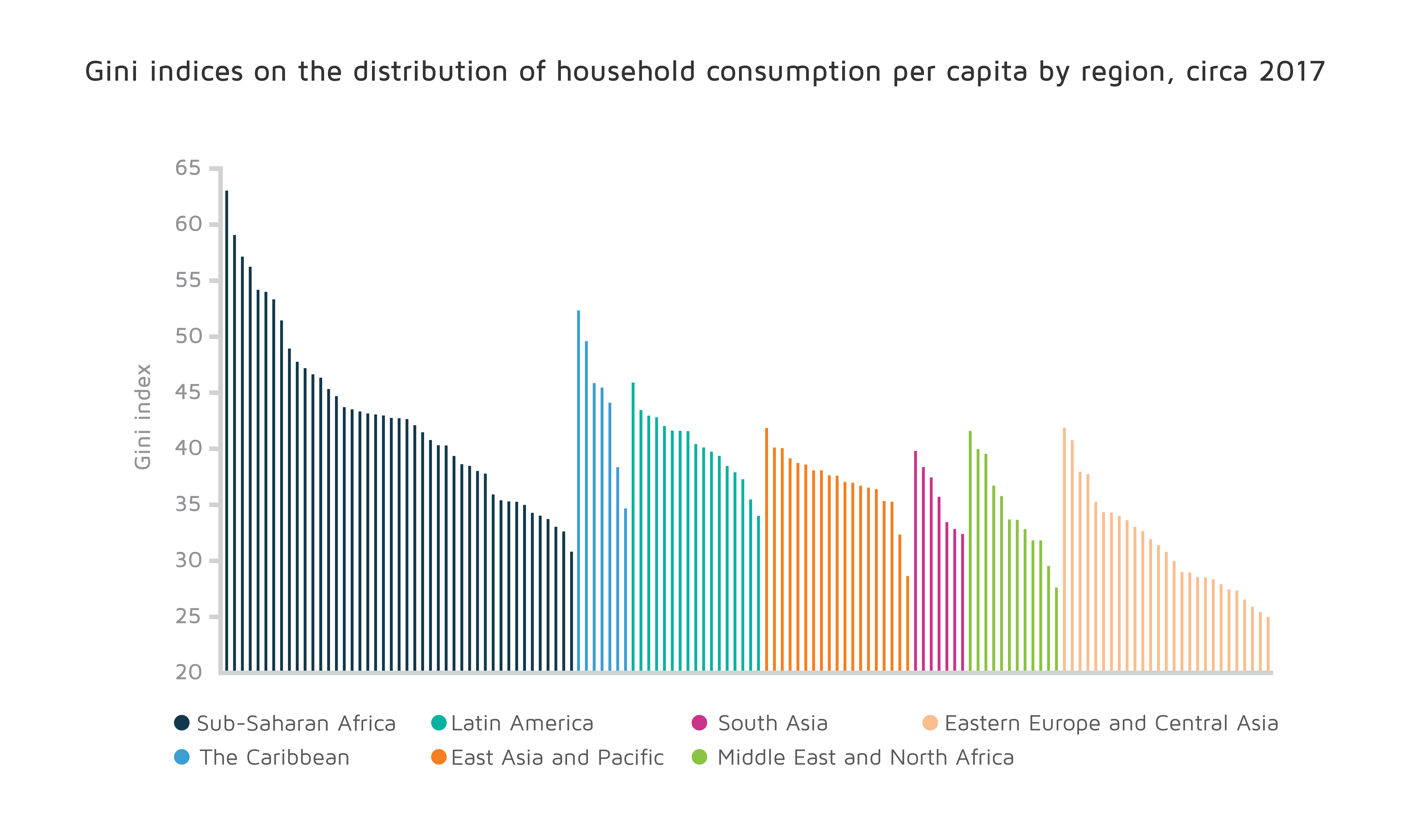
Despite a reduction in inequality recorded in the first decade of the 21st century and a rather high human development index, Latin America and the Caribbean (LAC) is the second most unequal region in the world after sub-Saharan Africa. A UNDP report titled Trapped: High Inequality and Low Growth in Latin America and the Caribbean notes that LAC continues to be a region of “enormous contrasts”, being home to 105 billionaires with a combined net worth of US$446.9 billion, as well as to 209 million people living in poverty, including 78 million living in extreme poverty in 2020.
This huge disproportion largely stems from three main factors: power concentration, multiple forms of violence, and inefficient social policy, the report highlighted.
Figure 1. LAC countries are some of the most unequal in the world
Groups affected by inequalities
LAC citizens experience different forms of inequalities from income inequality and gender inequality on the job market as men are better paid than women to LGBT+ people who face discrimination at school, on the job market and very often become victims of violence. Other discriminated groups are ethnic minorities that very often cannot rely on basic services such as healthcare and education and who do not participate actively in political and economic life.
Power concentration
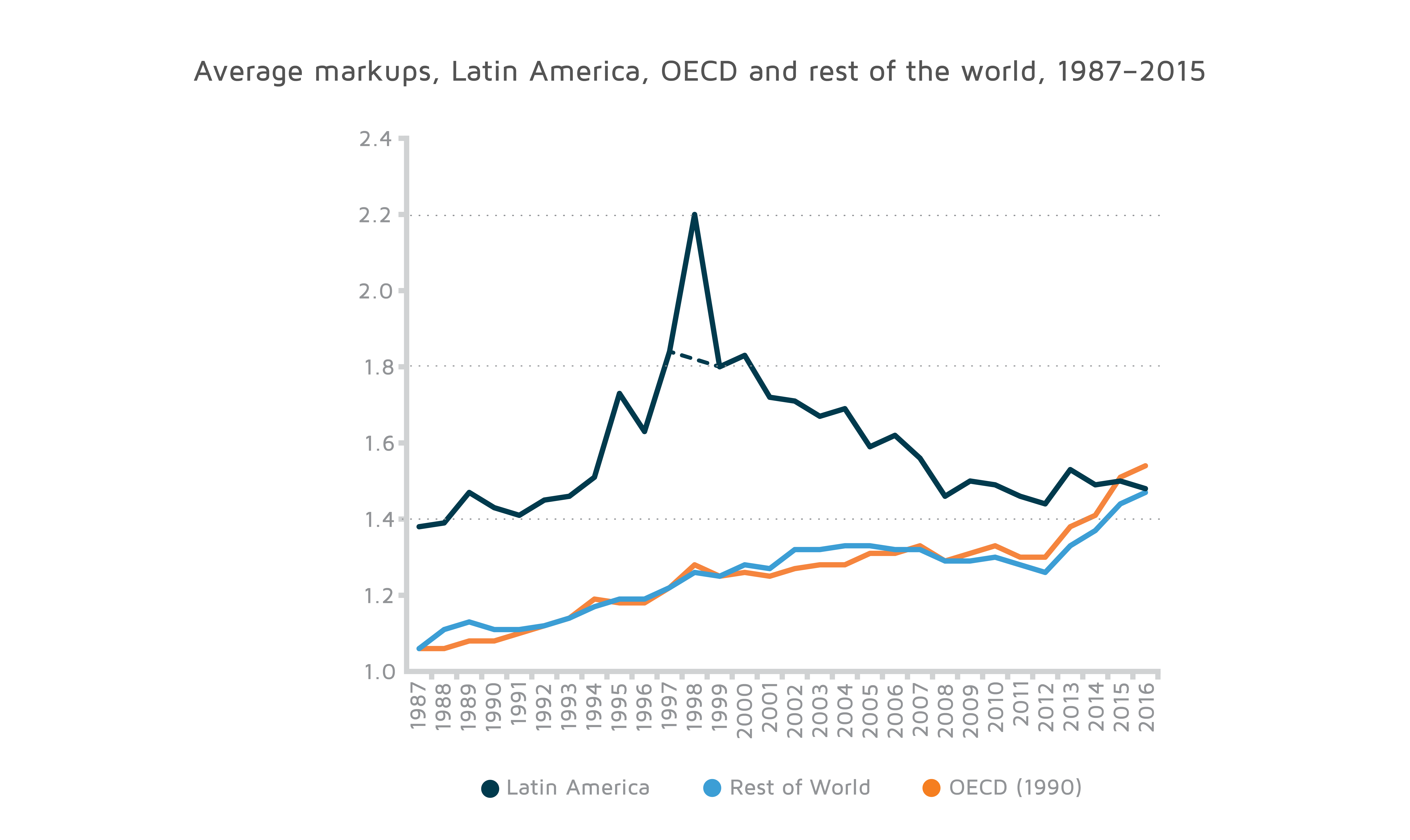
One of the main drivers of inequalities in LAC is the overwhelming existence of powerful groups in both business and politics. According to the report, in 2020 77% of people in LAC believed that their countries were managed by powerful groups with the highest rates being recorded in Paraguay – 95%, and Chile and Costa Rica with 91% each. The monopoly of power and business can be viewed as a reason why the LAC market is characterized by the prevailing existence of giant conglomerates rather than small and medium-sized companies. Monopolies add to inequalities and an increase in low productivity as they force consumers to pay higher prices for products without facing any competition. Only two LAC countries have anti-monopoly policies. The extent of this problem is reflected in the graph below:
Figure 2. A small number of giant firms dominate Latin American markets
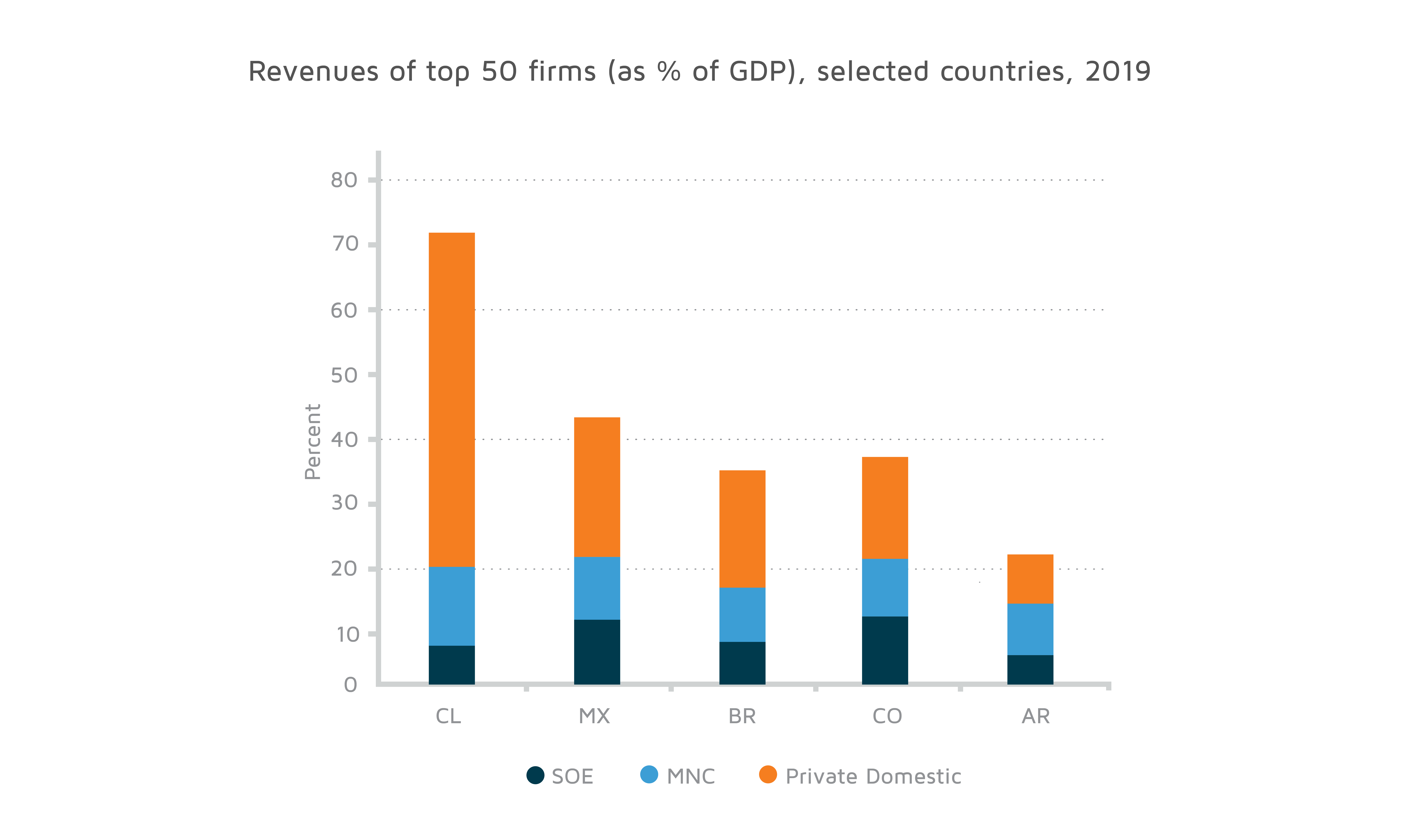
Figure 3. Mark-ups in Latin America are higher than in the rest of the world and constant over time
Multiple forms of violence
Last but not least, violence contributes significantly to inequalities and this still remains a huge problem in the region. While LAC is inhabited by only 9% of the world’s population it experiences 34% of violent deaths globally and is the most violent region in the world in terms of homicide levels. Furthermore, LAC is not only affected by criminal violence but also by political violence and sexual violence which impacts mostly women.
Inefficient social policy
Another factor contributing to inequalities is the inefficiency of tax systems. LAC countries are unable to effectively collect tax revenues and invest this in development. They consistently collect lower taxes as a share of the GDP compared to other states that have similar levels of development. The redistribution inequalities are presented below.
Figure 4. There is little redistribution through the fiscal system in LAC
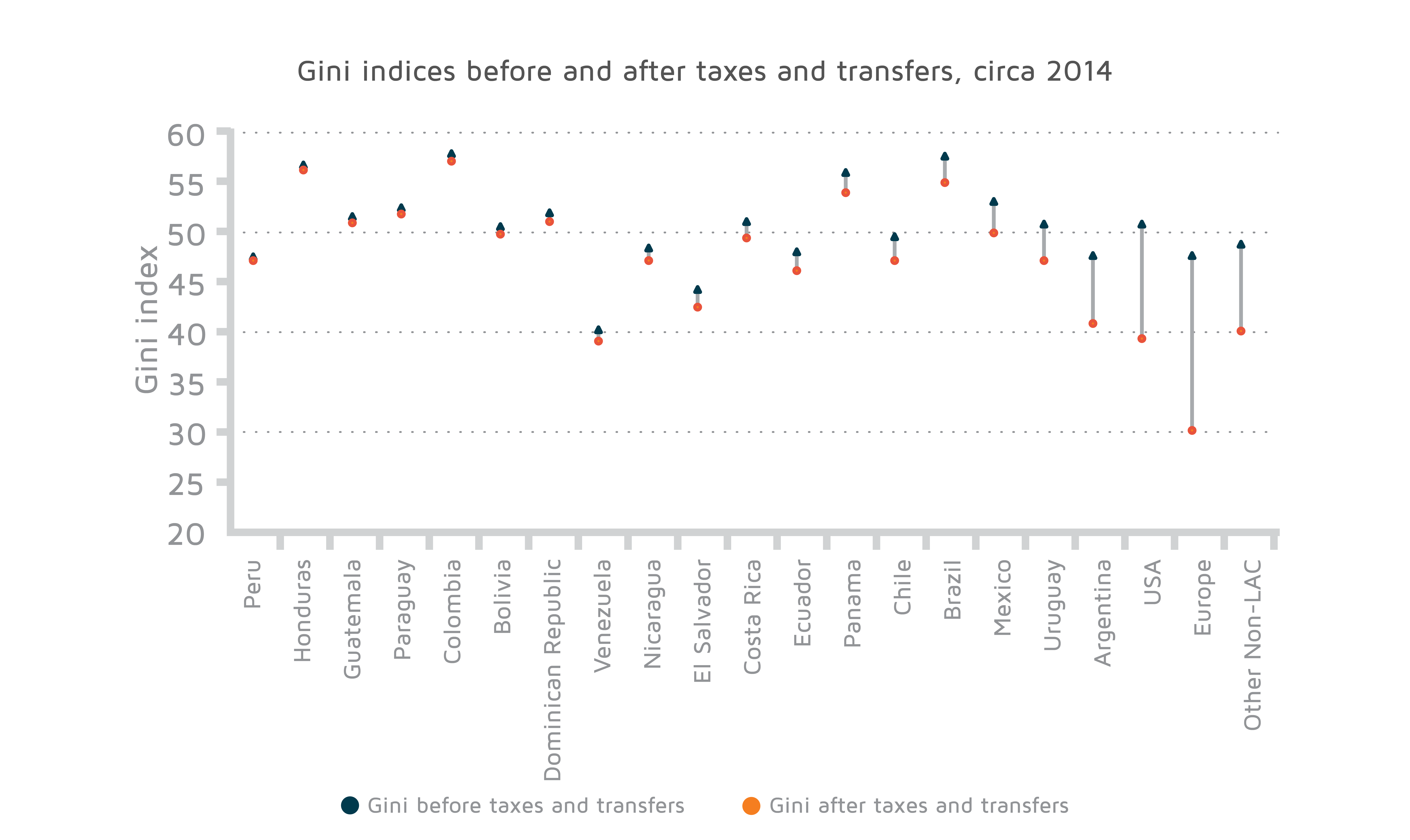
Although governments have introduced certain measures to boost social policies in LAC these have been mostly ineffective, short-term, and have often even worsened the situation. Their ineffectiveness has also been caused by the fact that social policies cover only those who are formally employed while the LAC job market is characterized by relatively higher numbers of informal workers who cannot rely on social support.
The combination of all those factors makes LAC the second most unequal region in the world after sub-Saharan Africa and this became the main cause of social unrest in many countries in late 2019 and throughout 2020.