
Add us as your preferred source on Google to see more of our content in Search.
 Add to Preferred Sources
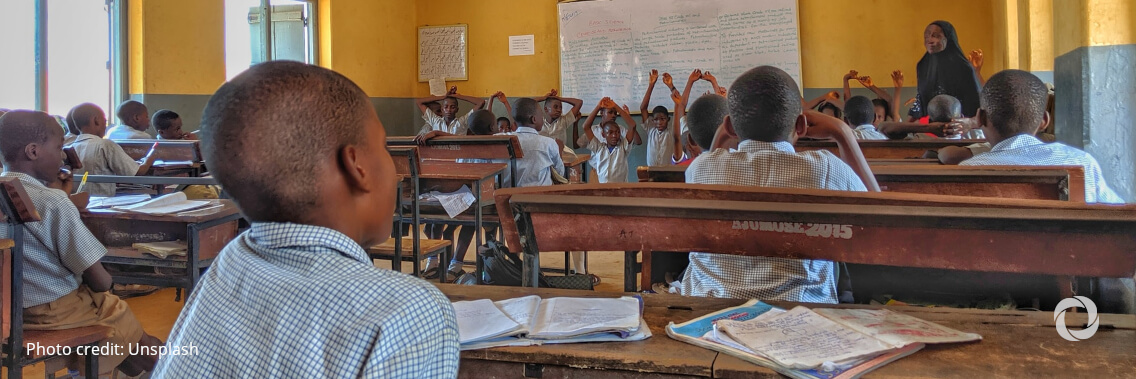
UNICEF estimates that 40 percent of all school-aged children across Eastern and Southern Africa are currently not in school due to COVID19-induced closures and pre-pandemic levels of out-of-school children.
Across the region, we are seeing re-closing of schools mid-year due to recent COVID-19 surges, with over 32 million children estimated to be out of school because of pandemic closures or having failed to return once their schools opened earlier this year. That is in addition to an estimated 37 million children who were out of school before the pandemic.
“Although the number of children out of school constantly fluctuate depending on the local context, the fact that an estimated 40 percent of the region’s children are out of school is shocking. We urge all Governments to prioritize education and ensure that schools remain open and safe. For the sake of the individual child, but also for the future of their communities and countries,” said Lieke van de Wiel, UNICEF Deputy Regional Director for Eastern and Southern Africa.
With much of Africa in the throes of a new COVID-19 wave, Botswana, Namibia, Zambia, and Uganda recently re-closed their schools nationwide, while Zimbabwe extended the academic winter break resulting in continued school closures, and Rwanda and Mozambique partially closed schools in some of the areas worst affected by the virus, while South Africa opened theirs this week following an extension of the winter break because of a COVID19 uptake.
UNICEF estimates that currently, some 69 million children are out of school in the region, due to COVID-19 closures as well as a range of other factors, including the inability of parents to pay school or transportation fees, child labor due to poverty, girls dropping out because of pressures to marry or inability to afford sanitary napkins during menstrual cycles, and access challenges for children with disabilities.
Some African children have had access to online learning, but millions have little or no access to the internet, computers, or phones. In addition, going to school not only offers the basic learning needed to help break the cycle of poverty, but it also provides protection from harmful practices such as early marriage, pregnancies, or abuse at home or on the streets, and can ensure a daily, nutritious meal.
“We have experienced a steep learning curve since the outbreak of the pandemic both in terms of keeping schools safe but also on how damaging it is for children and their communities when their classrooms are closed. The impacts of closures – both in the short and in the long term – are too vast to justify persisting with this approach. And online learning alone cannot substitute the overall benefits of children physically being in school, having fun, and learning from friends. When containment measures are being discussed and agreed upon, schools must be the last to close and the first to open,” Ms. van de Wiel continued.
UNICEF is supporting the efforts of the Ministries of Education and Health to work closely together to adopt strategies that allow for real-time, evidence monitoring of the COVID-19 context, and responding with relevant, localized measures. Nationwide school closures must be the very last resort.
Evidence collected since the start of the pandemic shows that children and schools are not the main drivers of the pandemic. So far, the health risks to children from COVID-19 have remained low. More than a year since schools first closed in the region, UNICEF and partners have accumulated a large body of knowledge about how to reduce the risks of the virus to children, teachers, and their families.
“Given that one-fifth of all school-aged children were already out of school pre-pandemic, there is no doubt that these continuing disruptions are further fuelling the world’s and the continent’s learning crisis which is heading towards becoming a learning catastrophe,” Ms. van der Wiel said.
Currently, 12 out of 21 countries in Eastern and Southern Africa have fully open schools, and 3 have partially open schools. UNICEF commends Ministries of Health and Education that have taken the decision to reopen schools while applying proven safety precautions as well as prioritize teachers for vaccination.
The pandemic is also exacerbating an already precarious education financing situation; only five governments of the 21 countries in the Eastern and Southern Africa region were spending at least 20 percent of their budgets on education as per the pre-crisis Education For All target.