
Add us as your preferred source on Google to see more of our content in Search.
 Add to Preferred Sources
Climate change and extreme weather are threatening human health and safety, food, water and energy security, and the environment in Latin America and the Caribbean. The impacts span the entire region, including Andean peaks, mighty river basins, and low-lying islands, according to a new report from the World Meteorological Organization (WMO). It flags concerns about fires and the loss of forests which are a vital carbon sink.
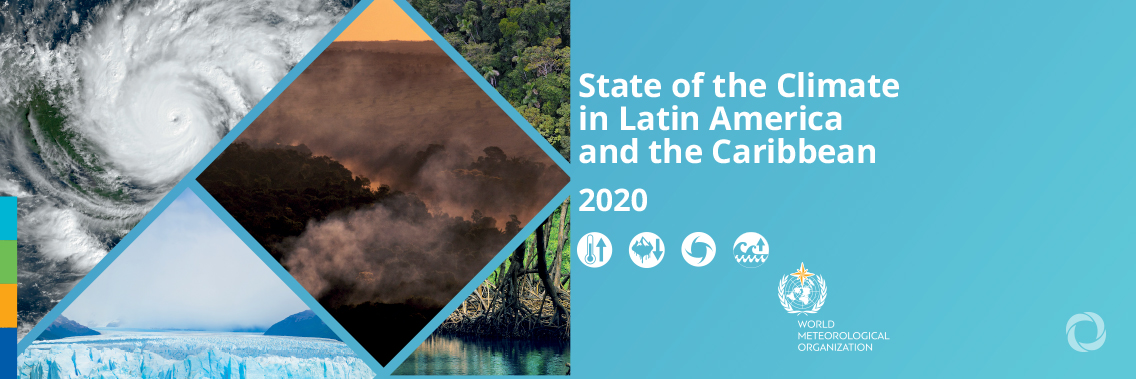
The “State of the Climate in Latin America and the Caribbean 2020” provides a snapshot of the effects of increasing temperatures, changing precipitation patterns, storms, and retreating glaciers. It includes transboundary analyses, such as the drought of the South American Pantanal and the intense hurricane season in Central America-Caribbean. It provides a detailed regional breakdown of worsening global climate change indicators.
The report and an accompanying story map show how marine life, coastal ecosystems, and the human communities that depend on them, particularly in Small Island Developing States, are facing increasing threats from ocean acidification and heat and rising sea levels.
The report was released at a high-level conference on 17 August, “Working together for weather, climate and water resilience in Latin America and the Caribbean” under the auspices of WMO, the UN Economic Commission for Latin America and the Caribbean (UNECLAC), and the UN Office for Disaster Risk Reduction (UNDRR).
It follows the release of the Intergovernmental Panel on Climate Change report on Climate Change 2021: the Physical Science Basis, which said that temperatures in the region have increased more than the global average and are likely to continue to do so. It also projected changing precipitation patterns, more sea-level rise, coastal flooding, and marine heatwaves.
“Latin America and the Caribbean (LAC) is among the regions most challenged by extreme hydro-meteorological events. This was highlighted in 2020 by the death and devastation from Hurricane Eta and Iota in Guatemala, Honduras, Nicaragua, and Costa Rica, and the intense drought and unusual fire season in the Pantanal region of Brazil, Bolivia, Paraguay, and Argentina. Notable impacts included water and energy-related shortages, agricultural losses, displacement, and compromised health and safety, all compounding challenges from the COVID-19 pandemic,” said WMO Secretary-General Prof. Petteri Taalas.
“With almost half of its area covered by forests, Latin America and the Caribbean represent about 57 percent of the world’s remaining primary forests, storing an estimated 104 gigatons of carbon. Fires and deforestation are now threatening one of the world’s largest carbon sinks, with far-reaching and long-lasting repercussions,” he said.
Between 1998 and 2020, climate-related and geophysical events resulted in the loss of 312,000 lives and directly affected more than 277 million people.
“As the report makes clear, climate change is impacting livelihoods in the LAC region and increasing disaster risk. The comprehensive climate and risk management approach, promoted by UNDRR, supports governments and communities in reducing, averting, and minimizing both current and future climate risks. Accurate and accessible information is crucial for risk-informed decision-making, and the “State of the Climate in Latin America and the Caribbean” is a vital tool in our battle for a safer, more resilient world,” said Ms. Mami Mizutori, Special Representative of the Secretary-General for Disaster Risk Reduction and Head of UNDRR.
The multi-agency report is based on a standard methodology for assessing the physical aspects of the climate system. It incorporates input from National Meteorological and Hydrological Services (NHS), WMO Regional Climate Centers (RCCs), research institutions, and international and regional organizations. It provides science-based information to support countries and communities in their efforts to adapt to a changing climate and build more resilience to extreme weather. It identifies areas for improvement in the management of hydrometeorological risks.
The report highlights that adaptation measures, particularly multi-hazard early warning systems, are underdeveloped in the region. It stresses the need for greater political commitment and more financial support to strengthen Early Warning Systems (EWS) and operational weather, climate, and hydrological services to support risk management and adaptation.