
Add us as your preferred source on Google to see more of our content in Search.
 Add to Preferred Sources
In order to contribute equitably to improving the quality of life of the region’s inhabitants through access to housing, the Central American Bank for Economic Integration (CABEI) approved the Central American Housing and Sustainable Habitat Development Program (VIDHAS) to support low-income households.
VIDHAS has two components. The direct investment component supports public projects and programs to benefit the low-income population; the main goals include integral neighborhood improvement, urban regeneration and renovation, sustainable housing project development and mechanisms to access financing for improvement, progressive construction and procurement of housing and projects that increase the rate of prosperity of Central American cities in order to promote community coexistence and create sustainable, resilient and socially inclusive cities.
It also facilitates feasibility analysis and final design of projects, which allows identifying, planning and prioritizing works through the implementation of territorial and urban planning processes.
Through the second component, which involves intermediated investment, CABEI seeks to foster the participation of financial institutions and strengthen actions for environmental sustainability.
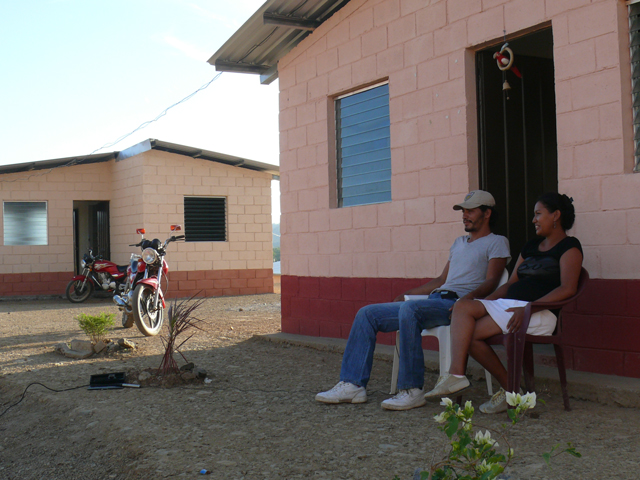
The financial intermediation program for social housing aims to help low-income households acquire, build and improve their housing. The financing is granted by CABEI-qualified financial institutions, which can access resources destined to the purchase of a new or used house, construction, progressive improvement and development of housing projects. Disbursements can be granted in local currency or in dollars.
The program aims to benefit people with incomes of up to eight minimum monthly salaries who will have a payment fee that should not exceed 30% of the monthly family income. The value of the house to be financed must be less than or equal to 160 minimum monthly salaries of each country.
For its part, the financial intermediation scheme for average housing provides resources for procurement, remodeling and improvements, as well as for purchasing productive assets and working capital. Under this modality, the procurement of housing is financed for a maximum of $170 thousand or the corresponding to 225 base salaries, pursuant to the country.
The financing will be for 90% of asset value and will have a duration of 12 years; in the case of improvement or progressive construction, up to 100% will be financed with a maximum of $50,000.
VIDHAS has been operational for two years and has approved $315 million to benefit Costa Rica, El Salvador, Honduras and Nicaragua.
Original source: BCIE
Published on 9 November 2017