
Add us as your preferred source on Google to see more of our content in Search.
 Add to Preferred Sources
Today, the UN Climate Change Secretariat awarded the project “Restoring of peatlands in Russia” to prevent fires and mitigate climate change – a project of KfW and the Federal Ministry for the Environment, Nature Conservation, Building and Nuclear Safety (BMUB) under the International Climate Initiative (IKI) – a prize in the focus area of Planetary Health. KfW is financing the project with EUR 6.5 million on behalf of the BMUB.
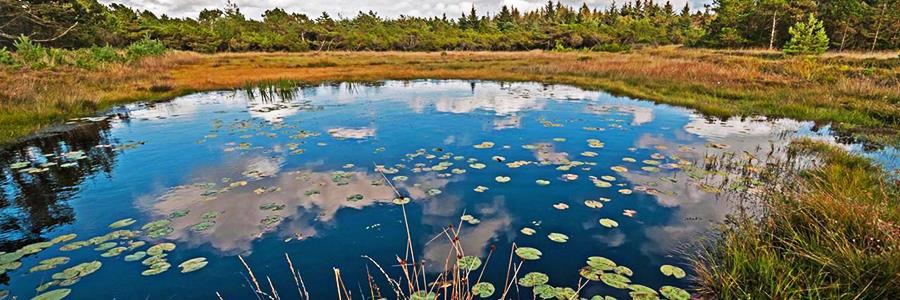
These funds are being used to rewet and restore up to 59,000 hectares of dried bogs in various Russian provinces including Moscow, Tver, Vladimir and Nizhny Novgorod. Due to their enormous capacity for storing CO2, the bogs will save 5 to 10 tonnes of CO2 per hectare and year.
“Bogs capture one of the Earth’s biggest climate killers – CO2. They only cover around 3% of the world’s surface, but they store twice as many greenhouse gases as all of the Earth’s forests combined. This is why protecting existing bogs and recultivating dried-out areas is a very efficient measure for mitigating climate change,” said Prof. Dr Joachim Nagel, Member of the Executive Board of KfW Group.
Large areas of boggy land were dried out, mainly to turn the wild habitats into arable land and forests. These areas pose a high risk of fire, particularly around Moscow. The project involves rewetting this degenerated bog land using an ecologically sound process. To achieve this, the canals that were used to drain the bogs are closed so that the ground- and rainwater can remain in the bog. A monitoring system is also being established to measure the progress of the rewetting project.
Original source: KfW
Published on 15 November 2017