
Add us as your preferred source on Google to see more of our content in Search.
 Add to Preferred Sources
International and local humanitarian agencies engaged in Ukraine joined forces in Berlin for a one-day conference, supported by the EU, to draw attention to the forgotten humanitarian crisis in the east of the country, urging decision makers to commit to tangible improvements to the situation in eastern Ukraine.
The conference – “Ukraine: A Forgotten Humanitarian Crisis in Europe?” – was organised by the ACCESS Consortium. The event, supported by the EU, brought together local and international non-governmental organisations, civil society representatives, United Nations agencies, the European Union, donors, as well as governmental and political representatives for a constructive dialogue leading to a shared understanding of the humanitarian needs and best ways forward.

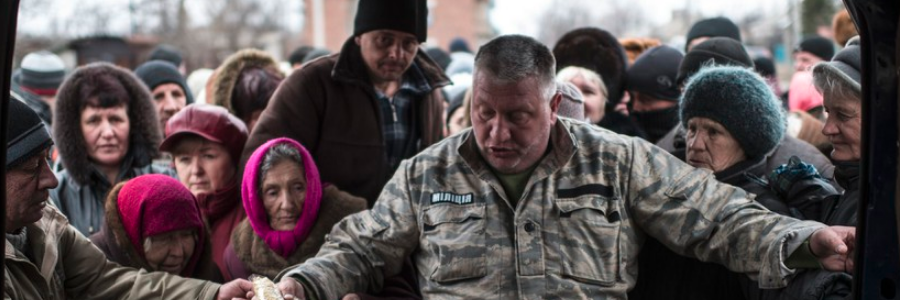
Thousands of Ukrainians travel across the line of contact every day to visit relatives, access services and find basic goods. Mayorsk entry-exit checkpoint is one of the main entry points to the non-government controlled area.
An average 40 conflict-related incidents are recorded every day in the 10 km-wide area along the line of contact alone. Recent developments have led to a further separation of the civilian population living on both sides of the line of contact. Almost four years since hostilities began in eastern Ukraine, human suffering is intensifying.
“The EU has been at the forefront of the humanitarian and early recovery response in eastern Ukraine from the beginning of the crisis, said EU Commissioner for Humanitarian Aid and Crisis Management Christos Stylianides. “We will continue to support those in need in Ukraine. We want to assist the most vulnerable groups and to support reform and development where it is possible”.
With negotiations not resulting in a political breakthrough thus far, and funding for humanitarian aid at critically low levels—the situation is still at crisis level for the four million people in need of assistance. It is crucial that humanitarian needs are given appropriate consideration, and that all stakeholders share a common understanding of the situation on the ground in order to find realistic solutions.
“Fighting, the trade blockade, the disruption of access to basic services, all have contributed to increasing vulnerabilities. This is happening right at the doors of the European Union, in the conflict-affected area of eastern Ukraine, were today, for instance, 1.2 million people are food insecure—176,000 of whom severely”, said Šimon Pánek, president of People in Need (PiN), the lead agency in the ACCESS Consortium.
Original source: European Civil Protection and Humanitarian Aid Operations
Published on 22 November 2017