
Add us as your preferred source on Google to see more of our content in Search.
 Add to Preferred Sources
Three years after the international community agreed on the Global Compact on Refugees, lack of political will and leadership is challenging the achievement of more equitable and predictable responses to forced displacement. Developing countries continue to shoulder the bulk of the responsibility by hosting 86 percent of the world’s refugees.
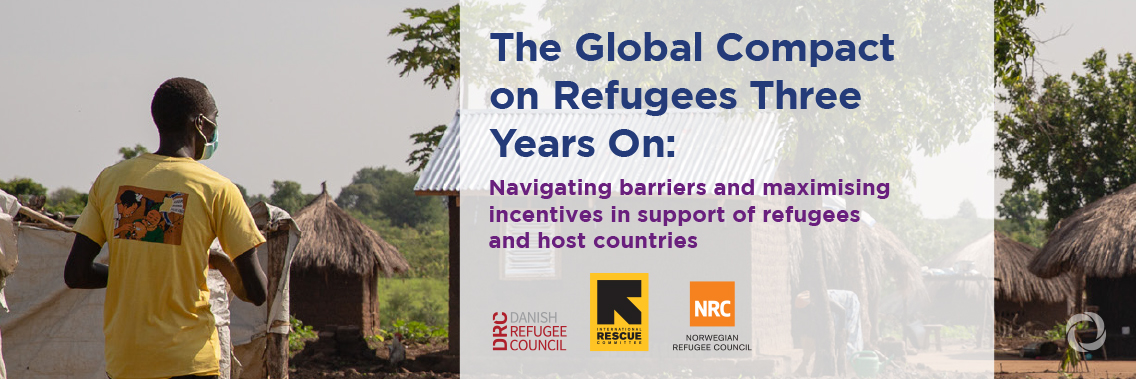
This is the main conclusion of a report commissioned by the International Rescue Committee in collaboration with the Danish Refugee Council and Norwegian Refugee Council ahead of the first mid-term review of progress at a high-level meeting this December. The report – The Global Compact on Refugees Three Years On: Navigating barriers and maximizing incentives in support of refugees and host countries – comes ahead of a major indicator report, produced by UNHCR, which is expected to be released on 16 November.
Resettlement, a cornerstone of refugee protection, is at its lowest in almost two decades, while commitments to addressing the drivers of displacement remain unrealized. Finding solutions to displacement is becoming more, not less, challenging.
Efforts to bring more diverse donors and governments to the table have yet to produce tangible results. It remains unclear if refugees, their host communities, and host countries can count on increased or more predictable support three years on. Based on currently available data, it is still impossible to know if they can rely on more medium to long-term development financing rather than just short-term humanitarian assistance.
The findings also point to some encouraging shifts in approaches to refugee responses in different regions of the world. For example, Colombia has regularised Venezuelan refugees and migrants, while Uganda has improved refugee access to protection, health, education services, and labor market opportunities. Another positive outcome is that major donors like ECHO, the US, Denmark, and Germany have started adopting more development-oriented approaches and funding the transition from humanitarian to longer-term interventions in line with the recommendations encompassed in the Global Compact.
The overall picture emerging from the report shows that the international community has not yet succeeded in implementing the Global Compact to the extent needed – in sharp contrast to the strong global support exhibited when the vast majority of UN Member States agreed on the Global Compact back in 2018.
“The international community must show stronger support for the Global Compact on Refugees as a whole and urgently prioritize more equitable and predictable responsibility-sharing towards refugees. The COVID-19 pandemic has exacerbated existing vulnerabilities and created new ones and put further strain on host countries, in addition to many refugees having lost access to livelihoods. Thus, the pandemic has only made the implementation of the Global Compact even more important and acute”, said Charlotte Slente, DRC Secretary-General.
“The report findings confirm that refugee assistance and global resettlement targets are woefully insufficient – neither addressing the unprecedented level of protection needs nor demonstrating solidarity with the countries that host the vast majority of the world’s refugees. As a priority, governments should increase their funding for refugees and set bold, ambitious resettlement targets for 2022 to provide a lifeline to some of the world’s most vulnerable people,” underlined David Miliband, IRC President, and CEO.
“With the Global Compact on Refugees, the international community promised better responsibility-sharing and durable solutions to displacement. Yet, three years on, a few generous host countries still continue to shoulder the greatest responsibility, while richer nations are neither providing protection for refugees nor sufficient economic support. We now call on the signatories to the compact to deliver on their promises, so that people forced from their homes by conflict receive the international protection they so desperately need, said Jan Egeland, NRC Secretary-General.