
Add us as your preferred source on Google to see more of our content in Search.
 Add to Preferred Sources
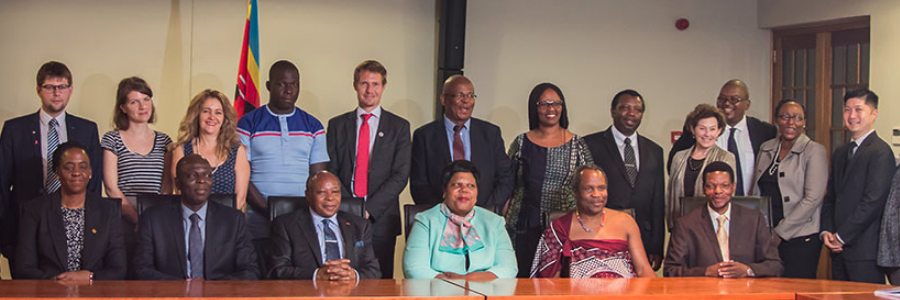
A delegation of the UNAIDS Programme Coordinating Board (PCB) visited Swaziland from 14 to 16 November to get insight into the country’s national AIDS response. During the visit, the delegation met the Acting Prime Minister, the Minister of Health and other representatives of the government, civil society, the private sector and development partners. The meetings with the political leadership clearly displayed the commitment to the response from the highest political level, from the King down.
During the meetings, the close collaboration between the United States President’s Emergency Plan for AIDS Relief and UNAIDS, based on UNAIDS’ role as the key link between the Prime Minister’s Office, the Ministry of Health and the broader political leadership, and with key civil society stakeholders, was noted. The critical role of the Joint Programme in preparing the recent concept note submitted for an application for financing by the Global Fund to Fight AIDS, Tuberculosis and Malaria for the AIDS response in Swaziland was also discussed.

The delegation engaged with representatives of civil society organizations and youth groups, and discussed disclosure of HIV status with them, hearing about the difficulties in disclosure, particularly for young people. The increasing, but still quite low levels of, reporting of sexual and gender-based violence and the importance of providing the types of flavoured condoms that appeal to young people were also discussed, as was the difficulty in funding the critical prevention work of civil society organizations.
The delegation complimented officials and representatives for their contribution to the sizeable scale-up of access to treatment and the significant number of people living with HIV who are virally suppressed. However, with 171 000 people living with HIV on life-saving treatment in 2016 and pilots being undertaken with pre-exposure prophylaxis, it was noted that the cost of treatment and prevention services is high and will remain so for many years.

The visit also explored the role of the private sector in the country, which has been significant. In a visit to the Royal Swaziland Sugar Corporation in Simunye, the delegation learned about how, in a spirit of corporate social responsibility, the company’s clinics provide health services to all staff, including seasonal staff, and their families, as well as surrounding communities. HIV counselling, testing and treatment are among the services provided.
The delegation heard about the possibility of further expanding the company’s engagement and its role in the surrounding community, including its prevention work, which particularly focuses on young women and adolescent girls, who are at higher risk of HIV infection.
During the country visit, the delegation also met with prison staff, development partners, media representatives and the United Nations country team. Throughout the visit, the delegation was supported by Zwelethu Mnisi, the Permanent Representative of Swaziland to the United Nations.
Original source: UNAIDS
Published on 28 November 2017