
Add us as your preferred source on Google to see more of our content in Search.
 Add to Preferred Sources
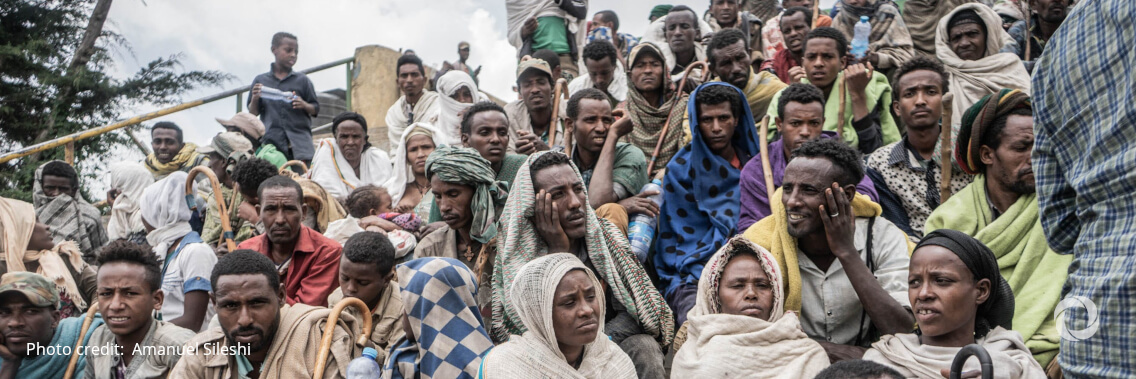
The ongoing conflict in Ethiopia has affected the lives and livelihoods of millions of people. The year-long fighting—combined with other existing hazards—has resulted in a worrying humanitarian situation, said the International Federation of Red Cross and Red Crescent Societies (IFRC) and the Ethiopian Red Cross Society (ERCS).
This crisis has exacerbated an already dire situation in Ethiopia. Climate shocks, devastating desert locusts, the continued socioeconomic impacts of COVID-19, and below-average rainfall have also led to a deterioration in food insecurity and other humanitarian needs.
Ato Getachew Taa, Ethiopian Red Cross Society’s Secretary-General, said: “Unless immediate action is taken, millions of lives are at risk due to displacement, food insecurity, trauma, and loss of livelihoods. About 23 million people in Ethiopia are now in need of humanitarian assistance across the country, due to the combined consequences of conflict, drought, epidemics, food insecurity, pest outbreaks, and population movement. Our teams are currently handling overwhelming humanitarian needs.”
Urgent needs include emergency shelter and essential household items, food, cash, health services, psychological support, water, sanitation, and hygiene materials—as well as protection services.
The IFRC is deeply concerned by the mounting needs and is stepping up its humanitarian response and preparedness efforts. Through IFRC’s extended response operation, 660,000 people affected by the crisis will receive humanitarian support—including shelter, food, cash, healthcare, water, sanitation, and hygiene items. IFRC’s operational strategy provides targeted assistance and contributes to meeting the immediate needs of the affected population.
Mohammed Mukhier, IFRC Regional Director for Africa, said: “Our teams and partners have been doing their best to reach desperate communities, but the resources are unable to keep pace with the scale of need. To match the growing humanitarian demands and reach people desperate for assistance, the IFRC is seeking 27 million Swiss francs.” Red Cross teams in Ethiopia have been providing humanitarian assistance since the beginning of the crisis. Thousands of displaced families have received shelter, water, sanitation, and hygiene services, as well as household, food, and cash assistance. In Sudan and Djibouti, those who fled from Ethiopia are also receiving similar services from Red Cross and Red Crescent teams.
“The IFRC network is working in a neutral, impartial way to support vulnerable communities. In accordance with our Fundamental Principles, we continue to ensure that we deliver our support based on people’s needs alone and prioritize the most vulnerable at all times,” added Mukhier.