
Add us as your preferred source on Google to see more of our content in Search.
 Add to Preferred Sources
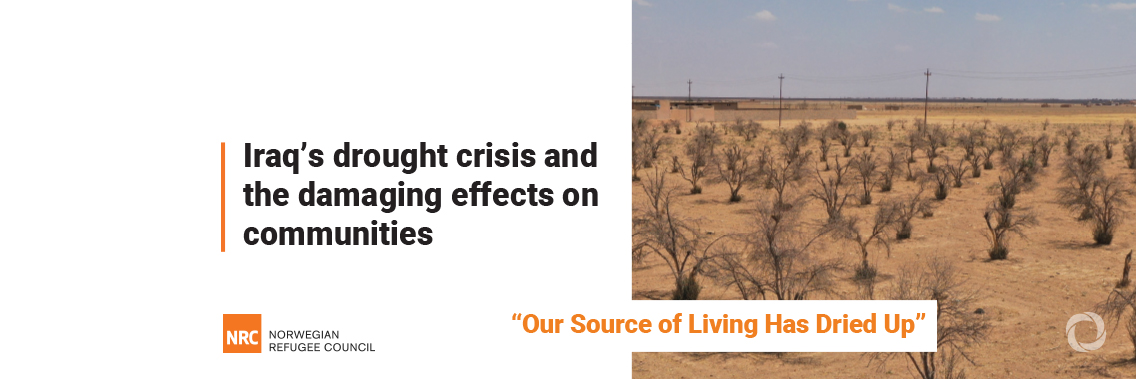
The scale of suffering inflicted by drought on Iraq’s populations this year is laid bare in new research by the Norwegian Refugee Council (NRC).
It shows that one in two families in drought-affected regions require food assistance because of drought, while one in five do not have sufficient food for everyone in the family.
Communities across Iraq have faced damaging losses to their crops, livestock, and income. Children are eating less, and farmers and displaced populations are hit hardest.
According to NRC’s research, which surveyed 2,800 households in drought-affected areas across the country:
- 37% of wheat farmers and 30% of barley farmers have suffered crop failure of at least 90% of expected harvest,
- 37% percent of households have lost cattle, sheep, or goats in the last six months, mainly due to insufficient water, inadequate feed or disease,
- The average monthly income in six out of seven governorates surveyed has dropped lower than the monthly survival threshold.
Samira, 46, has returned from displacement to Mosul to farm her land with two of her five children but has already seen reductions in produce.
“Our production has decreased due to water shortage recently, which also led to a decrease in our income… I can’t afford the necessary food for my family so I borrow money from my relatives or buy food on credit,” she told NRC.
Over the past few years, drought conditions, rising temperatures, and decreasing rainfall have reflected the growing threat of climate change in the country. Water flows from upstream countries have also receded.
“Our harvest has dropped due to drought. Our land was thriving but now it is losing its value day after day and no one seems to care about what farmers are facing. Our land used to produce 20 tonnes each season, now it’s no more than 10 or 11 tonnes,” said Osama, a 27-year-old farmer from Hawija.
Such extreme circumstances have forced people to leave their homes, compounding the displacement crisis in Iraq. Of those surveyed, 1 in 15 households told NRC that a family member had migrated in the last 30 days in search of work and income. Many of those had been in displacement at least once before or had just returned home. Young people are particularly vulnerable as our research shows that 45% of people aged 15-24 had left their farming communities to find a job in towns and cities, while 38% have lost a job.
The outlook for 2022 is worrying, with continued water shortages and drought conditions likely to devastate the coming farming season. This may increase families’ reliance on purchased water as well as poor hygiene practices, which could lead to disease outbreaks. There are signs of waves of displacement already taking place amid water scarcity, income losses, and rising food prices within farming communities.
“Families are telling us they have to borrow money to eat amid soaring prices and dwindling savings. They say their only source of living is vanishing in front of their eyes. Their lands are drying up and there is nothing they can do about it. This is all rooted in a water shortage crisis,” said Maithree Abeyrathna, NRC’s Head of Programmes in Iraq.
“We want to see solid water management plans to support communities badly hit and prevent future shocks, and these plans must be informed by farmers themselves.”
NRC is also calling for international assistance to support livestock farmers and provide irrigation rehabilitation and drought-tolerant seeds to reduce crop failure and crop losses. The Governments of Iraq and the Kurdish Regional Government are encouraged to incorporate climate-mitigation strategies within national job creation efforts and advocate for water-sharing agreements to be upheld by upstream countries to prepare for the future effects of climate change in Iraq and continued drought conditions.