
Education Cannot Wait announces US$11.1 million catalytic grant for new multi-year resilience programme in Libya
Add us as your preferred source on Google to see more of our content in Search.
 Add to Preferred Sources
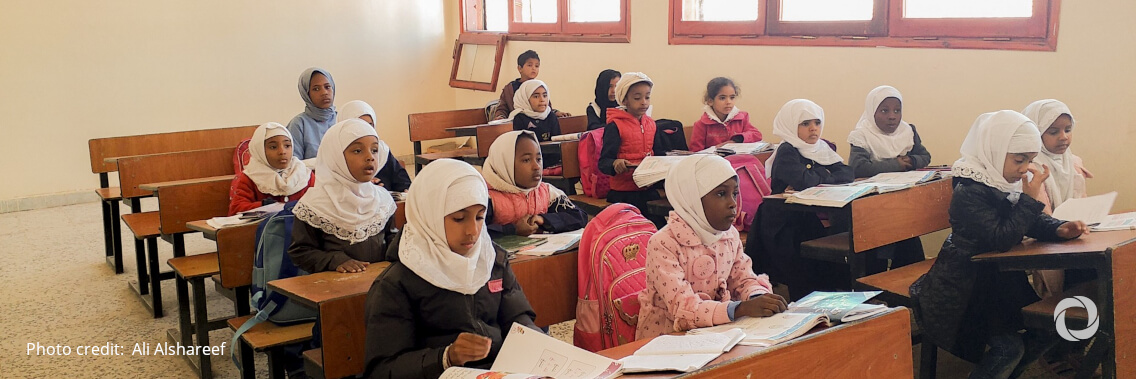
Education Cannot Wait (ECW) announced US$11.1 million in catalytic grant financing to fund a new multi-year educational program in Libya.
The program will be delivered through a consortium of partners including the Norwegian Refugee Council (NRC), Terre des Hommes-Italy (TdH-IT), and UNICEF. ECW and partners called on donors to urgently mobilize an additional US$18.9 million to fully fund the three-year program.
“The children and youth, including the girls of Libya, can and must no longer be left behind. Enough. After 10 years of utter chaos and crisis, we must invest in peace, stability, and human rights. The most secure way of doing so is to invest now in the new generation. To finally provide hope for safe, quality, protective learning environments for children, youth, girls, refugees – including those with disabilities; hope for the victims of violence; as well as hope for a more peaceful Libya,” said Yasmine Sherif, Director of Education Cannot Wait, the UN’s global fund for education in emergencies and protracted crises.
“Fully funded, the program will reach 110,000 crisis-affected children and adolescents with holistic education solutions. In reaching the most vulnerable and marginalized, 60% of program beneficiaries are girls, and 10% are children with disabilities,” said Lana Wreikat, acting UNICEF Special Representative to Libya.
Prior to the 2011 revolution, Libya had achieved nearly universal enrolment for primary and secondary education. However, a decade of conflict, economic crisis, displacement, and COVID-19 have had a profound and negative impact on the Libyan education system. The 2021 Humanitarian Response Plan estimates that 316,000 girls and boys and 10,000 teachers need urgent humanitarian education support.
The grant will help strengthen education systems, focusing on holistic solutions, gender equality, mental health and psychosocial support, and continuity of education to ensure no child is left behind.
The consortium led by NRC will work primarily through a community-based approach, focusing on community schools and centers to provide non-formal education, child protection activities, and psychosocial support for learners who do not have access to the formal education system.
“An inclusive approach to education for children in Libya has never been more important. After ten years of conflict, children in Libya more than ever need this hope for the future. All children in Libya deserve an opportunity to be connected, protected, and learning in a safe environment, regardless of their displacement status,” said Dax Bennett Roque, NRC Libya Country Director.
The Terre des Hommes-led consortium will support formal and community schools, provide non-formal education, child protection, and mental health and psycho-social support activities, and lead the development of a rigorous evidence base to ensure the most vulnerable girls and boys are reached.
“The cycles of conflict in Libya and the COVID-19 pandemic have had a compounding and devastating impact on the state of education for children and youth across the country. Education is a right for all, and a right that Terre des Hommes – Italy, ACTED, IMPACT-REACH and their partners are committed to upholding in 2022-2024 under the ECW Multi-Year Resilience Programme,” said Flavia Pugliese, Terre des Hommes- Italy Country Delegate.
The UNICEF-led consortium will ensure increased capacity and cross-sectoral engagement for the Ministry of Education and other partners, building the groundwork to ensure every girl and boy – including those living with disabilities – enjoy the safety, protection, and opportunity of quality education.
Original Source: Education Cannot Wait