
Add us as your preferred source on Google to see more of our content in Search.
 Add to Preferred Sources
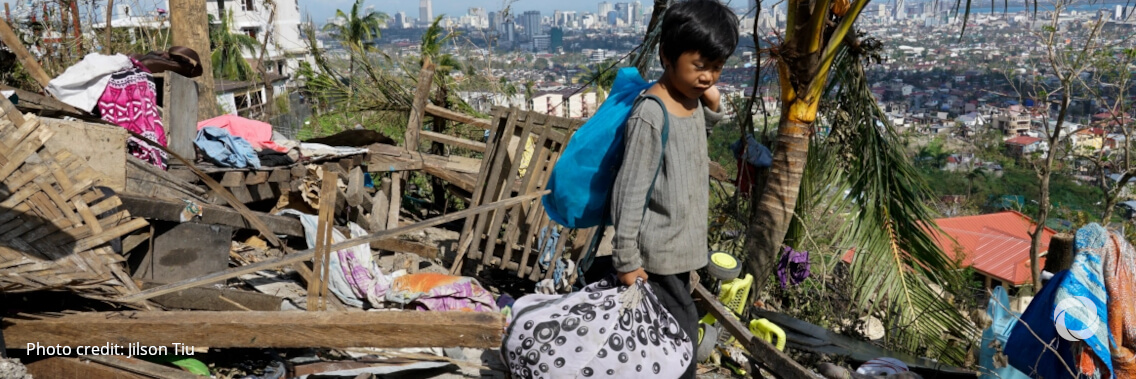
Around 3.1 million people (807,000 families) are in dire need of humanitarian assistance following the destruction left behind by Super Typhoon Rai that hit the Philippines on 16 -17 December 2021.
The super typhoon locally known as Odette has displaced more than 550,000 people, who are currently taking shelter in evacuation centers or staying with their relatives and friends. These numbers may still rise as reports from isolated areas have yet to be consolidated. According to the Philippine National Police, the number of deaths recorded as of 20th December is at least 375 people.
Most communities are without electricity, following damage to the distribution utilities estimated at Php 300 million ($6m) by the Philippines Department of Energy. Several provinces in the affected areas, including Bohol, Dinagat Islands, and Surigao del Norte, are unlikely to see electricity restored by the end of the year.
“The devastation is so massive, it reminds us of our experience during Super Typhoon Haiyan in 2013, the strongest to ever hit the Philippines. Millions of people affected urgently need life-saving aid, especially those who have been left homeless this Christmas,” said Aida Ricarte Acting Executive Director ECLIPSE, Oxfam’s humanitarian partner based in Leyte.
The typhoon has also destroyed the livelihoods of many families already reeling from the impact of COVID-19.
“It is really unfortunate that this typhoon hit when many families are still recovering from the health and economic impact of the pandemic. We need to act swiftly and provide tents and shelter repair kits to minimize the risk of COVID-19 infections in evacuation centers,” said Lot Felizco, Oxfam Pilipinas Country Director.
The affected communities urgently need food, clean water, hygiene supplies, and accessible toilets, to mitigate public health risks in addition to the risk of COVID-19.
“The compound threats of Super Typhoon Rai and COVID-19 will put local humanitarian leadership to test. Social distancing protocols will mean new ways of responding to this humanitarian crisis. It will also require quick response and concerted effort from the government, private sector, non-government organizations, and the international community,” Felizco said.
To improve the emergency response, the Philippine government has declared the six worst-hit regions across the Philippines under a state of calamity. They are MIMAROPA, Western Visayas, Central Visayas, Eastern Visayas, Northern Mindanao, and Caraga regions.
Oxfam and humanitarian partner organizations recently provided solar packs to people in the worst affected towns of Macrohon and Padre Burgos in Southern Leyte province, and Siargao island, which is still experiencing power outages. They had also distributed Php 4 million ($80,000) worth of pre-disaster financial aid to 2,650 families in Eastern Samar to help them prepare for the typhoon.