

Add us as your preferred source on Google to see more of our content in Search.
 Add to Preferred Sources
Following the World Health Organization’s announcement that the common pesticide chemicals malathion and diazinon are likely carcinogens, the Environmental Protection Agency (EPA) in the United States commissioned a nationwide study that revealed that 97% of the plants and animals currently protected under the Endangered Species Act (ESA) are threatened by the pesticides chlorpyriphos and malathion. The EPA study was published on 18 January 2017 and revealed that 78% of the plants and animals protected by the ESA are concomitantly at risk of harm from the pesticide diazinon.
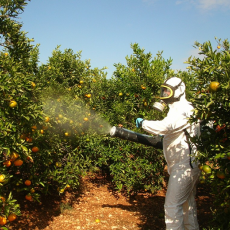 According to the EPA, all pesticides currently licensed for use in the United States are routinely assessed to determine their risk of harming plants, mammals, fish and invertebrates. A pesticide is categorised according to whether it will have ‘no effect’ on endangered species, ‘may affect’ endangered species, ‘may affect but is not likely to adversely affect’ or ‘may affect and is likely to adversely affect’ protected critical habitats and endangered species. The EPA’s January assessment determined that chlorpyriphos, malathion and diazinon may affect and are likely to adversely affect 97% of the endangered species in the United States.
 Based on these evaluations from the EPA, the US Fish and Wildlife Service and the National Marine Fisheries Service will issue recommendations to identify mitigation measures and changes to pesticide use so that these pesticides can no longer harm any endangered species in the US when used on agricultural crops. The three pesticides identified in the report are all organophosphates, a group of insecticides previously classified by the EPA as being acutely toxic to humans, wildlife and bees. Organophosphates are widely used on crops such as fruit, vegetables, wheat and corn as a form of insect control and were developed as an alternative to organochloride pesticides such as dichlorodiphenyltrichloroethane (DDT), itself banned from use in the United States since 1972.